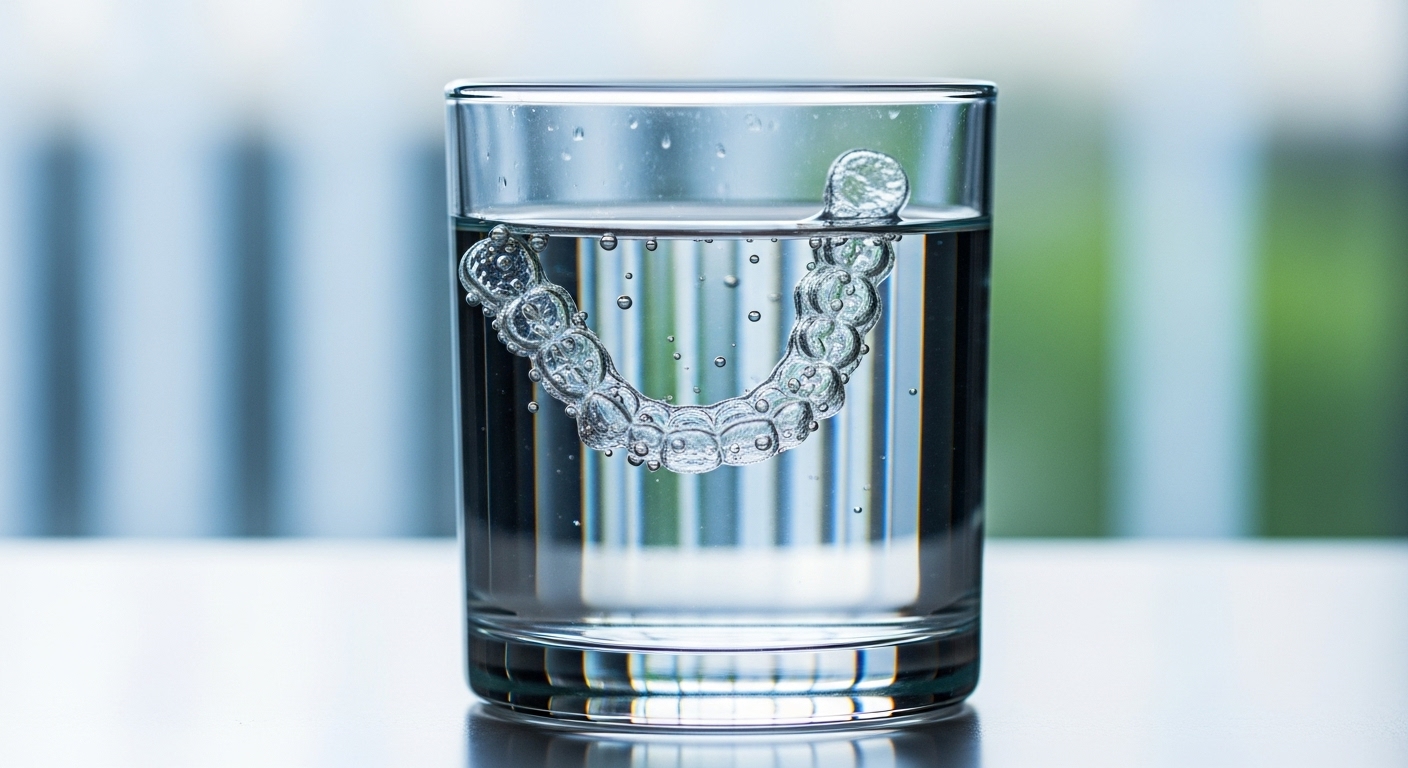
How to Clean Invisalign Aligners: The Complete 2026 Care Guide
Your Invisalign aligners spend 20-22 hours per day pressed against your teeth in the warm, moist environment of your mouth -- an ideal breeding ground for bacteria. Without proper daily cleaning, aligners develop bacterial biofilm within hours, leading to bad breath, cloudy or yellowed trays, and an increased risk of cavities and gum inflammation. The good news is that keeping aligners pristine is straightforward and takes less than five minutes a day when you follow the right routine.
This comprehensive 2026 guide covers the correct daily cleaning routine, the products that work (and the ones that damage aligners), deep cleaning methods, stain removal, common mistakes, and how to maintain excellent oral hygiene throughout your entire Invisalign treatment.
Invisalign Cleaning Essentials
- • Clean twice daily: Morning and bedtime, using a soft-bristle brush and clear antibacterial soap
- • Rinse every removal: Quick rinse under lukewarm water each time you take aligners out
- • Deep clean every 2-3 days: Soak in cleaning crystals, denture tablets, or vinegar solution
- • Never use: Toothpaste (scratches), hot water (warps), colored soap/mouthwash (stains)
- • Always brush teeth before reinserting aligners after eating
Why Cleaning Your Aligners Properly Matters
It is tempting to treat aligner cleaning as optional -- after all, you switch to a new set every 1-2 weeks, so why bother keeping the current set spotless? The answer has real clinical consequences.
Your mouth contains over 700 species of bacteria. When you wear an aligner, it creates a sealed environment over your teeth where saliva flow is restricted. Without saliva's natural antibacterial properties, bacteria multiply rapidly on the aligner surface and in the space between the aligner and your enamel. Within 24 hours of not cleaning, a visible biofilm (plaque) forms on the plastic.
Research published in the American Journal of Orthodontics and Dentofacial Orthopedics has shown that patients who do not maintain adequate aligner hygiene have significantly higher rates of gingivitis (gum inflammation) and demineralization (white spots on teeth that precede cavities) compared to patients who follow a consistent cleaning routine. Dirty aligners are not just unpleasant -- they actively undermine your dental health.
"I see it regularly in my practice: patients who neglect aligner hygiene develop more cavities during treatment than they had in the previous five years combined. The aligner acts as a protective barrier when it is clean, but as a bacterial incubator when it is not."
The Complete Daily Cleaning Routine
The foundation of aligner care is a consistent daily routine. Here is the protocol recommended by most orthodontists, broken down by time of day.
Morning Routine (3 minutes)
Overnight, bacteria accumulate on both your aligners and your teeth. The morning routine clears this buildup before you start your day.
- Remove aligners: Gently pull from the back molars forward.
- Rinse aligners under lukewarm (not hot) running water to remove saliva and loose debris.
- Apply a small amount of clear, unscented liquid antibacterial soap to a dedicated soft-bristle toothbrush.
- Brush all surfaces of both aligners gently: Inside, outside, and along the edges. Use small circular motions. Do not press hard -- the goal is to remove biofilm, not scrub the plastic.
- Rinse aligners thoroughly to remove all soap residue. Soap residue causes a bitter taste.
- Brush your own teeth with fluoride toothpaste, floss, and rinse.
- Reinsert clean aligners onto clean teeth.
After Every Meal
The post-meal routine prevents food particles and sugars from being trapped between aligners and teeth, which is the primary mechanism for Invisalign-related cavities.
- Rinse aligners when you remove them (before eating).
- Eat your meal. See our eating with Invisalign guide for food and drink rules.
- Brush your teeth with fluoride toothpaste. If brushing is not possible (restaurant, meeting), rinse your mouth thoroughly with water.
- Rinse aligners under lukewarm water again.
- Reinsert aligners.
Bedtime Routine (3 minutes)
The bedtime routine is the most important of the day. Your mouth produces less saliva during sleep, which means bacteria multiply faster overnight. Going to bed with dirty aligners on unbrushed teeth is a recipe for cavities.
- Remove aligners.
- Clean aligners with soap and soft brush (same as morning).
- Brush teeth thoroughly with fluoride toothpaste for a full two minutes.
- Floss between every tooth. This is non-negotiable at bedtime.
- Consider a fluoride rinse (like ACT) for extra enamel protection during treatment.
- Reinsert clean aligners onto clean teeth.
Cleaning Products: What Works and What Damages Aligners
Not all cleaning products are safe for Invisalign's SmartTrack thermoplastic material. Using the wrong product can scratch, discolor, or warp your aligners -- sometimes irreversibly. Here is the definitive breakdown.
| Product | Safe? | Use Case | Notes |
|---|---|---|---|
| Clear antibacterial soap | Yes | Daily cleaning (2x/day) | Must be clear and unscented; colored or scented soap stains/leaves taste |
| Invisalign Cleaning Crystals | Yes | Deep cleaning every 2-3 days | Official product from Align Technology; dissolve in lukewarm water, soak 15 min |
| Denture tablets (Polident, Efferdent) | Yes | Deep cleaning alternative | More affordable than cleaning crystals; soak 15-20 min, brush and rinse |
| White vinegar + water (50/50) | Yes | Stain removal | Soak 15-30 min; rinse very thoroughly; may leave slight taste initially |
| Hydrogen peroxide (3%) + water (50/50) | Yes | Disinfection / whitening | Soak 20-30 min; rinse thoroughly; effective against stubborn stains |
| Toothpaste | No | -- | Abrasive ingredients scratch plastic, causing permanent cloudiness |
| Colored mouthwash | No | -- | Dyes stain aligners blue, green, or purple; alcohol can degrade plastic |
| Bleach | No | -- | Damages plastic, leaves harmful residue, strong taste |
| Boiling water / dishwasher | No | -- | Heat warps SmartTrack material immediately and irreversibly |
Warning: Never use toothpaste on your aligners. This is the single most common cleaning mistake and the most damaging. The abrasive particles in toothpaste (even "gentle" formulas) create hundreds of micro-scratches that permanently cloud the plastic and create textured surfaces where bacteria thrive. Once scratched, the damage cannot be reversed.
Deep Cleaning Methods (Every 2-3 Days)
Daily soap-and-brush cleaning handles surface bacteria and debris, but a periodic deeper soak dissolves buildup that brushing alone cannot reach -- particularly in the crevices and attachment wells of your aligners. Choose one of the following methods.
Method 1: Invisalign Cleaning Crystals
- Fill a clean container (not a cup you drink from) with lukewarm water.
- Add one packet of Invisalign Cleaning Crystals and stir until dissolved.
- Submerge both aligners in the solution for 15 minutes.
- Remove aligners and brush gently with a soft toothbrush to dislodge loosened buildup.
- Rinse thoroughly under lukewarm running water.
Invisalign Cleaning Crystals are the official product from Align Technology and are specifically formulated for SmartTrack material. They are available from your orthodontist or online retailers. A 50-packet box typically costs $25-$40.
Method 2: Denture Cleaning Tablets
- Fill a container with lukewarm water.
- Drop in one denture cleaning tablet (Polident, Efferdent, or generic equivalent).
- Place aligners in the fizzing solution for 15-20 minutes.
- Brush and rinse thoroughly.
Denture tablets are a cost-effective alternative to Invisalign Cleaning Crystals. A box of 120 tablets costs about $8-$12, making this the most budget-friendly deep cleaning option.
Method 3: White Vinegar Soak
- Mix equal parts distilled white vinegar and lukewarm water in a container.
- Soak aligners for 15-30 minutes.
- Brush gently with a soft toothbrush.
- Rinse very thoroughly -- vinegar taste can linger if rinsing is inadequate.
The acetic acid in white vinegar is effective at dissolving mineral deposits and killing bacteria. This is a good option for removing light staining and odor.
Common Aligner Problems and Solutions
Even with good habits, you may encounter cleaning challenges during treatment. Here is how to handle the most common issues.
| Problem | Likely Cause | Solution | Prevention |
|---|---|---|---|
| Cloudy / hazy aligners | Toothpaste abrasion | Damage is permanent; switch to soap immediately | Never use toothpaste on aligners |
| Yellow or brown staining | Coffee/tea/wine with aligners in | Soak in cleaning crystals, denture tablets, or 50/50 hydrogen peroxide/water | Always remove before drinking anything except water |
| Bad odor | Bacterial biofilm buildup | Deep clean with soaking solution; increase daily cleaning frequency | Clean twice daily; rinse at every removal |
| Bad taste | Scented soap residue or bacteria | Switch to unscented soap; rinse more thoroughly | Use only clear, unscented soap |
| White calcium/tartar buildup | Mineral deposits from saliva | Soak in white vinegar solution for 30 min; brush gently | Regular deep cleaning; rinse aligners more frequently |
| Warped / ill-fitting aligners | Hot water or heat exposure | Contact orthodontist for replacement ($50-$150) | Only use lukewarm or cool water; keep away from heat sources |
"The patients who keep their aligners the cleanest are the ones who dedicate a separate soft-bristle toothbrush exclusively for aligner cleaning and keep it next to their regular toothbrush. When the cleaning tool is right there, the habit sticks."
Oral Hygiene During Invisalign Treatment
Clean aligners are only half the equation. If you put clean aligners onto teeth that have food particles and plaque on them, you are still creating a bacterial breeding ground. Oral hygiene during Invisalign treatment needs to be more rigorous than normal -- not less.
Brushing Protocol
During Invisalign treatment, the American Dental Association (ADA) recommends brushing after every meal before reinserting aligners. Here is the optimal approach:
- Use a soft-bristle toothbrush and fluoride toothpaste.
- Brush for a full 2 minutes using the modified Bass technique: angle bristles 45 degrees toward the gumline and use gentle, short strokes.
- Pay extra attention to areas around attachments: These small bonded bumps create recesses where plaque accumulates.
- Brush your tongue: Bacteria on the tongue contribute to bad breath, which is amplified by aligner wear.
Flossing
Floss at least once daily, ideally at bedtime. During Invisalign treatment, interdental cleaning is even more important than usual because aligners prevent saliva from naturally washing between teeth. Options include:
- Traditional string floss: Most thorough; wrap around each tooth in a C-shape.
- Floss picks: More convenient for on-the-go cleaning after meals.
- Interdental brushes (e.g., TePe): Excellent for patients with wider gaps or around attachment points.
- Water flosser (Waterpik): Good supplement but should not replace string floss entirely.
Extra Fluoride Protection
Since aligners restrict saliva flow over tooth surfaces, you lose some of saliva's natural remineralization benefits. Many orthodontists recommend adding a fluoride rinse (like ACT Anti-Cavity) to your bedtime routine during treatment. The fluoride strengthens enamel and provides extra cavity protection during the hours when saliva production is lowest (overnight).
Your Invisalign Hygiene Checklist
- • Dedicated soft-bristle toothbrush for aligner cleaning only
- • Clear, unscented liquid antibacterial soap
- • Fluoride toothpaste for your teeth
- • Dental floss or floss picks
- • Cleaning crystals or denture tablets for deep cleaning
- • Fluoride rinse (ACT or equivalent) for bedtime use
- • Travel kit: mini toothbrush, toothpaste, floss picks, aligner case
Proper Storage and Handling
How you store your aligners when they are not in your mouth matters as much as how you clean them. Improper storage is the leading cause of lost, damaged, and contaminated aligners.
- Always use the protective case: Every time aligners leave your mouth, they go into the case. No exceptions.
- Never wrap aligners in a napkin: This is the most common way aligners get accidentally thrown away, especially at restaurants. Replacement cost: $50-$150 per tray plus 1-3 weeks of treatment delay.
- Never leave aligners in the open: Exposed aligners dry out and collect airborne bacteria. In a NYC apartment or office, this means dust, pet dander, and environmental contaminants.
- Keep cases clean: Rinse your aligner case with soap and water daily and let it air dry. Replace the case every 2-3 months or whenever it develops discoloration or odor.
- Keep aligners away from pets: Dogs are attracted to the scent of saliva on aligners and will chew them.
- Order extra cases: Keep one at home, one at work, one in your bag, and one in your partner's apartment. Extra cases cost $2-$5 each from your orthodontist or Amazon.
Warning: Do not store aligners in direct sunlight, a hot car, or near any heat source. The SmartTrack plastic warps at temperatures above 150 degrees Fahrenheit. A car dashboard on a summer day in NYC can easily exceed 170 degrees, destroying aligners in minutes.
Cleaning Aligners While Traveling
Maintaining your cleaning routine while traveling -- whether it is a business trip or vacation -- requires minimal preparation. Assemble a travel hygiene kit and keep it packed and ready:
- Collapsible travel toothbrush (for your teeth)
- Travel-size fluoride toothpaste
- Second soft-bristle toothbrush (for aligners)
- Small bottle of clear antibacterial soap
- 4-5 individually wrapped denture tablets (for deep cleaning on the go)
- Floss picks
- Aligner case
- Small water bottle (for rinsing when a sink is not available)
If you are flying, all of these items are TSA-compliant in carry-on luggage. Keep the kit in your personal bag rather than checked luggage so you have access throughout the journey. For more on managing Invisalign during daily life, including dining out, check our eating with Invisalign guide.
Cleaning When Switching to a New Tray
Every 1-2 weeks, you will advance to the next set of aligners in your treatment sequence. Here is the protocol for tray transitions:
- Remove old aligners and clean them one final time.
- Store old aligners in a labeled bag: Your orthodontist may ask you to bring previous trays to appointments, and having the previous set as a backup is valuable if a new tray is lost or damaged.
- Brush and floss teeth thoroughly before inserting the new tray.
- Insert new aligners: They will feel tight -- this is normal and means they are applying the intended force to continue moving your teeth.
- Switch at bedtime: Most orthodontists recommend starting a new tray before sleep so you sleep through the initial tightness.
For information on what to expect when switching trays and managing the mild discomfort that sometimes accompanies new aligners, see our dedicated guide.
Frequently Asked Questions
Clean your aligners at least twice daily -- once in the morning and once before bed. Additionally, rinse them under lukewarm water every time you remove them (before meals) and every time you put them back in. Perform a deeper soak with cleaning crystals or denture tablets every 2-3 days.
No. Most toothpastes contain abrasive particles (hydrated silica, baking soda, calcium carbonate) that scratch the plastic surface. These micro-scratches make aligners cloudy and create grooves where bacteria accumulate. Use clear, unscented liquid antibacterial soap instead.
Yellowing is usually caused by drinking coffee, tea, or wine with aligners in, eating with aligners in, or using colored soap or mouthwash. Cloudiness results from using abrasive toothpaste. Prevent discoloration by removing aligners before eating or drinking anything except plain water, and cleaning with soap rather than toothpaste.
Never. Invisalign aligners are made from SmartTrack thermoplastic, which begins to deform at temperatures above approximately 150 degrees Fahrenheit (65 degrees Celsius). Hot water will warp the aligner, ruining its fit and potentially setting back your treatment. Always use lukewarm or cool water.
For daily cleaning, clear unscented liquid antibacterial soap with a soft-bristle toothbrush is the most effective and affordable option. For deeper weekly cleaning, Invisalign Cleaning Crystals, denture tablets (Polident or Efferdent), or a 50/50 white vinegar and water soak all work well.
Sources
1. Align Technology — Invisalign Aligner Care Instructions and SmartTrack Material Specifications, 2025
2. American Journal of Orthodontics and Dentofacial Orthopedics — "Oral Hygiene and Caries Experience During Clear Aligner Therapy," 2024
3. Journal of Clinical Orthodontics — "Microbial Colonization of Removable Orthodontic Appliances," 2023
4. American Dental Association (ADA) — Patient Guidelines for Removable Orthodontic Appliance Care, 2025
5. International Journal of Dental Hygiene — "Effectiveness of Various Cleaning Methods for Thermoplastic Orthodontic Aligners," 2024
6. Journal of Dental Research — "Salivary Flow and Bacterial Load Under Clear Orthodontic Aligners," 2023
Conclusion
Proper cleaning is not a minor detail of Invisalign treatment -- it is fundamental to both the health of your teeth and the aesthetics of your aligners. A consistent routine of twice-daily cleaning with soap and a soft brush, periodic deep soaking, and rigorous oral hygiene will keep your aligners clear, odor-free, and bacteria-free throughout your entire treatment.
The mistakes to avoid are simple: never use toothpaste (it scratches), never use hot water (it warps), and always brush your teeth before reinserting aligners. Follow those three rules plus the daily cleaning routine outlined in this guide, and your aligners will look as clear on day 13 as they did on day 1.
Questions About Your Invisalign Treatment?
Find a certified Invisalign provider in NYC who can help with any cleaning or care concerns.
Find a Provider in NYC