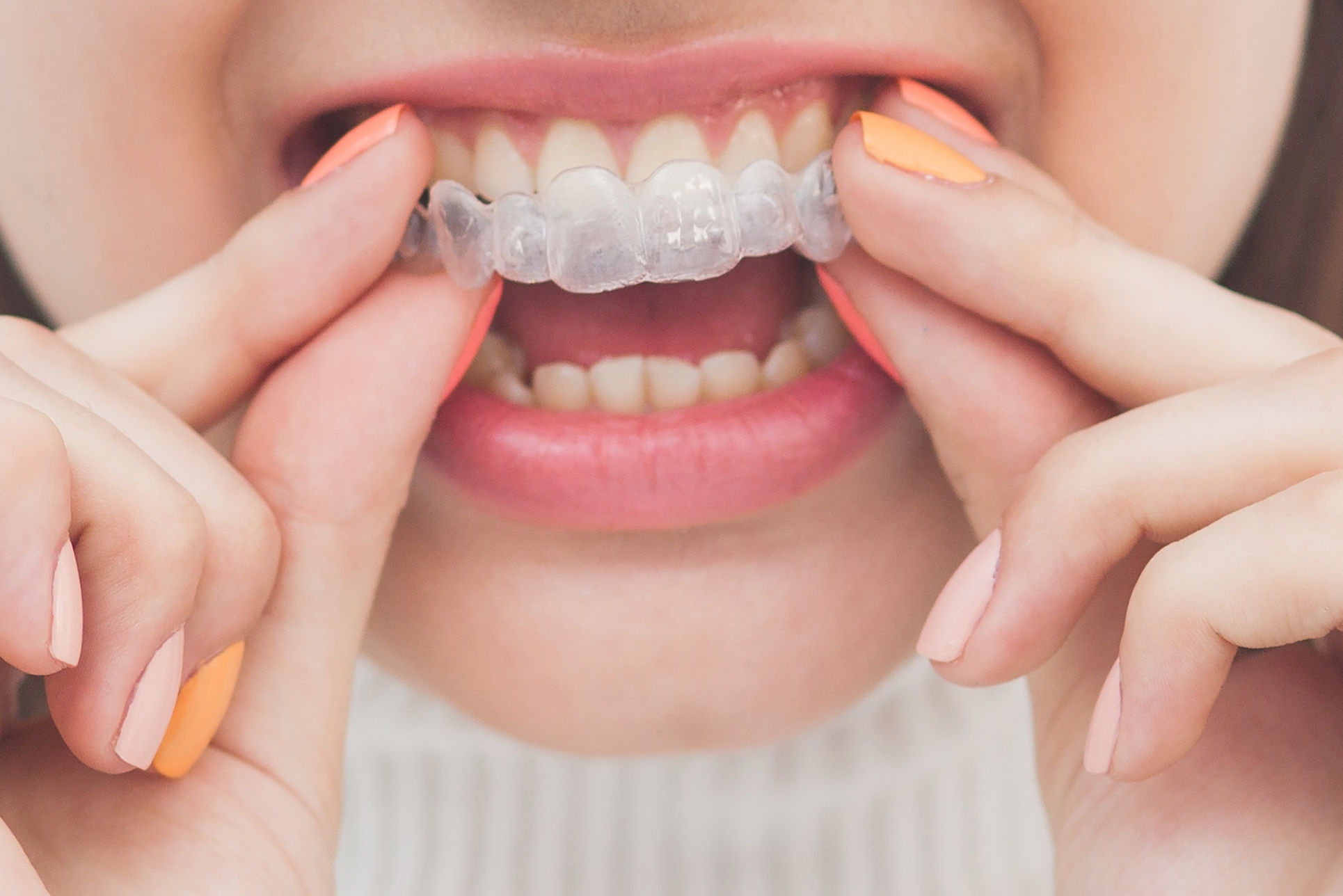
Invisalign Tray Not Fitting? Causes, Fixes, and When to Call Your Orthodontist
You peel open a new Invisalign aligner, place it over your teeth, and something feels wrong -- it does not snap into place, there is a visible gap, or the tray seems to rock on certain teeth. An ill-fitting aligner is one of the most common concerns Invisalign patients face, and it can range from a minor issue with a simple fix to a sign that your treatment has gone off track. This guide covers the seven most common causes, what you can do at home, and when you need to contact your orthodontist.
Quick Guide: When a Tray Does Not Fit
- • Minor tightness with a new tray: Normal -- use chewies and give it 48 hours
- • Small gap on one tooth: Try chewies for 3-5 days; if no improvement, call your orthodontist
- • Tray lifts off multiple teeth: Stop advancing and contact your orthodontist immediately
- • Tray cracked or warped: Switch to previous tray and request a replacement
- • Pain beyond normal pressure: Remove tray and call your orthodontist
Normal Tightness vs a Real Fitting Problem
First, it is important to distinguish between the normal tightness of a new aligner and an actual fitting problem. Every new Invisalign tray is engineered to be slightly ahead of where your teeth currently sit. This intentional mismatch creates the force that moves teeth. So some initial tightness, pressure, and even mild discomfort is expected and healthy -- it means the aligner is doing its job.
A genuine fitting problem looks different. Signs include: a visible gap between the aligner edge and the tooth (especially near the biting surface), the tray rocking or tilting when you press on it, one area feeling loose while another feels painfully tight, or the aligner simply refusing to seat fully over all teeth no matter how hard you press. If any of these persist beyond 48-72 hours with consistent chewie use, you have a tracking issue that needs attention.
7 Common Causes of Ill-Fitting Invisalign Trays
1. Insufficient Wear Time
This is the number one cause of tracking issues. Invisalign requires 20-22 hours of daily wear to keep teeth moving according to the treatment plan. When wear time drops below 20 hours consistently, teeth do not reach their target position before the next tray change, and each successive aligner fits a little worse. Even dropping to 18 hours per day can create cumulative tracking errors over several weeks.
2. Switching Trays Too Early
Eager patients sometimes advance to the next tray ahead of schedule, thinking it will speed up treatment. This backfires. If teeth have not completed their programmed movement in the current tray, the next tray will not fit properly. Always follow your orthodontist's prescribed tray-change schedule, whether that is every 7, 10, or 14 days.
3. A Stubborn Tooth That Is Not Tracking
Some teeth simply move more slowly than predicted by the ClinCheck software. This is particularly common with rotated premolars, deeply impacted canines, and teeth with short roots or dense surrounding bone. When one tooth lags behind, the aligner will not seat properly in that area, and the gap may worsen with each successive tray.
4. A Lost or Broken Attachment
Invisalign attachments are small composite bumps bonded to certain teeth that help the aligner grip and apply force in specific directions. If an attachment falls off (which happens to roughly 10-15% of patients at some point), the aligner loses its grip on that tooth, and the programmed movement stalls. You may notice the tray feeling looser in the area where the attachment was.
5. A Warped or Damaged Tray
Invisalign aligners are made of SmartTrack thermoplastic, which can warp when exposed to heat. Leaving aligners in a hot car, washing them with hot water, or even drinking very hot beverages while wearing them can distort the plastic. A warped tray will not fit correctly regardless of tooth position.
6. Dental Work Between Scans
If you had a filling, crown, or other dental work done after your Invisalign impressions were taken, the shape of the treated tooth may have changed enough to affect aligner fit. Always inform your orthodontist before getting any dental work during Invisalign treatment so they can coordinate timing.
7. Complex Movements Beyond Aligner Capability
Certain tooth movements are inherently difficult for clear aligners: significant rotations (especially of round-rooted premolars), vertical extrusion, and bodily movement of teeth through dense bone. If your treatment plan includes these movements, there is a higher likelihood of tracking issues that may require mid-course corrections.
| Cause | How Common | DIY Fix? | Orthodontist Needed? |
|---|---|---|---|
| Insufficient wear time | Very common (~40%) | Yes -- increase wear to 22 hrs/day | Only if tracking does not recover in 1-2 weeks |
| Switching trays too early | Common (~20%) | Yes -- go back to previous tray | If multiple trays behind schedule |
| Stubborn tooth | Moderate (~15%) | Chewies may help; extend tray wear | Yes -- may need mid-course correction |
| Lost attachment | Moderate (~10-15%) | No | Yes -- rebond ASAP |
| Warped tray | Occasional (~5%) | No -- use previous tray | Yes -- request replacement |
| Dental work changed tooth shape | Occasional (~5%) | No | Yes -- rescan likely needed |
| Complex movements | Case-dependent (~10%) | No | Yes -- may need auxiliaries or plan revision |
DIY Fixes You Can Try at Home
Before calling your orthodontist, try these steps. They resolve the majority of minor fitting issues:
Use Aligner Chewies Aggressively
Chewies are your best friend when a tray is not seating properly. Place the chewie between your teeth (focusing on the problem area) and bite down firmly for 5-10 seconds, then move to the next tooth. Repeat for 5-10 minutes. Do this every time you reinsert your aligners -- after meals, after brushing, and before bed. Consistent chewie use for 3-5 days resolves many minor gaps.
Go Back to the Previous Tray
If the new tray clearly does not fit, go back to the previous aligner that fit well. Wear it for an extra 3-5 days to give your teeth more time to complete the intended movement. Then try the new tray again. If it still does not fit, keep wearing the old tray and contact your orthodontist.
Maximize Your Wear Time
Bump your wear time up to a strict 22 hours per day. Reduce meal times, avoid unnecessary aligner removals, and put your aligners back in immediately after eating and brushing. Every extra hour of wear helps teeth reach their target position faster.
Check Your Attachments
Look in a mirror and compare the number of attachments on your teeth to your previous count. If one is missing, the aligner will not seat properly in that area. A missing attachment requires an orthodontist visit for rebonding.
Warning: Never try to force an ill-fitting aligner into place by biting down hard without a chewie, using tools to bend the plastic, or wearing it despite sharp pain. Forcing an aligner can crack the tray, damage teeth, or cause root resorption. If it does not improve with chewies and extended wear within 3-5 days, professional intervention is needed.
When to Call Your Orthodontist
Contact your orthodontist promptly if you experience any of the following:
- A gap between the aligner and any tooth that persists after 5 days of chewie use
- The tray lifts off or rocks on multiple teeth
- A visible tracking discrepancy that is getting worse with each new tray
- A lost or broken attachment
- Sharp or severe pain that is not the normal pressure of a new tray
- A cracked, warped, or otherwise damaged aligner
- You are more than 2 trays behind schedule
"Patients sometimes feel embarrassed to call about tracking issues, but early intervention is always better. A small tracking problem caught at tray 10 might need a simple adjustment. The same problem ignored until tray 20 often requires a complete rescan and new set of aligners."
What Your Orthodontist Will Do
When you visit your orthodontist for a tracking issue, here is what to expect:
| Intervention | When Used | What It Involves | Timeline Impact |
|---|---|---|---|
| Extended wear of current tray | Minor tracking issue | Wear current tray 1-2 extra weeks | 1-2 week delay |
| Backtrack to earlier tray | Moderate tracking issue | Go back 2-3 trays and re-advance slowly | 3-6 week delay |
| Attachment rebond/add | Lost attachment or stubborn tooth | Rebond or add new attachments | Minimal -- same appointment |
| IPR (interproximal reduction) | Crowding preventing movement | Slight enamel reduction between teeth | Minimal |
| Mid-course correction (rescan) | Significant tracking failure | New scan, revised ClinCheck, new aligners | 4-6 week wait for new trays + extended treatment |
For patients on Invisalign Comprehensive plans, mid-course corrections and refinement aligners are included at no additional cost. This is one of the advantages of the comprehensive plan over limited options like Invisalign Lite. For a full breakdown of plan options and pricing, see our cost and insurance guide.
How to Prevent Tracking Issues
Prevention is always easier than correction. Here are evidence-based strategies to keep your Invisalign treatment on track:
Prevention Checklist
- • Wear aligners 20-22 hours per day without exception
- • Use chewies for 5-10 minutes every time you reinsert aligners
- • Never skip ahead to the next tray early
- • Keep aligners away from heat (hot water, hot car, dishwasher)
- • Report lost attachments within 24 hours
- • Attend all scheduled monitoring appointments
- • Coordinate any dental work with your orthodontist before the procedure
- • Store aligners in their case -- never in pockets, napkins, or loose in bags
"The patients who never have tracking problems are the ones who use chewies religiously and maintain strict wear time. It sounds simple, but those two habits account for 80% of treatment success."
NYC-Specific Advice
New York City patients face unique challenges that can affect aligner fit. The fast-paced lifestyle can make it tempting to skip wear time during social events, business dinners, or late-night outings. Here are NYC-specific tips:
- Summer heat: Never leave aligners in a car or on a windowsill. NYC summers regularly exceed 90 degrees F, which can warp SmartTrack plastic in minutes.
- Dining out frequently: Keep your aligner case with you at all times. Set a phone timer to remind yourself to reinsert after meals -- the busy NYC restaurant scene makes it easy to forget.
- Emergency visits: Most orthodontic offices in Manhattan, Brooklyn, and Queens offer same-day or next-day emergency slots for tracking issues. Do not wait weeks for your next scheduled appointment if something feels wrong.
- Find a provider: If you are looking for an experienced Invisalign provider who can handle complex cases and mid-course corrections, check our best orthodontists in New York directory.
Warning: If you lose an aligner while dining out in NYC (a very common occurrence), do not go without any tray. Immediately revert to your previous aligner and call your orthodontist the next business day. Going even 24-48 hours without an aligner can cause teeth to shift enough to create tracking problems with subsequent trays.
Frequently Asked Questions
A tight-feeling new tray is completely normal and expected. Each new aligner is designed to be slightly ahead of your current tooth position, applying gentle force to move teeth into the next stage. The tightness typically subsides within 24-48 hours as teeth begin to shift. If the tightness is severe or does not improve after 3 days, contact your orthodontist.
Never skip a tray without consulting your orthodontist. Each aligner builds on the movements of the previous one. Skipping a tray means the next aligner will be even further off track. Instead, go back to the previous tray that fit well and call your orthodontist for guidance. They may recommend wearing the previous tray longer or ordering a mid-course correction.
Well-tracking aligners snap snugly over all teeth with no visible gaps, air pockets, or lifting at the edges. The aligner should feel firm against each tooth surface. If you can see space between the aligner and any tooth, or if the aligner rocks or shifts when you press on it, tracking may be off. Small gaps at the gum line are normal, but gaps at the biting edge of teeth are a concern.
Chewies are small cylindrical cushions made of a spongy material (Styrene Copolymer). You bite down on them for 5-10 minutes after inserting a new aligner to help seat it fully against your teeth. They are especially useful during the first 2-3 days of each new tray and can significantly improve tracking. Most orthodontists provide them free of charge.
It depends on your treatment plan. Invisalign Comprehensive includes unlimited refinement aligners at no extra cost, which covers mid-course corrections and new trays. Invisalign Lite (14 trays) and Invisalign Express (7 trays) have limited refinements and may incur additional fees. Most NYC orthodontists include mid-course corrections in their quoted treatment fee.
Sources
1. Align Technology. Invisalign Doctor Site: Tracking and Mid-Course Correction Protocols, 2025.
2. American Journal of Orthodontics and Dentofacial Orthopedics. "Factors Affecting Aligner Tracking Accuracy: A Systematic Review." Vol. 168, Issue 1, 2025.
3. Journal of Clinical Orthodontics. "Optimizing Patient Compliance and Tracking in Clear Aligner Therapy." Vol. 59, Issue 4, 2024.
4. Angle Orthodontist. "Effect of Wear Time on Clear Aligner Treatment Outcomes." Vol. 95, Issue 1, 2025.
5. European Journal of Orthodontics. "Attachment Debonding Rates and Their Impact on Invisalign Treatment Outcomes." Vol. 47, Issue 2, 2025.
6. Orthodontics and Craniofacial Research. "Thermoplastic Aligner Deformation Under Thermal Stress." Vol. 28, Issue 3, 2024.
7. American Association of Orthodontists (AAO). Patient Guide to Clear Aligner Troubleshooting, 2025.
Tray Not Fitting? Get Expert Help
An experienced NYC orthodontist can diagnose the cause of your tracking issue and get your Invisalign treatment back on course -- often in a single visit.
Find a Provider in NYC