Dental Crowns in NYC: Types, Cost, Procedure & Insurance Guide (2026)
A dental crown is one of the most common and reliable restorative procedures in dentistry, yet the choices involved -- material type, lab quality, provider experience, and insurance navigation -- can feel overwhelming. In New York City, where a single crown can cost anywhere from $800 to $3,500 depending on material and location, understanding your options before you sit in the chair is essential. This 2026 guide covers everything NYC patients need to know: crown types, the step-by-step procedure, realistic costs by borough, insurance strategies, and long-term care.
Key Takeaways: Dental Crowns in NYC (2026)
- • NYC cost range: $1,200-$3,500 per crown (15-25% above national average)
- • Most popular material: Zirconia and E-max for their strength-plus-aesthetics balance
- • Procedure time: Two visits over 2-3 weeks (or same-day with CEREC technology)
- • Insurance coverage: Most PPO plans cover 50% as a major procedure
- • Lifespan: 10-25+ years with proper care
- • FSA/HSA eligible: Yes -- save 20-35% using pre-tax dollars
What Is a Dental Crown?
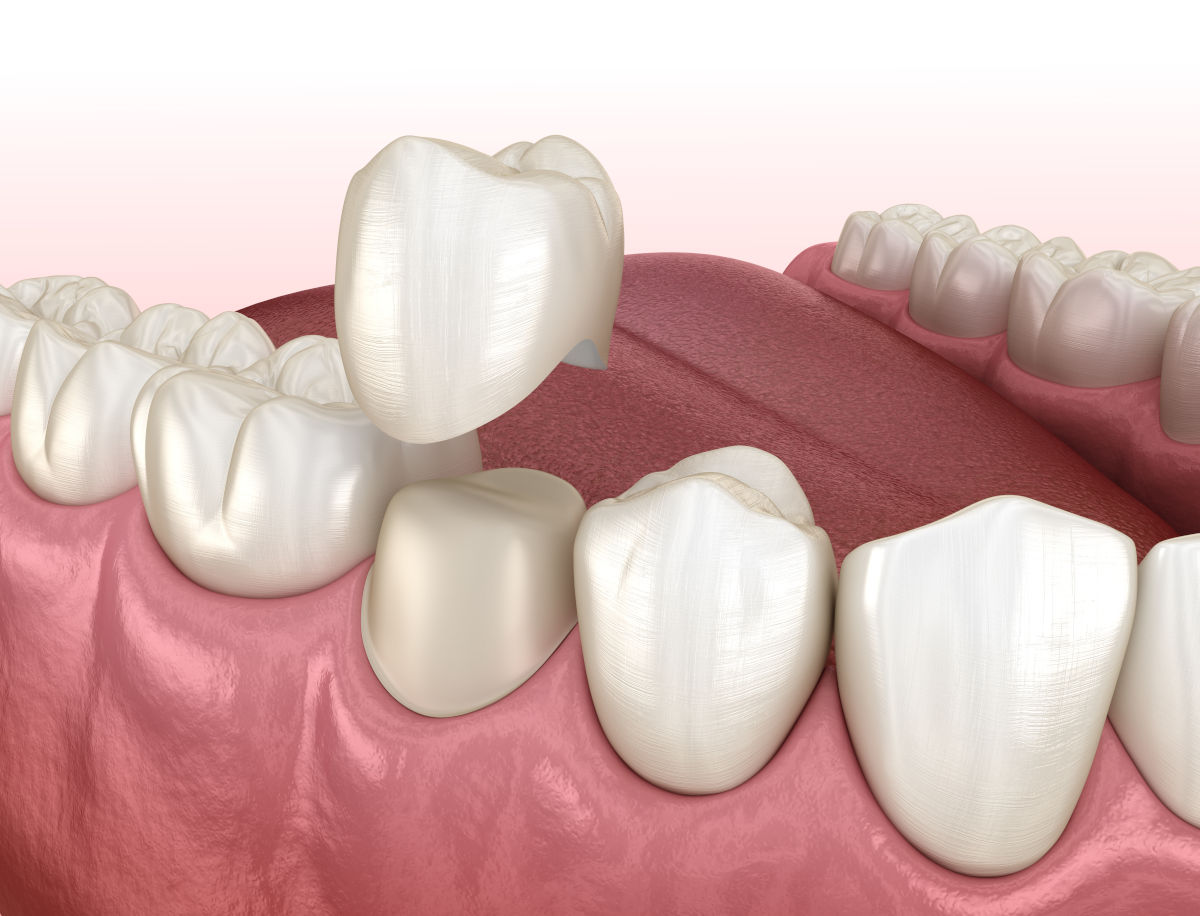
A dental crown, sometimes called a "cap," is a custom-fabricated restoration that completely encases a damaged, weakened, or cosmetically compromised tooth. Unlike a filling that patches a portion of the tooth, a crown replaces the entire visible structure above the gumline, restoring shape, strength, function, and appearance in one piece. Crowns are cemented permanently and, once placed, look and function like a natural tooth.
Dentists recommend crowns in a wide range of scenarios: after root canal treatment (where the tooth becomes brittle), for teeth with large fractures or extensive decay, to anchor a dental bridge, to top a dental implant, or for purely cosmetic improvements when veneers or dental bonding are not sufficient. According to the American Dental Association, over 15 million Americans have crown or bridge restorations, making it one of the most-performed procedures in the country.
Types of Dental Crowns: Materials Compared
The material your crown is made from affects its appearance, durability, cost, and suitability for different locations in the mouth. Here is how the five main types compare in 2026.
| Crown Material | Best For | Strength | Aesthetics | NYC Cost (2026) |
|---|---|---|---|---|
| Porcelain-Fused-to-Metal (PFM) | Back teeth, bridges | High | Good | $1,200-$1,800 |
| All-Porcelain / All-Ceramic | Front teeth | Moderate | Excellent | $1,500-$2,500 |
| Zirconia | All teeth, bruxism patients | Very High | Very Good | $1,500-$3,000 |
| Lithium Disilicate (E-max) | Front & premolars | High | Excellent | $1,800-$3,500 |
| Gold / Metal Alloy | Back molars | Highest | Poor (metallic) | $1,300-$2,500 |
Porcelain-Fused-to-Metal (PFM) Crowns
PFM crowns have been the workhorse of restorative dentistry for decades. They feature a metal substructure for strength, coated with tooth-colored porcelain for aesthetics. While still widely used, they have a known drawback: over time, gum recession can expose a dark metal line at the crown margin. For back teeth where aesthetics are less critical, PFMs remain a cost-effective option.
All-Ceramic and All-Porcelain Crowns
These metal-free crowns offer the most natural light transmission and color matching, making them the preferred choice for front teeth. They are biocompatible and ideal for patients with metal allergies. However, they are somewhat more prone to chipping under heavy bite forces, which is why many dentists reserve them for anterior restorations.
Zirconia Crowns
Zirconia has become the dominant crown material in 2026 thanks to its combination of exceptional strength (over 1,200 MPa flexural strength) and improved translucency. Monolithic zirconia crowns are milled from a single block using CAD/CAM technology, eliminating the risk of porcelain chipping. Brands like BruxZir have made zirconia the go-to choice for patients who grind their teeth or need posterior crowns that also look natural.
"Zirconia has fundamentally changed how we approach full-coverage restorations. The latest multilayer zirconia blanks give us strength where we need it at the core and translucency at the incisal edge -- something that was impossible just five years ago."
Lithium Disilicate (E-max) Crowns
E-max crowns, manufactured by Ivoclar Vivadent, are considered the gold standard for aesthetic single-tooth restorations. Their glass-ceramic composition delivers unmatched translucency and color depth, closely mimicking natural enamel. With a flexural strength of approximately 500 MPa, they are strong enough for front teeth and premolars but may not be the best choice for heavy-biting molars in patients with bruxism.
Gold and Metal Alloy Crowns
Gold crowns are the most durable option and cause the least wear on opposing teeth, making them biomechanically ideal. Many prosthodontists still consider gold the best material for second molars that are not visible when smiling. The obvious cosmetic limitation is the metallic color, which is why their use has declined as zirconia technology has advanced.
The Dental Crown Procedure: Step by Step
Understanding what happens during each visit can help reduce anxiety and help you plan for time off work. The traditional crown procedure requires two appointments, though same-day options exist.
First Visit: Preparation (60-90 minutes)
Your dentist begins by numbing the tooth and surrounding tissue with local anesthesia. The tooth is then reshaped -- reduced by approximately 1.5 to 2mm on all sides -- to create space for the crown to fit over it without being bulky. If the tooth has significant decay or structural damage, a core buildup using composite resin or amalgam may be placed first to provide a stable foundation.
Next, a digital scan or traditional impression is taken of the prepared tooth and the opposing arch. This data is sent to a dental laboratory (or processed in-office for same-day crowns) where technicians fabricate the final restoration. A temporary acrylic crown is placed over the prepared tooth to protect it during the two to three-week lab fabrication period.
Second Visit: Cementation (30-45 minutes)
The temporary crown is removed, and the new permanent crown is tried in to check the fit, bite, and color match. Adjustments are made as needed. Once both the dentist and the patient are satisfied, the crown is permanently cemented using dental adhesive. A final bite check ensures the crown sits evenly in your occlusion.
Same-Day CEREC Crowns
Many NYC practices now offer CEREC (Chairside Economical Restoration of Esthetic Ceramics) technology, which allows a crown to be designed, milled, and placed in a single visit of about 90-120 minutes. A digital scanner captures the tooth's dimensions, software designs the crown on screen, and an in-office milling unit carves it from a ceramic block. While convenient, same-day crowns may have limitations in color-matching for highly visible front teeth compared to lab-fabricated restorations.
| Factor | Traditional Crown (2 Visits) | Same-Day CEREC Crown |
|---|---|---|
| Number of visits | 2 visits over 2-3 weeks | 1 visit (90-120 min) |
| Temporary crown needed | Yes | No |
| Material options | All types (PFM, zirconia, E-max, gold) | Ceramic/zirconia blocks only |
| Aesthetic customization | Excellent (lab technician hand-layers) | Good (limited staining/glazing) |
| NYC cost | $1,200-$3,500 | $1,500-$2,800 |
| Best for | Visible front teeth, complex cases | Back teeth, busy patients |
Dental Crown Cost in NYC (2026)
New York City dental costs run approximately 15-25% above the national average due to higher rent, labor, and lab fees. The total cost of a dental crown depends on the material chosen, the tooth's location, whether a core buildup or post is needed, and the specific neighborhood of the practice.
| Procedure | National Average | NYC Average |
|---|---|---|
| PFM crown | $800-$1,400 | $1,200-$1,800 |
| All-ceramic crown | $1,000-$2,000 | $1,500-$2,500 |
| Zirconia crown | $1,000-$2,500 | $1,500-$3,000 |
| E-max crown | $1,200-$2,800 | $1,800-$3,500 |
| Gold crown | $1,000-$2,000 | $1,300-$2,500 |
| Core buildup (add-on) | $200-$400 | $300-$500 |
| Post and core (add-on) | $250-$500 | $350-$600 |
Practices in Midtown Manhattan and the Upper East Side tend to charge at the top of these ranges, while offices in Brooklyn, Queens, and the Bronx often offer more competitive pricing without sacrificing quality. It is worth noting that some of the city's top prosthodontists charge premium fees but use master ceramists who produce restorations that are virtually indistinguishable from natural teeth.
"The cost of a crown reflects far more than the material -- it includes the skill of the lab technician, the precision of the impression, and the time the dentist spends perfecting the fit. A $1,200 crown and a $2,500 crown may look similar on an X-ray, but in the mouth, the difference can be dramatic."
Insurance, FSA/HSA & Financing Options
Navigating insurance for dental crowns requires understanding how plans classify different procedures. Most dental insurance plans treat crowns as a "major" restorative service, which typically means 50% coverage after your deductible -- compared to 80% for "basic" procedures like fillings and 100% for preventive care.
PPO vs HMO Coverage
PPO plans generally cover 50% of the "usual, customary, and reasonable" (UCR) fee for crowns. In NYC, the UCR for a porcelain crown is often set around $1,200-$1,500, meaning your plan might pay $600-$750 and you cover the rest. If your dentist charges more than the UCR, you are responsible for the difference. HMO/DHMO plans work differently: you pay a fixed copay (often $150-$400 for a crown), but you must see an in-network provider and the material options may be limited.
Warning: Most dental insurance plans have an annual maximum benefit of $1,500-$2,500. A single crown can consume a significant portion of this limit. If you need multiple crowns, consider spreading treatment across two calendar years to maximize your benefits -- for example, getting one crown in December and the next in January.
FSA and HSA Strategies
Dental crowns qualify as eligible expenses under both FSA and HSA accounts. Using pre-tax dollars effectively gives you a 20-35% discount depending on your marginal tax rate. For a $2,000 crown, that translates to $400-$700 in savings. If your employer offers an FSA, plan your crown placement during the benefit year when you have funds available. HSA funds roll over indefinitely, giving you more flexibility in timing.
Payment Plans and Financing
Many NYC dental offices offer third-party financing through CareCredit, Lending Club, or Proceed Finance. These plans often feature 0% APR promotional periods of 6-18 months. Some practices also offer in-house payment plans that allow you to split the cost into 3-6 monthly installments without a credit check. For patients comparing crown costs with alternatives, it is useful to consider the long-term value: a well-made crown protects a tooth for 15-25 years, whereas repeated fillings on a compromised tooth may ultimately cost more over time.
Crowns vs Alternatives: When Is a Crown Necessary?
Not every damaged tooth needs a crown. Understanding the alternatives helps you have a more informed conversation with your dentist.
Crowns vs inlays/onlays: If the damage is too extensive for a filling but does not warrant full coverage, an inlay or onlay (partial crown) may be appropriate. These cost $900-$1,800 in NYC and preserve more natural tooth structure. Crowns vs veneers: Veneers cover only the front surface and are primarily cosmetic, while crowns encircle the entire tooth and provide structural reinforcement. Crowns vs extraction and implants: When a tooth is severely damaged, the choice between saving it with a crown versus extracting and placing an implant depends on prognosis. A crown on a tooth with a poor long-term outlook may need replacement sooner, while an implant provides a permanent solution but costs $3,000-$6,000 in NYC.
When You Definitely Need a Crown
- • After a root canal on a premolar or molar
- • When more than 50% of the tooth structure is lost to decay or fracture
- • To restore a dental implant
- • As an anchor (abutment) for a dental bridge
- • For a cracked tooth at risk of splitting
- • When a large old filling is failing and the remaining tooth is weak
Recovery and Aftercare
Recovery from a dental crown placement is typically straightforward, but knowing what to expect helps you plan your schedule and avoid surprises.
First 24-48 hours: Mild sensitivity to hot, cold, or biting pressure is normal. Avoid chewing on the newly crowned side if possible. Stick to soft foods and avoid sticky or extremely hard items. First 1-2 weeks: Sensitivity should diminish gradually. If your bite feels "high" or uneven, contact your dentist for a quick adjustment -- this is common and takes only a few minutes to fix. Long-term care: Treat your crown like a natural tooth. Brush twice daily, floss carefully around the crown margin (a floss threader or water flosser can help), and maintain regular dental checkups every six months.
Warning: If you experience sharp, persistent pain when biting, spontaneous throbbing, or swelling around the crowned tooth, contact your dentist promptly. These symptoms may indicate an issue with the crown fit, an undetected crack, or infection in the underlying tooth that may require additional treatment.
How Long Do Dental Crowns Last?
The longevity of a dental crown depends on the material, the quality of the preparation and cementation, your bite forces, and your oral hygiene habits. Research published in the Journal of Prosthetic Dentistry reports the following average survival rates:
Gold crowns: 20-30+ years (highest survival rate of any material). Zirconia crowns: 15-25 years (excellent track record in studies following patients for 10+ years). PFM crowns: 10-20 years (porcelain chipping is the most common reason for replacement). All-porcelain crowns: 10-15 years on front teeth (lower for molars due to fracture risk). E-max crowns: 10-20 years (newer material, but early data is very promising).
Habits that shorten crown lifespan include teeth grinding (bruxism), chewing ice or hard candy, using teeth as tools, and poor oral hygiene leading to recurrent decay at the crown margin. Wearing a night guard if you grind your teeth can significantly extend the life of your investment -- many NYC dentists recommend a custom night guard ($400-$800) for any patient receiving premium crown work.
Choosing a Crown Provider in NYC
New York City has no shortage of dental professionals who place crowns, but quality varies significantly. Here are factors to consider when selecting a provider:
Credentials: General dentists perform the majority of crown procedures. For complex cases -- multiple anterior crowns, full-mouth rehabilitations, or implant-supported crowns -- consider a prosthodontist, a specialist with 3 additional years of training beyond dental school. Technology: Practices with digital scanners (iTero, 3Shape) eliminate messy impressions and often produce better-fitting crowns. Offices with in-house CEREC mills can offer same-day crowns. Lab quality: Ask which lab your dentist uses. High-quality NYC labs and master ceramists produce restorations with superior aesthetics, but they cost the dentist more, which is reflected in the fee. Reviews and before/after photos: Especially for visible front-tooth crowns, review the dentist's portfolio of previous work. A well-reviewed provider with documented results gives you more confidence in the outcome.
Frequently Asked Questions
High-quality dental crowns last 10-20 years on average, though many patients keep them for 25 years or longer with proper care. Zirconia and gold crowns tend to have the longest lifespans, while all-porcelain crowns may need replacement sooner if placed on molars. Regular dental checkups, good oral hygiene, and avoiding habits like ice-chewing help maximize crown longevity.
In New York City, a single dental crown typically costs $1,200 to $3,500 without insurance in 2026. Porcelain-fused-to-metal crowns start around $1,200, all-ceramic crowns range from $1,500 to $2,500, and premium zirconia or E-max crowns can reach $3,500. Same-day CEREC crowns average $1,500-$2,800. Manhattan practices generally charge 15-25% more than outer borough offices.
Most PPO dental insurance plans classify crowns as a major restorative procedure and cover 50% of the allowed amount after you meet your annual deductible. However, many plans cap annual benefits at $1,500-$2,500, which may not fully cover the remaining balance for premium crown materials. HMO plans may cover crowns at lower copays but limit you to network providers. Pre-authorization is strongly recommended.
The crown procedure itself is not painful because the tooth is fully numbed with local anesthesia. You may feel pressure during tooth preparation, but no sharp pain. After the anesthesia wears off, mild sensitivity or soreness is common for 3-7 days. Over-the-counter pain relievers like ibuprofen typically manage any discomfort effectively. If pain persists beyond two weeks, contact your dentist.
Yes, dental crowns are considered a qualified medical expense under both Flexible Spending Accounts (FSA) and Health Savings Accounts (HSA). You can use pre-tax dollars to pay for the crown, effectively saving 20-35% depending on your tax bracket. This applies to the full cost including the temporary crown, final crown, and any related procedures like core buildups.
Sources
1. American Dental Association, "Dental Crown and Bridge Overview," ADA Patient Education, 2025.
2. Sailer I, Makarov NA, Thoma DS, et al., "All-ceramic or metal-ceramic tooth-supported fixed dental prostheses (FDPs)? A systematic review of the survival and complication rates," Dental Materials, 2015; 31(6):603-623.
3. Rinaldi M, Tinti A, Tinti C, "Zirconia restorations: a literature review of survival rates and clinical complications," Journal of Prosthetic Dentistry, 2024.
4. Ivoclar Vivadent, "IPS e.max Lithium Disilicate: Clinical Performance Data," Technical Report, 2025.
5. American Association of Dental Plans, "Dental Benefits Coverage Trends Report," AADP, 2025.
6. Pjetursson BE, Sailer I, Zwahlen M, Hammerle CH, "A systematic review of the survival and complication rates of all-ceramic and metal-ceramic reconstructions," Clinical Oral Implants Research, 2007; 18 Suppl 3:73-85.
7. U.S. Bureau of Labor Statistics, "Consumer Price Index -- Dental Services," BLS Data, 2025-2026.
8. NADL (National Association of Dental Laboratories), "Crown Material Trends Survey," 2025.
Need a Dental Crown in New York City?
Find experienced, top-rated dentists and prosthodontists near you who offer competitive pricing and the latest crown materials.
Find a Provider in NYC