Dental Bridges: Types, Cost, Pros & Cons (2026 NYC Guide)
Missing a tooth affects far more than your smile -- it impacts chewing efficiency, speech clarity, and the alignment of your remaining teeth. A dental bridge is one of the most established and effective ways to replace one or more missing teeth without surgery. In New York City, bridge costs range from $2,000 to $6,000+ depending on the type, material, and number of teeth involved. This 2026 guide walks you through every bridge option, realistic NYC pricing, the procedure itself, insurance strategies, and how bridges compare to dental implants.
Key Takeaways: Dental Bridges in NYC (2026)
- • NYC cost: $2,500-$6,000 for a 3-unit bridge (national average: $2,000-$5,000)
- • Treatment time: 2-3 weeks for a traditional bridge (2 office visits)
- • Lifespan: 10-20+ years with proper maintenance
- • Insurance: Most PPO plans cover 50% as a major procedure
- • No surgery required: Unlike implants, bridges are a non-surgical solution
- • Best alternative: Dental implants for patients who want a longer-lasting, bone-preserving option
What Is a Dental Bridge?
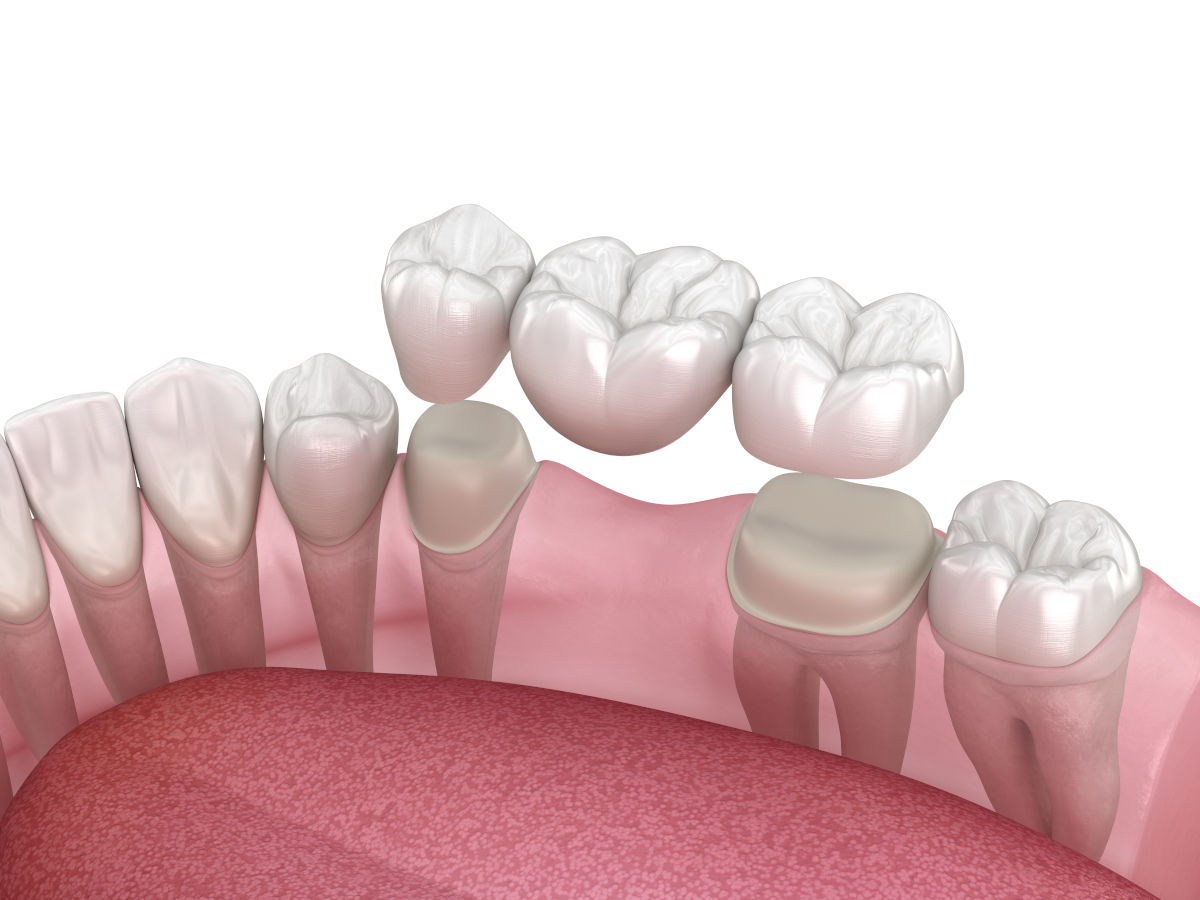
A dental bridge literally "bridges" the gap created by one or more missing teeth. It consists of two or more dental crowns placed on the teeth flanking the gap (called abutment teeth) with a false tooth or teeth (called pontics) suspended between them. The entire unit is cemented as one piece, creating a fixed restoration that stays in your mouth permanently -- you do not remove it for cleaning like a denture.
Bridges have been used in dentistry for over a century, and modern materials have dramatically improved their strength, aesthetics, and longevity. The American College of Prosthodontists estimates that approximately 178 million Americans are missing at least one tooth, and about 15% of those patients have bridges as their replacement. While implants have gained significant market share over the past two decades, bridges remain the preferred choice for many patients due to their speed, lower cost, and non-surgical nature.
Types of Dental Bridges
There are four main types of dental bridges, each suited to different clinical situations. Your dentist will recommend the type that best fits your anatomy, bite, and aesthetic goals.
| Bridge Type | How It Works | Best For | NYC Cost (2026) |
|---|---|---|---|
| Traditional | Crowns on both adjacent teeth with pontic(s) between | Most cases; 1-3 missing teeth | $2,500-$6,000 |
| Cantilever | Crown on only one adjacent tooth supports the pontic | Areas with low bite force; one-sided support only | $2,000-$4,500 |
| Maryland (resin-bonded) | Metal or ceramic wings bonded to backs of adjacent teeth | Front teeth; minimal prep needed | $1,800-$3,500 |
| Implant-supported | Bridge anchored by dental implants instead of natural teeth | Multiple missing teeth; no healthy abutments available | $5,000-$15,000+ |
Traditional Dental Bridge
The traditional bridge is the most common type, accounting for roughly 70% of all bridges placed. It requires preparing (shaving down) the teeth on both sides of the gap to accept crowns. These abutment crowns are connected to the pontic, forming a solid three-unit (or more) restoration. Traditional bridges work well when the adjacent teeth are already compromised -- for example, if they have large fillings or existing crowns that need replacement anyway.
Cantilever Bridge
A cantilever bridge is supported by a crown on only one side of the missing tooth. This design is used when there is only one suitable adjacent tooth available or when the dentist wants to preserve a healthy tooth on the other side. Because the pontic is cantilevered (supported from one end), this type generates leverage forces that can stress the abutment tooth. For this reason, cantilever bridges are generally limited to areas with lower bite forces, such as front teeth.
Maryland Bridge (Resin-Bonded)
Maryland bridges use metal or porcelain "wings" that are bonded to the lingual (tongue) side of the adjacent teeth with resin cement. The major advantage is that the abutment teeth require minimal or no preparation -- preserving healthy tooth structure. The trade-off is that the bond can debond over time, especially under heavy bite forces. Maryland bridges are most commonly used for missing front teeth in patients with healthy, intact adjacent teeth. Success rates for anterior Maryland bridges are approximately 87-93% at 10 years.
"For a young patient missing a single front tooth with two perfect adjacent teeth, a Maryland bridge can be a brilliant conservative option. You preserve tooth structure while delivering an excellent aesthetic result. The key is proper case selection and meticulous bonding technique."
Implant-Supported Bridge
When multiple adjacent teeth are missing, an implant-supported bridge uses two or more dental implants as anchors instead of natural teeth. This is the most durable and bone-preserving option but also the most expensive and time-intensive, requiring surgery and a healing period of 3-6 months before the final bridge is placed. For patients missing three or more consecutive teeth, an implant-supported bridge is often more cost-effective than placing individual implants for each tooth. See our dental implant cost guide for detailed pricing.
The Dental Bridge Procedure
A traditional dental bridge typically requires two appointments spread over two to three weeks. Here is what to expect at each stage.
First Appointment: Preparation (60-90 minutes)
After administering local anesthesia, the dentist prepares the abutment teeth by removing a layer of enamel (approximately 1.5-2mm) to create space for the crowns. If either abutment tooth has decay, it is removed and a core buildup is placed. Digital or traditional impressions are taken of the prepared teeth, the opposing arch, and your bite registration. These records are sent to a dental laboratory where a master technician fabricates the bridge. A temporary acrylic bridge is placed to protect the prepared teeth and maintain aesthetics during the lab phase.
Second Appointment: Try-In and Cementation (30-60 minutes)
The temporary bridge is removed, and the permanent bridge is tried in. The dentist checks the fit (margins, contacts, and seating), the bite (occlusion), and the color match. Minor adjustments are made chairside. Once everything is verified, the bridge is permanently cemented. Some dentists prefer to temporarily cement the bridge for 2-4 weeks first, allowing the patient to test-drive it before final cementation.
Warning: If your temporary bridge falls off or cracks before your second appointment, call your dentist right away. The prepared teeth can shift without the temporary in place, potentially affecting the fit of the final bridge. In the meantime, you can temporarily reattach it with denture adhesive (available at any pharmacy) until your emergency visit.
Dental Bridge Cost in NYC (2026)
Bridge costs in New York City reflect the high overhead of urban dental practice and the quality of dental labs serving the metro area. The total cost depends on the number of units (teeth) in the bridge, the material, and the provider's location and expertise.
| Bridge Type / Material | National Average (3-unit) | NYC Average (3-unit) |
|---|---|---|
| PFM traditional bridge | $2,000-$4,000 | $2,500-$5,000 |
| All-ceramic traditional bridge | $2,500-$4,500 | $3,000-$5,500 |
| Zirconia traditional bridge | $3,000-$5,000 | $3,500-$6,000 |
| Maryland bridge | $1,500-$2,800 | $1,800-$3,500 |
| Cantilever bridge | $1,800-$3,500 | $2,000-$4,500 |
| Implant-supported bridge (2 implants + 3 crowns) | $4,000-$12,000 | $5,000-$15,000 |
Additional costs may include X-rays ($25-$250), core buildups on abutment teeth ($300-$500 each), and temporary bridges ($200-$400). Practices in Manhattan's Midtown or Financial District tend to charge at the upper end of these ranges, while offices in Washington Heights, Astoria (Queens), or Bay Ridge (Brooklyn) often offer more competitive pricing.
"When patients ask me about the cost difference between a bridge and implants, I remind them to think in terms of lifetime value. A bridge may cost less today, but if it lasts 12 years and then needs replacement, the cumulative cost over 25 years can approach or exceed the one-time cost of an implant that lasts a lifetime."
Dental Bridges vs Dental Implants
The bridge vs implant decision is one of the most common questions patients face when replacing missing teeth. Both are excellent options, but they differ in important ways.
| Factor | Dental Bridge | Dental Implant |
|---|---|---|
| Treatment time | 2-3 weeks | 3-6 months |
| Surgery required | No | Yes |
| Adjacent teeth affected | Yes (requires preparation) | No |
| Bone preservation | No (bone loss under pontic) | Yes (stimulates bone) |
| Average lifespan | 10-15 years | 20-30+ years |
| NYC cost (single tooth) | $2,500-$6,000 | $3,500-$6,500 |
| Insurance coverage | 50% (major procedure) | Varies (often limited) |
A bridge is often the better choice when the adjacent teeth already need crowns, when the patient cannot undergo surgery due to medical conditions, when a faster solution is needed, or when budget is a primary concern. An implant is typically preferred when the adjacent teeth are healthy and intact, when bone preservation is a priority, and when the patient wants the longest-lasting option.
Pros and Cons of Dental Bridges
Advantages of Dental Bridges
- • Non-surgical procedure with no recovery downtime
- • Completed in just 2 visits over 2-3 weeks
- • Lower upfront cost than implants
- • Excellent aesthetics with modern ceramic materials
- • Restores chewing function and prevents teeth from shifting
- • Well-covered by most dental insurance plans
- • Proven long track record -- 10-20+ year lifespans common
Limitations to Consider: Bridges require shaving down healthy adjacent teeth, which is irreversible. The bone beneath the pontic gradually resorbs over time since there is no root to stimulate it. Bridges are also harder to clean under the pontic area, requiring floss threaders, super floss, or a water flosser. If one abutment tooth develops a problem (decay, fracture, or root canal failure), the entire bridge may need to be replaced.
Caring for Your Dental Bridge
Proper maintenance is the single most important factor in extending your bridge's lifespan. The most vulnerable area is the junction between the crown margins and the natural tooth structure, where bacterial plaque can cause recurrent decay.
Daily hygiene: Brush twice daily with fluoride toothpaste, paying special attention to the gumline around the abutment crowns. Use a floss threader or super floss to clean under the pontic every day -- this area traps food and plaque that a regular toothbrush cannot reach. A water flosser (like a Waterpik) set to medium pressure is an excellent supplement, especially for patients who find threading floss difficult.
Professional cleanings: Visit your dentist every six months for professional cleaning and examination. Your hygienist will use specialized instruments to clean around and under the bridge. Periodic X-rays (typically once a year) help detect any early decay at the crown margins that is not visible to the eye.
Protective measures: If you grind your teeth at night, a custom night guard ($400-$800 in NYC) protects both your bridge and your natural teeth from excessive wear. Avoid using your bridge to bite into extremely hard objects, and never use your teeth as tools.
Insurance and Payment Options for Bridges
Dental bridges are classified as a major restorative procedure by most insurance plans. Here is how typical coverage works in 2026:
PPO plans: Generally cover 50% of the UCR (usual, customary, and reasonable) fee after your annual deductible. For a $4,000 bridge, your plan might pay $2,000 if the UCR aligns with the full fee, leaving you with a $2,000 copay. HMO/DHMO plans: Offer fixed copays that can be lower than PPO out-of-pocket costs, but you are limited to in-network providers. Discount plans: Not insurance, but they offer 15-30% off retail fees at participating dentists.
FSA/HSA: Dental bridges are qualified expenses under both Flexible Spending Accounts and Health Savings Accounts, allowing you to pay with pre-tax dollars. Financing: CareCredit and Lending Club offer 0% APR for 6-18 months at many NYC dental offices. In-house payment plans are also common.
When to Consider Alternatives
While bridges are excellent for many patients, alternatives may be more appropriate in certain situations. If you are missing all or most teeth, a full or partial denture is more practical. If you want to avoid touching adjacent teeth entirely, a single dental implant is the gold standard. For cosmetic improvements to front teeth that are present but damaged, veneers or bonding may be better options. And if the adjacent teeth have significant periodontal disease, they may not be strong enough to support a bridge, making implants or removable prosthetics the safer choice.
Frequently Asked Questions
A well-made dental bridge typically lasts 10-15 years, and many last 20 years or more with excellent oral hygiene. Implant-supported bridges tend to have the longest lifespan at 15-25+ years. The most common reasons bridges fail are decay in the abutment teeth, cement washout, and fracture of the porcelain. Regular dental checkups every 6 months help catch problems early and extend bridge longevity.
Neither option is universally better — the right choice depends on your specific situation. Dental bridges are faster (completed in 2-3 weeks vs 3-6 months for implants), less invasive (no surgery), and cost less upfront. However, implants preserve bone, do not require altering adjacent teeth, and typically last longer. For patients with healthy adjacent teeth or those who want the longest-lasting solution, implants are often preferred. For patients who need a quick fix, cannot undergo surgery, or have budget constraints, bridges are an excellent option.
A standard 3-unit dental bridge in New York City costs $2,500 to $6,000 in 2026, depending on the material and the dentist's location. PFM bridges start around $2,500, all-ceramic bridges range from $3,000 to $4,500, and zirconia bridges cost $3,500 to $6,000. Manhattan practices typically charge 15-25% more than offices in Brooklyn, Queens, or the Bronx.
Most PPO dental insurance plans cover bridges as a major restorative procedure at 50% of the allowed amount after your deductible. However, with annual maximums typically capped at $1,500-$2,500, insurance may only cover a portion of a multi-thousand-dollar bridge. Some plans impose a waiting period of 6-12 months for major procedures. Pre-authorization is strongly recommended to avoid surprises.
Yes, once your bridge is permanently cemented and you have adjusted to it (usually within 1-2 weeks), you can eat most foods normally. Start with soft foods and gradually reintroduce harder items. Avoid extremely sticky foods like caramel and taffy, which can loosen the bridge cement. Also avoid biting directly into very hard foods like ice or hard candy with the bridge. With reasonable care, most patients report that eating with a bridge feels completely natural.
Sources
1. American College of Prosthodontists, "Facts & Figures: Missing Teeth in America," ACP, 2025.
2. Pjetursson BE, Bragger U, Lang NP, Zwahlen M, "Comparison of survival and complication rates of tooth-supported fixed dental prostheses (FDPs) and implant-supported FDPs," Clinical Oral Implants Research, 2007; 18 Suppl 3:97-113.
3. Thalji G, A Comparative Study of Fixed Dental Prostheses, Journal of Prosthodontics, 2024.
4. Mixed Evidence on Maryland Bridges, "Long-term Survival Rates of Resin-Bonded Fixed Dental Prostheses," Journal of Adhesive Dentistry, 2023.
5. American Dental Association, "Bridge and Implant Decision Guide," ADA Patient Education, 2025.
6. National Association of Dental Plans, "Annual Benefits and Coverage Report," NADP, 2025.
7. U.S. Bureau of Labor Statistics, "Consumer Price Index -- Dental Services," BLS, 2025-2026.
Need a Dental Bridge in New York City?
Connect with experienced dentists and prosthodontists offering bridges, implants, and other tooth replacement options across Manhattan, Brooklyn, and Queens.
Find a Provider in NYC