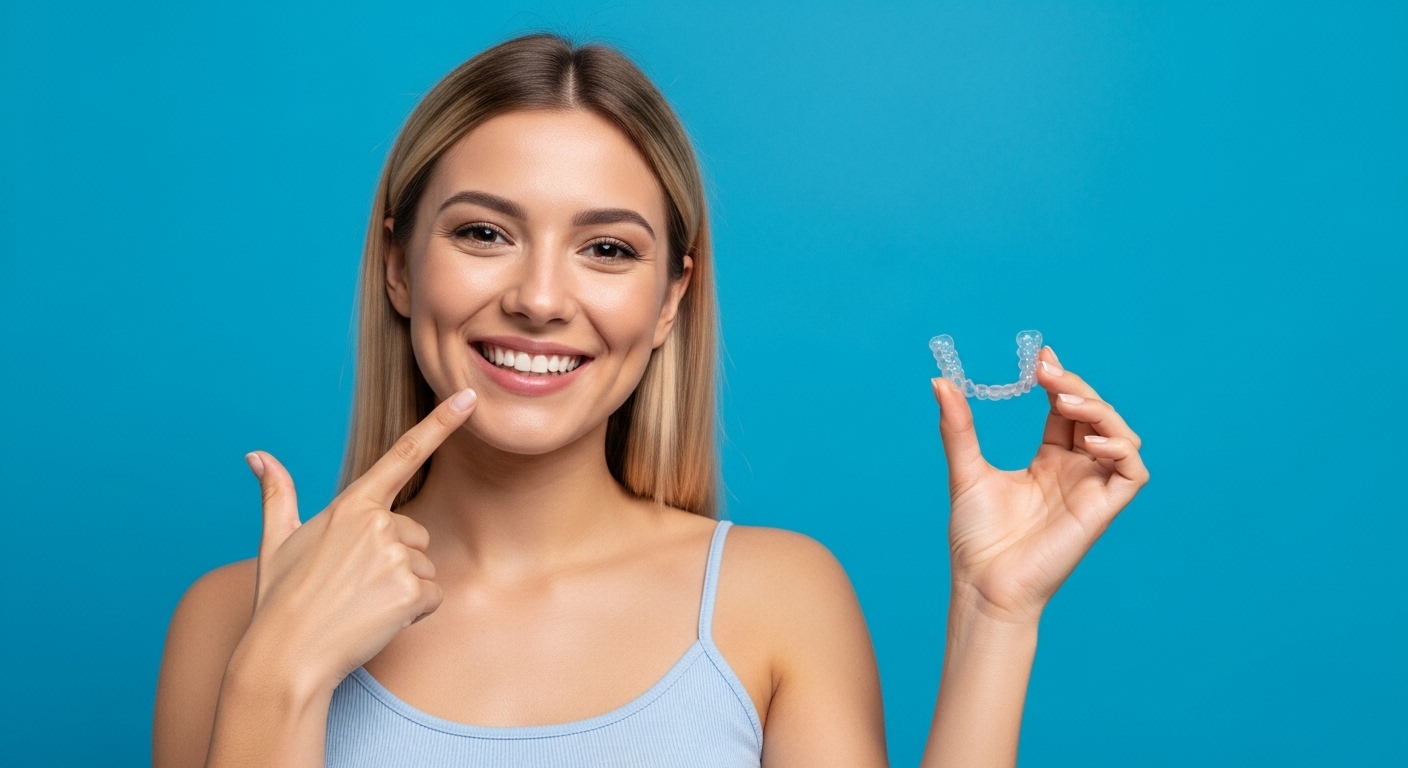
Invisalign for Adults: No Age Limit, Real Results at 30, 40, 50, and Beyond (2026)
If you have been telling yourself "I am too old for braces," it is time to reconsider. There is no upper age limit for Invisalign. Adults in their 30s, 40s, 50s, 60s, and beyond are achieving straighter, healthier smiles every day -- and doing it without anyone at the office noticing. According to the American Association of Orthodontists, 1 in 3 orthodontic patients in the United States is now an adult, and clear aligners are the driving force behind that trend.
Invisalign for Adults: Key Facts for 2026
- • Age limit: None -- healthy adults of any age qualify
- • Treatment time: 6-18 months (same as for teens)
- • Cost in NYC: $3,500 - $8,500
- • Insurance: Many PPO plans cover adult orthodontics ($1,500-$3,000)
- • Compliance advantage: Adults are more disciplined, often achieving better results
- • Discretion: Clear aligners are virtually invisible in professional settings
There Is No Age Limit for Invisalign
The idea that orthodontics is "only for kids" is decades outdated. Adult teeth respond to the same biomechanical forces as adolescent teeth. The biological process -- bone remodeling in response to sustained pressure -- works the same way at 25 as it does at 65. What matters is not your age; it is the health of your teeth, gums, and supporting bone.
If you are in your 50s or 60s and still have most of your natural teeth, that is strong evidence you have taken good care of your oral health. Invisalign can build on that foundation by improving alignment, making your teeth easier to clean, and reducing the risk of future problems like uneven enamel wear and gum recession.
A growing body of research supports adult orthodontic treatment. A 2024 study published in the American Journal of Orthodontics and Dentofacial Orthopedics found no clinically significant difference in tooth movement rates between adults aged 35-55 and younger patients when aligner compliance was equivalent.
"I treat patients in their 60s and 70s regularly. As long as the periodontium is healthy, age is simply not a barrier. If anything, my adult patients are my most motivated -- they have been waiting years or decades for this, and they follow every instruction to the letter."
Why Adults Choose Invisalign Over Other Options
Adults seek orthodontic treatment for a wide range of reasons, and they overwhelmingly prefer Invisalign over traditional braces. Here are the most common motivations:
| Reason for Seeking Treatment | Estimated % of Adult Patients |
|---|---|
| Teeth shifted after childhood braces (relapse) | 35-40% |
| Never had orthodontics as a child | 25-30% |
| Professional or social confidence | 15-20% |
| Bite issues causing jaw pain, TMJ, or headaches | 10-15% |
| Recommended by dentist to improve oral health | 5-10% |
Discretion in the Workplace
For many professionals in Manhattan, Brooklyn, and Queens, the idea of wearing metal braces to client meetings or on camera is a nonstarter. Invisalign aligners are made from Align Technology's patented SmartTrack material, a medical-grade thermoplastic that is virtually invisible when worn. Many patients report going through their entire treatment without a single colleague noticing.
Better Compliance, Better Results
Adults consistently outperform teenagers in one critical metric: wear time compliance. Invisalign requires 20 to 22 hours of daily wear to work effectively. Teens are notorious for leaving aligners in their lunch tray or forgetting to put them back in after a snack. Adults, who are investing their own money and are motivated by professional goals, rarely make these mistakes. The result is that adult treatments often finish on schedule or even ahead of schedule.
Flexibility for Busy Lifestyles
Unlike braces, Invisalign aligners are removable. You can take them out for an important presentation, a date, a wedding toast, or a meal with clients. You eat whatever you want, brush and floss normally, and snap the aligners back in. For adults juggling careers, families, and social obligations, this flexibility is a major advantage.
Why Teeth Shift After Childhood Braces
This is the single most common scenario in adult Invisalign treatment: you had braces as a teenager, your teeth were perfectly straight on the day the braces came off, and then -- over years or decades -- your teeth gradually shifted back. You are not alone. The AAO estimates that post-orthodontic relapse affects the majority of patients who do not wear retainers consistently.
Several factors contribute to this shift:
- Retainer non-compliance: Retainers are meant to be worn for life (at least nightly). Most teens stop wearing them within a few years of finishing treatment.
- Natural aging: The lower front teeth crowd naturally with age due to a phenomenon called "late lower incisor crowding," driven by forward jaw growth that continues into your 30s and 40s.
- Wisdom teeth: While the direct impact of wisdom teeth on crowding is debated, their eruption can contribute to pressure in the arch.
- Bruxism: Teeth grinding and clenching exert forces that push teeth out of alignment over time.
- Periodontal changes: As gum and bone tissue change with age, the support structure for teeth shifts slightly, allowing movement.
The good news is that relapse cases are often simpler to treat than the original malocclusion. Because the teeth have been moved once before, the bone tends to remodel more readily. Many relapse patients qualify for Invisalign Lite or Moderate tiers rather than Comprehensive, resulting in shorter treatment times (4-12 months) and lower costs.
Special Considerations for Adult Patients
While Invisalign works beautifully for adults, there are a few clinical factors your orthodontist will evaluate that are less common in younger patients:
| Consideration | What It Means for Treatment |
|---|---|
| Periodontal (gum) health | Active gum disease must be treated and stabilized before orthodontics. Moving teeth through inflamed tissue can accelerate bone loss. |
| Bone density | Adults with osteoporosis or long-term bisphosphonate use need careful evaluation, though most still qualify for treatment. |
| Existing dental restorations | Crowns and veneers can be worked around; dental implants cannot be moved and must be planned around. |
| Root resorption history | If previous orthodontic treatment caused root shortening, your orthodontist will use lighter forces and monitor closely. |
| Missing teeth | Invisalign can close gaps from missing teeth or create ideal spacing for future implants or bridges. |
| TMJ disorders | Bite correction with Invisalign often improves TMJ symptoms, but severe TMD may require co-management with a specialist. |
Warning: If you have been diagnosed with active periodontal disease, do not start Invisalign until your periodontist confirms the condition is stable. Moving teeth through compromised bone can cause irreversible damage. A reputable orthodontist will require a periodontal clearance letter before beginning treatment.
Invisalign with Crowns, Veneers, Bridges, and Implants
Most adults over 40 have at least some dental restorations. Here is how Invisalign interacts with each type:
- Porcelain crowns: Invisalign works well with crowns. SmartForce attachments can be bonded to porcelain using specialized adhesives (silane coupling agents). The bond is slightly weaker than on natural enamel, so attachments may need occasional rebonding.
- Veneers: Aligners can move veneered teeth, but attachment adhesion to porcelain veneer surfaces is less reliable. Your orthodontist may position attachments on adjacent natural teeth instead.
- Bridges: Teeth connected by a bridge are splinted together and move as a unit. If individual tooth movement is needed, the bridge may need to be sectioned first. This requires coordination between your orthodontist and general dentist.
- Dental implants: Implants are osseointegrated (fused to bone) and cannot be moved. Treatment must be planned around them. In some cases, Invisalign can move natural teeth into better positions relative to existing implants.
- Fillings: Standard composite or amalgam fillings pose no issue whatsoever for Invisalign treatment.
"The presence of dental work is not a disqualification -- it is just a variable we plan around. I have treated hundreds of adult patients with extensive restorations. The key is a thorough initial workup and close communication with the patient's restorative dentist."
What to Expect During Adult Invisalign Treatment
The adult Invisalign process mirrors the standard workflow, with a few age-specific nuances:
- Comprehensive evaluation: Your orthodontist takes digital X-rays, a panoramic radiograph, intraoral photos, and 3D iTero scans. For adults, a periodontal assessment is performed to ensure gum and bone health.
- ClinCheck treatment simulation: You see a 3D animation of how your teeth will move, stage by stage, from start to finish. This is your opportunity to ask questions and understand the plan before committing.
- Aligner delivery: Custom aligners arrive 2-4 weeks after scanning. At this appointment, your orthodontist bonds attachments and fits your first set of trays.
- Active treatment: You switch to a new set of aligners every 1-2 weeks, wearing them 20-22 hours daily. Remove only for eating, drinking anything other than water, and oral hygiene.
- Progress checks: Visit your orthodontist every 6-10 weeks for monitoring, attachment adjustments, and IPR if needed.
- Refinements: If teeth have not fully reached their target positions, a new scan is taken and additional aligners are made. Refinements are included in most Comprehensive plans.
- Retention: Once treatment is complete, you transition to retainers. For adults, nightly retainer wear is recommended for life to prevent relapse. Vivera retainers cost $400-$600 for a set of four.
Adult Treatment Timeline at a Glance
- • Consultation to scan: 1-2 visits over 1-2 weeks
- • Scan to first aligner: 2-4 weeks (manufacturing time)
- • Active treatment: 6-18 months (case-dependent)
- • Refinements: 2-4 months if needed
- • Retention: Nightly retainer wear, indefinitely
Cost and Insurance for Adult Invisalign
The good news: Invisalign costs the same for adults as for any other age group. The fee is determined by case complexity, not by patient age. Here is a quick pricing overview for NYC in 2026:
| Cost Category | Typical Amount |
|---|---|
| Invisalign (NYC, all tiers) | $3,500 - $8,500 |
| PPO insurance benefit | $1,500 - $3,000 lifetime maximum |
| HSA/FSA tax savings | 20-35% of out-of-pocket (varies by tax bracket) |
| In-house financing | 0% interest for 12-24 months at most practices |
| Vivera retainers (after treatment) | $400 - $600 for set of 4 |
Important for adults: Some dental insurance plans impose an age limit on orthodontic benefits, covering only dependents under 19. This is becoming less common as the adult orthodontic market grows, but it is worth verifying before you start treatment. If your employer plan excludes adult orthodontics, consider purchasing a supplemental dental plan during open enrollment that includes orthodontic coverage.
For a full breakdown of pricing, financing, and money-saving strategies, see our Invisalign Cost and Insurance Guide.
How Adult Treatment Differs from Teen Treatment
While the aligners themselves are identical, the clinical approach and patient experience differ in several ways:
| Factor | Adults | Teens |
|---|---|---|
| Jaw growth | Complete -- treatment planning is more predictable | Still developing -- growth can help or complicate treatment |
| Compliance | Excellent -- self-motivated, financially invested | Variable -- compliance indicators built into teen aligners |
| Dental restorations | Common (crowns, veneers, implants) -- requires planning around | Rare |
| Periodontal risk | Higher -- gum assessment required before starting | Low in most cases |
| Treatment speed | Comparable to teens when compliance is equal | May benefit from active growth |
| Retention | Nightly retainer for life -- critical to prevent re-relapse | Same recommendation, though compliance drops in young adulthood |
The Long-Term Health Benefits of Straightening Teeth as an Adult
Invisalign for adults is not just about appearance. Properly aligned teeth deliver measurable health benefits that accumulate over the decades of life remaining:
- Easier cleaning: Crooked or overlapping teeth trap plaque and make flossing difficult. Straight teeth are dramatically easier to clean, reducing your lifetime risk of cavities and periodontal disease.
- Reduced enamel wear: Misaligned bites cause teeth to grind against each other unevenly. Over decades, this leads to cracked enamel, chipped edges, and the need for expensive restorations.
- TMJ symptom relief: Many adults live with chronic jaw pain, headaches, or ear ringing caused by bite misalignment. Correcting the bite often alleviates or eliminates these symptoms.
- Gum health: Crowded teeth create deep pockets where bacteria thrive, increasing periodontal disease risk. Alignment allows the gum tissue to fit more snugly around each tooth.
- Preserved bone: Proper occlusion distributes chewing forces evenly, which helps maintain jawbone density as you age.
Warning: Adults who complete Invisalign and then stop wearing their retainers will experience relapse -- possibly within months. If you invested time and money in treatment, protect the results by committing to nightly retainer wear. This is a non-negotiable part of adult orthodontic care.
Common Real-World Scenarios for Adult Patients in NYC
To illustrate how adult treatment works in practice, here are three composite patient profiles based on typical cases seen by NYC orthodontists:
Scenario 1: Post-Braces Relapse (Age 34)
A financial analyst in Midtown had braces at age 14, stopped wearing her retainer in college, and noticed her lower front teeth gradually crowding over the past decade. She consulted an orthodontist, who prescribed Invisalign Lite (14 aligners). Treatment time: 7 months. Cost: $4,200, of which insurance covered $2,000. She paid the remaining $2,200 through her FSA.
Scenario 2: Never Had Orthodontics (Age 52)
A Brooklyn-based teacher always wanted straighter teeth but grew up without access to orthodontic care. She had mild crowding on top and a moderate crossbite. Her orthodontist recommended Invisalign Comprehensive with 28 aligners, plus elastics for bite correction. Treatment time: 14 months. Cost: $6,500, financed at 0% interest over 24 months ($270/month).
Scenario 3: Pre-Restorative Alignment (Age 61)
A retired executive in Queens needed two implants and a bridge but had spacing and tipping issues that would compromise the restorative work. His general dentist referred him to an orthodontist for pre-prosthetic alignment with Invisalign Moderate (20 aligners). By straightening the remaining teeth first, the restorative dentist was able to place the implants in ideal positions. Treatment time: 10 months. The orthodontic investment saved thousands in future restorative costs by creating a better foundation.
Frequently Asked Questions
No. There is no upper age limit for Invisalign. Adults in their 40s, 50s, 60s, and even 70s routinely undergo successful treatment. The only requirements are healthy teeth, adequate bone support, and gums free of active periodontal disease. Your orthodontist will evaluate these factors at your first consultation.
Yes. Adult teeth move through bone the same way adolescent teeth do. In fact, many orthodontists report that adults achieve more predictable outcomes because they tend to be more disciplined about wearing aligners 20 to 22 hours per day and following care instructions. The main difference is that jaw growth is complete in adults, which can actually simplify treatment planning.
Most adult cases take 6 to 18 months, comparable to treatment times for younger patients. Simple relapse cases where teeth shifted after childhood braces may be complete in as little as 4 to 6 months. Complex bite corrections can take 18 to 24 months. Your orthodontist will provide a personalized timeline based on your 3D ClinCheck plan.
In most cases, yes. Invisalign can work around crowns, veneers, and bridges. Attachments can be bonded to porcelain crowns with special adhesives. The one exception is dental implants: because implants are fused to the jawbone, they cannot be moved. Your orthodontist will plan treatment around any implants in your mouth.
Minimally. Invisalign aligners are made of clear SmartTrack plastic and are virtually invisible at conversational distance. Many NYC professionals in law, finance, media, and healthcare wear Invisalign throughout treatment without colleagues ever noticing. You can also remove aligners for important presentations or meetings.
Sources
1. American Association of Orthodontists (AAO) — "Adults and Orthodontics" Patient Survey, 2024
2. American Journal of Orthodontics and Dentofacial Orthopedics — "Tooth Movement Rates in Adults vs. Adolescents with Clear Aligners," 2024
3. Angle Orthodontist — "Compliance and Outcome in Adult Clear Aligner Therapy," 2023
4. Journal of Clinical Orthodontics — "Managing Complex Adult Cases with Invisalign: A Retrospective Analysis," 2023
5. British Journal of Orthodontics — "Post-Orthodontic Relapse Patterns in Adult Patients: A 10-Year Follow-Up," 2022
6. Align Technology — Invisalign Outcomes Data for Adult Patients, 2025
7. American Dental Association (ADA) — "Interdisciplinary Treatment Planning for the Adult Orthodontic Patient," 2024
It Is Never Too Late to Straighten Your Smile
Find a certified Invisalign provider in your NYC neighborhood and schedule a consultation to see what treatment could look like for you.
Find a Provider in NYC