Underbite Correction in 2026: Braces, Surgery & Non-Surgical Options
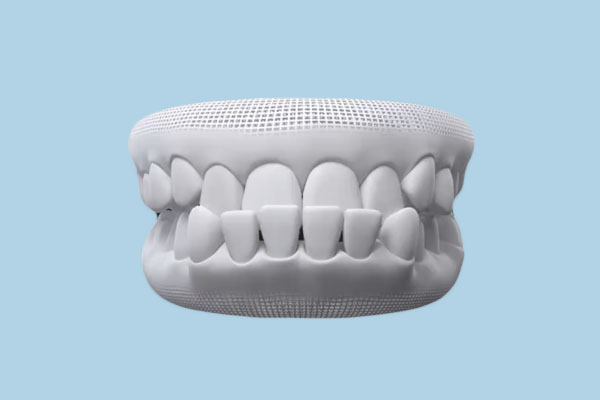
An underbite -- where the lower front teeth sit in front of the upper front teeth -- affects approximately 5-10% of the U.S. population and is classified as a Class III malocclusion in orthodontic terminology. While less common than overbites, underbites are often more complex to treat because they frequently involve a skeletal component: the lower jaw is too large, the upper jaw is too small, or both. In 2026, NYC patients have access to advanced non-surgical options, refined surgical techniques, and early intervention protocols that can significantly reduce treatment complexity. This guide covers every approach, from braces and Invisalign to orthognathic surgery.
Key Facts: Underbite Correction in 2026
- • Prevalence: 5-10% of the U.S. population
- • NYC treatment cost: $4,000 - $9,000 (non-surgical); $25,000 - $50,000 (surgical)
- • Treatment time: 12-24 months (non-surgical); 2-3 years (surgical)
- • Best early intervention age: 7-10 years
- • Surgery needed: About 30-40% of underbite cases require surgical correction
- • Insurance: Dental covers orthodontics; medical may cover jaw surgery
What Is an Underbite?
A normal bite has the upper front teeth sitting 1-3mm in front of the lower front teeth (positive overjet). An underbite reverses this relationship -- the lower teeth protrude beyond the upper teeth, creating a negative overjet. In clinical terms, this is called a Class III malocclusion based on Angle's classification system, where the lower first molar sits forward of its normal position relative to the upper first molar.
Underbites fall into two categories:
- Dental underbite: The jaw bones are relatively normal in size and position, but the lower front teeth are angled forward and/or the upper front teeth are angled backward. This accounts for roughly 30-40% of underbite cases and is generally correctable with orthodontics alone.
- Skeletal underbite: The lower jaw (mandible) is genuinely too large, the upper jaw (maxilla) is too small, or there is a combination of both. This accounts for 60-70% of underbite cases and often requires surgical intervention for adults.
What Causes an Underbite?
| Cause | Mechanism | Percentage of Cases | Treatability |
|---|---|---|---|
| Genetics (mandibular prognathism) | Inherited large lower jaw or small upper jaw | 60-70% | Surgery often needed for severe cases |
| Maxillary deficiency | Underdeveloped upper jaw fails to grow forward sufficiently | 20-30% | Palatal expansion + facemask (children); surgery (adults) |
| Childhood habits | Tongue thrusting, mouth breathing affecting jaw development | 10-15% | Habit correction + orthodontics |
| Tooth position (dental) | Lower incisors flared forward; upper incisors tipped backward | 30-40% | Braces or Invisalign with elastics |
| Missing upper teeth | Loss of upper teeth allows lower arch to shift forward | 5-10% | Orthodontics + dental implants or bridges |
"Underbites are heavily influenced by genetics. The Hapsburg jaw is a famous historical example of hereditary mandibular prognathism. Today, we can identify the growth pattern early and intervene at age 7-8 with a protraction facemask, which in many cases reduces the severity enough that jaw surgery is no longer necessary by adulthood."
Non-Surgical Underbite Treatments
Braces with Class III Elastics
For mild to moderate dental underbites, traditional braces combined with Class III elastics (rubber bands from the lower canines to the upper molars) can pull the lower teeth back and the upper teeth forward. This approach is effective when the jaw discrepancy is less than 3-4mm and the underbite is primarily dental in nature.
- NYC cost: $4,500 - $8,000
- Treatment time: 18-24 months
- Best for: Dental underbites with minimal skeletal component
Invisalign for Underbite
Invisalign can address mild underbites by tilting the upper incisors forward and the lower incisors backward, creating a positive overjet. For improved results, Invisalign is often combined with Class III button elastics -- small buttons bonded to the teeth with rubber bands attached.
- NYC cost: $4,500 - $8,500
- Treatment time: 12-20 months
- Best for: Mild dental underbites in adults who prefer clear aligners
Carriere Motion Appliance
The Carriere Motion 3D appliance is a non-surgical option that has gained popularity for Class III correction. It uses a bar bonded to the lower canine and first molar to distalize (push back) the entire lower arch before transitioning to braces or Invisalign for final alignment.
- NYC cost: $5,000 - $9,000 (total treatment including follow-up braces/aligners)
- Treatment time: 3-6 months for the Carriere phase, then 12-18 months for braces/aligners
- Best for: Moderate dental underbites in teens and adults
Facemask Therapy (for Children)
For children ages 7-10 with a maxillary deficiency, a reverse-pull facemask (protraction facemask) combined with a palatal expander is the gold standard early treatment. The facemask pulls the upper jaw forward during the growth period, potentially eliminating the need for surgery later.
- NYC cost: $3,000 - $6,000
- Treatment time: 12-18 months of wear (10-14 hours/day, primarily at night)
- Success rate: 70-80% when started before age 10
Surgical Underbite Correction
For severe skeletal underbites in adults, orthognathic surgery is the definitive treatment. The most common procedures for underbite correction include:
- Bilateral Sagittal Split Osteotomy (BSSO): Sets the lower jaw back to a normal position. Most commonly performed for mandibular prognathism.
- Le Fort I Osteotomy: Advances the upper jaw forward when maxillary deficiency is the primary cause.
- Bimaxillary surgery: Repositions both jaws for optimal results when both contribute to the underbite. This is the most common approach for severe cases.
Warning: Underbite surgery should only be performed after jaw growth is complete -- typically after age 16-17 for females and 18-19 for males. Operating before growth completion can result in relapse as the jaw continues to grow. NYC oral surgeons typically confirm growth completion with serial cephalometric X-rays taken 6-12 months apart.
Treatment Comparison: Underbite Correction Options
| Treatment | NYC Cost | Duration | Underbite Severity | Age Group |
|---|---|---|---|---|
| Invisalign + elastics | $4,500 - $8,500 | 12-20 months | Mild dental | Teens / Adults |
| Braces + Class III elastics | $4,500 - $8,000 | 18-24 months | Mild to moderate dental | All ages |
| Carriere Motion + braces | $5,000 - $9,000 | 15-24 months | Moderate dental | Teens / Adults |
| Facemask + expander | $3,000 - $6,000 | 12-18 months | Mild to moderate skeletal | Children (7-10) |
| Orthognathic surgery + braces | $25,000 - $50,000 | 2-3 years | Moderate to severe skeletal | Adults (18+) |
What to Expect After Underbite Surgery
Orthognathic surgery for underbite correction is a significant procedure performed under general anesthesia in a hospital setting. NYC hospitals with specialized oral and maxillofacial surgery departments include NYU Langone, Mount Sinai, Columbia, and Weill Cornell. Here is the typical recovery timeline:
- Week 1: Significant swelling (peaks at days 2-3), jaw wired or banded shut, liquid diet only, pain managed with prescription medication.
- Weeks 2-4: Swelling gradually decreases, transition to a soft/pureed diet, light activity permitted. Most patients take 2-3 weeks off work.
- Weeks 4-8: Return to a soft diet, gradual jaw opening exercises, numbness begins to resolve (some areas may remain numb for 3-12 months).
- Months 2-6: Progressive return to normal diet and activity, post-surgical orthodontic adjustments begin, final bite refinement.
- Months 6-12: Orthodontic finishing, debonding, retainer placement. Full bone healing occurs over 12 months.
"The biggest misconception about underbite surgery is the recovery time. Most of my patients are back to desk work within two weeks and eating soft foods by week four. The days of having your jaw wired shut for six weeks are largely behind us -- modern rigid fixation with titanium plates allows much earlier jaw mobilization and faster recovery."
Insurance Coverage and Financing in NYC
Underbite treatment can be expensive, but multiple funding sources can significantly reduce out-of-pocket costs:
- Dental insurance: PPO plans typically cover $1,500-$3,000 of orthodontic treatment. Check whether your plan has an age limit -- some only cover orthodontics for patients under 19.
- Medical insurance: Jaw surgery is frequently covered when deemed medically necessary. Documentation of functional impairments (difficulty chewing, speech issues, TMJ pain, sleep apnea) strengthens your case. Pre-authorization is required.
- FSA/HSA: Both orthodontic and surgical costs qualify. NYC residents in higher tax brackets can save 30-40% by paying with pre-tax dollars.
- Payment plans: Most NYC orthodontists offer 0% interest financing. Monthly payments of $150-$400 over 12-24 months are typical.
- Dental schools: NYU College of Dentistry and Columbia College of Dental Medicine offer orthodontic treatment at 30-50% below private practice rates, supervised by faculty orthodontists.
How to Maximize Insurance for Underbite Surgery
- • Have your orthodontist and oral surgeon submit a detailed letter of medical necessity
- • Document all functional impairments: chewing difficulty, speech problems, jaw pain, airway issues
- • If your medical insurance denies the claim, appeal with additional documentation -- initial denials are overturned in roughly 40-60% of cases
- • Use dental insurance for orthodontics and medical insurance for surgery to maximize total coverage
- • Time your surgery to maximize annual medical insurance benefits (consider deductible timing)
Frequently Asked Questions
Mild to moderate underbites caused primarily by tooth position rather than jaw discrepancy can often be corrected without surgery using braces with Class III elastics, Invisalign, or Carriere Motion appliances. However, severe skeletal underbites where the lower jaw is significantly larger than the upper jaw typically require orthognathic surgery for a stable correction. A board-certified orthodontist can determine whether your case is dental or skeletal with a cephalometric X-ray analysis.
Orthognathic surgery for underbite correction in New York City typically costs $20,000 to $50,000 for the surgical procedure, plus $5,000 to $8,000 for pre and post surgical orthodontic treatment. Medical insurance often covers 60 to 80 percent of the surgical cost when it is deemed medically necessary. With insurance, out-of-pocket surgical costs may be $5,000 to $15,000. The orthodontic component is usually covered separately by dental insurance up to the plan maximum.
The American Association of Orthodontists recommends evaluating underbites by age 7. Early treatment between ages 7 and 10 with palatal expanders or facemask therapy can modify growth and potentially prevent the need for surgery later. For teens, treatment timing depends on growth completion. Adult underbites with a significant skeletal component are best treated after growth is complete, typically after age 16 for females and 18 for males, when surgical outcomes can be properly planned.
Invisalign can correct mild dental underbites where the issue is primarily tooth position rather than jaw size discrepancy. It works by tipping the upper front teeth forward and the lower front teeth backward to achieve a positive overjet. For moderate underbites, Invisalign may be combined with Class III elastics and button attachments. Severe skeletal underbites are not appropriate for Invisalign alone and require braces with surgery or other interventions.
Skeletal underbites can worsen over time, particularly during growth spurts in adolescence. The lower jaw typically grows later and longer than the upper jaw, so a mild childhood underbite may become moderate or severe by the late teens. In adults, underbites generally stabilize but may worsen slightly due to continued lower jaw growth into the mid-twenties in some individuals, along with natural tooth wear patterns that can accentuate the malocclusion.
Sources
1. Proffit WR, Fields HW, Sarver DM. "Contemporary Orthodontics." 7th Edition, Elsevier, 2024.
2. Ngan P, Moon W. "Evolution of Class III treatment in orthodontics." American Journal of Orthodontics and Dentofacial Orthopedics, 2015;148(1):22-36.
3. Mandall N, et al. "Early Class III protraction facemask treatment reduces the need for orthognathic surgery: A multi-centre randomized controlled trial." Journal of Orthodontics, 2016;43(3):164-175.
4. American Association of Orthodontists. "Underbite (Class III Malocclusion): Treatment Options." Patient Education, 2025.
5. Align Technology. "Class III Correction with Invisalign: Clinical Guide." Provider Resources, 2025.
6. Eslami S, et al. "Orthognathic surgery for Class III malocclusion: Stability and patient outcomes." International Journal of Oral and Maxillofacial Surgery, 2023;52(8):891-900.
7. Henry W. Fields, et al. "Evaluation of treatment timing for Class III malocclusion." Seminars in Orthodontics, 2022;28(1):50-62.
8. New York State Department of Health. "Oral and Maxillofacial Surgery: Patient Information Guide." Updated 2025.
Need Underbite Treatment in NYC?
Find a board-certified orthodontist who specializes in Class III malocclusion correction. Free consultations available at top NYC practices.
Find a Provider in NYC