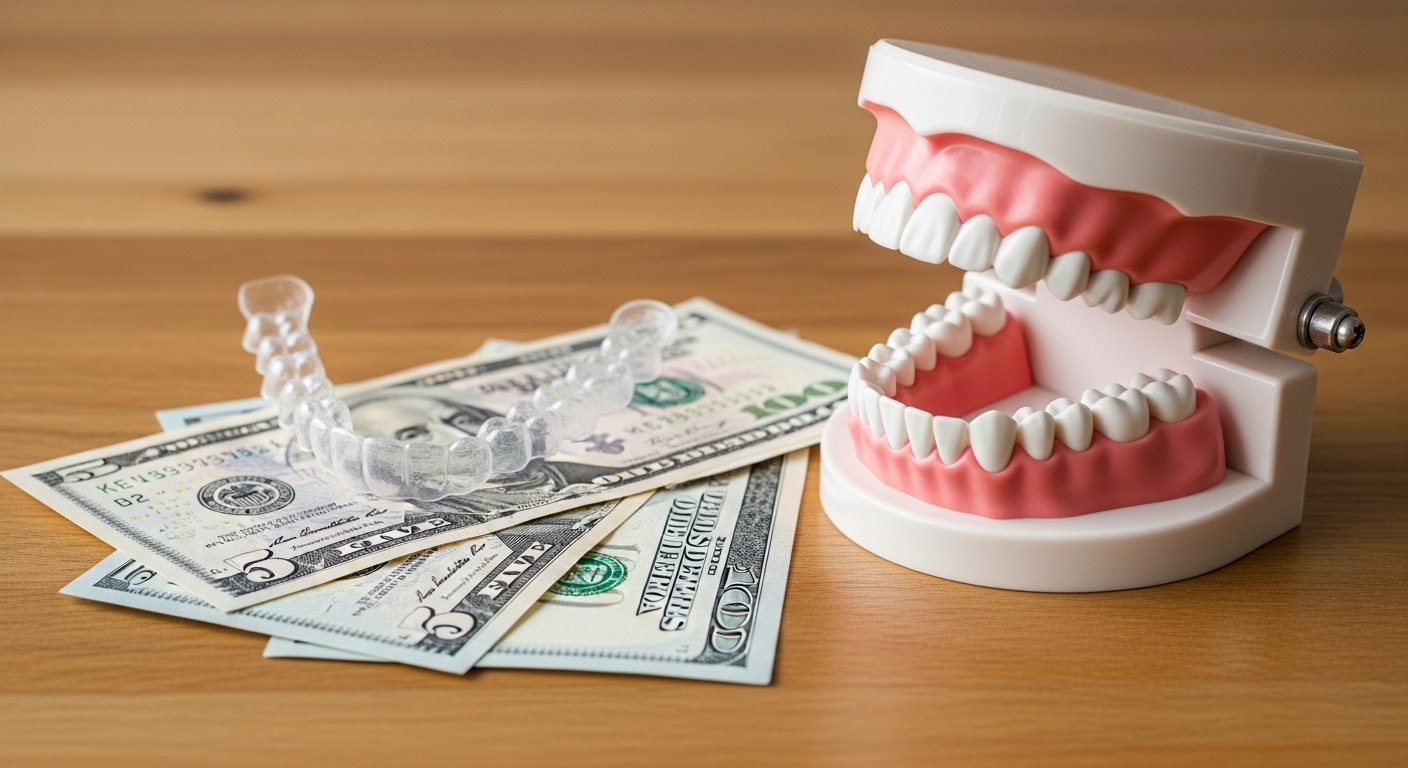
Braces Cost in NYC 2026: Prices, Insurance, and Payment Plans
Understanding the true cost of braces in New York City is critical for financial planning -- and the sticker price is only part of the picture. Between insurance benefits, FSA/HSA tax savings, payment plans, and borough-by-borough price variations, the amount you actually pay out of pocket can differ dramatically from the quoted fee. This 2026 guide breaks down every cost factor for all braces types in NYC, including strategies that can save you thousands of dollars.
Key Takeaways: Braces Cost in NYC (2026)
- Metal braces: $4,000-$8,500 (most affordable)
- Ceramic braces: $5,000-$9,500 (+$1,000-$2,000 vs metal)
- Invisalign: $4,500-$9,000 (comparable to metal for most cases)
- Lingual braces: $10,000-$14,000 (most expensive)
- Insurance: Typically covers $1,500-$3,000 lifetime benefit
- FSA/HSA: Saves 25-35% through pre-tax dollars
Braces Cost by Type in NYC
The type of braces you choose is the single biggest factor affecting cost. Each system has different manufacturing, lab, and placement requirements that drive pricing. Here is a comprehensive breakdown of what each type costs in New York City versus the national average.
| Braces Type | National Average | NYC Range | Monthly Payment* |
|---|---|---|---|
| Metal braces (traditional) | $3,000-$7,500 | $4,000-$8,500 | $150-$300 |
| Self-ligating metal (Damon) | $3,500-$8,000 | $4,500-$9,000 | $175-$325 |
| Ceramic braces | $4,000-$8,500 | $5,000-$9,500 | $200-$350 |
| Lingual braces | $8,000-$13,000 | $10,000-$14,000 | $350-$550 |
| Invisalign Comprehensive | $3,500-$8,500 | $4,500-$9,000 | $175-$325 |
| Invisalign Lite | $3,000-$5,000 | $3,500-$5,500 | $150-$250 |
*Monthly payments assume 0% interest plans over 18-24 months with a 10-20% down payment. Actual terms vary by provider.
For a detailed comparison of all these braces types beyond cost, see our comprehensive types of braces guide.
What Factors Affect Braces Cost?
The quoted fee at an orthodontic office is determined by several interrelated factors. Understanding these helps explain why two patients getting "the same" braces can be quoted very different prices.
Case Complexity
The severity of your orthodontic problem is the biggest variable. A mild case with minor crowding might cost $4,000-$5,500, while a complex case with severe crowding, a deep overbite, and jaw discrepancy could reach $8,000-$9,500 for the same type of braces. Complex cases require more appointment time, more archwire changes, possibly supplemental appliances (expanders, temporary anchorage devices), and longer overall treatment duration.
Provider Experience and Location
Orthodontists with advanced training, board certification, and extensive experience typically charge more -- and the premium is generally justified by better outcomes and fewer complications. Location within NYC also matters: a practice on Park Avenue or in Midtown Manhattan pays dramatically higher rent than one in Astoria, Queens, which is reflected in fees. Manhattan practices average 10-20% more than Brooklyn or Queens offices.
Treatment Duration
Longer treatments cost more because they require additional adjustment visits, more materials, and extended use of chair time and staff resources. A 12-month Invisalign Lite case will cost less than a 24-month comprehensive treatment, all else being equal.
"I encourage patients to think about cost per outcome, not just the lowest price. An experienced orthodontist who charges $1,000 more but finishes treatment 6 months sooner with fewer complications is often the better value in the long run. The cheapest option is rarely the most economical."
Braces Cost by NYC Borough
Where you get treatment within New York City significantly impacts the price. Here is a general guide to borough-level pricing trends for metal braces (the most commonly quoted type).
| Area | Metal Braces Range | Invisalign Range | Notes |
|---|---|---|---|
| Manhattan (Midtown/UES/UWS) | $5,500-$8,500 | $5,500-$9,000 | Highest fees, most specialists |
| Manhattan (Downtown/LES) | $5,000-$8,000 | $5,000-$8,500 | Slightly lower than Midtown |
| Brooklyn | $4,000-$7,000 | $4,500-$8,000 | Growing number of top providers |
| Queens | $4,000-$6,500 | $4,500-$7,500 | Most affordable borough |
| Bronx | $3,500-$6,500 | $4,000-$7,000 | Lower overhead, competitive pricing |
Insurance Coverage for Braces in New York
Dental insurance can offset a meaningful portion of your braces cost, but coverage varies widely between plans. Here is what NYC patients typically encounter.
PPO Dental Plans
Most dental PPO plans with orthodontic benefits provide a lifetime maximum of $1,500 to $3,000 per covered individual. This is a one-time benefit -- once used, it does not renew annually. Coverage usually applies equally to all braces types (metal, ceramic, Invisalign, and sometimes lingual). Some plans have age restrictions, covering only patients under 19, while others include adults. Co-insurance is typically 50% up to the lifetime max, meaning the plan pays 50% of the cost up to its maximum benefit.
HMO/DHMO Plans
HMO dental plans often provide orthodontic coverage at reduced rates when you use in-network providers. Benefits may be limited to specific appliance types (sometimes metal braces only). The cost savings can be significant -- some HMO plans reduce the patient's share to $2,000-$3,500 for metal braces -- but the trade-off is a smaller provider network and potentially fewer treatment options.
Medicaid Coverage in New York
New York Medicaid covers orthodontic treatment for children under 21 who meet medical necessity criteria (typically a Handicapping Labio-Lingual Deviation index score of 26 or higher). Coverage is limited to metal braces in most cases. Finding orthodontists who accept Medicaid in NYC can be challenging due to low reimbursement rates, but several practices in Brooklyn, Queens, and the Bronx participate.
Warning: Never assume your insurance covers orthodontics. Many dental plans exclude orthodontic benefits entirely, especially lower-tier plans. Always request a pre-authorization or pre-treatment estimate from your insurance company before starting treatment. Your orthodontist's billing coordinator can help submit this request.
FSA and HSA Strategies to Reduce Cost
Flexible Spending Accounts (FSA) and Health Savings Accounts (HSA) are powerful tools that NYC patients consistently underutilize. Both allow you to pay for orthodontic treatment with pre-tax dollars, which effectively reduces your cost by your marginal tax rate.
For a New York City resident in the 24% federal tax bracket, 6.85% state tax bracket, and 3.876% city tax bracket, the combined marginal rate approaches 35%. That means every $1,000 paid through an FSA or HSA saves approximately $350 in taxes. On a $6,000 orthodontic treatment, FSA/HSA use could save $2,100 compared to paying with after-tax dollars.
FSA vs HSA: Which Is Better for Braces?
- FSA: Contribute up to $3,200/year (2026). Use-it-or-lose-it. Available with any employer plan.
- HSA: Contribute up to $4,300 individual / $8,550 family (2026). Rolls over indefinitely. Requires HDHP.
- Strategy: Time your treatment start to maximize contributions across plan years
- Tip: If both spouses have FSAs, combine them to cover more of the cost
- Both HSA and FSA cover all braces types, retainers, and related orthodontic expenses
Payment Plans and Financing Options
The full cost of braces does not need to be paid upfront. The vast majority of NYC orthodontists offer financing options that make treatment accessible.
In-House Payment Plans
Most orthodontic practices offer their own payment plans with 0% interest. The typical arrangement is a 10-20% down payment ($500-$1,500) followed by monthly installments spread over the treatment duration. For an $6,000 metal braces case with $1,000 down, you might pay approximately $250/month over 20 months. There are usually no credit checks for in-house plans, making them accessible to most patients.
Third-Party Financing
CareCredit is the most widely accepted third-party healthcare financing option. Many NYC orthodontists offer CareCredit with promotional 0% APR for 12 to 24 months. After the promotional period, interest rates can reach 26-29% APR, so it is crucial to pay off the balance before the promotional period ends. LendingClub and Proceed Finance offer similar orthodontic financing with fixed monthly payments and competitive APRs.
Warning: If using CareCredit or similar promotional financing, mark your calendar for the promotional period end date. If the balance is not paid in full by that date, deferred interest on the entire original balance may be charged retroactively -- potentially adding hundreds or thousands of dollars to your cost.
Braces Cost With vs. Without Insurance in NYC (2026 Update)
The single most common question we receive is not "how much are braces" but "how much will I actually pay." The answer depends on one number: your plan's lifetime orthodontic maximum, usually $1,000 to $3,000, paid once per person and never renewed. Most NYC plans with orthodontic coverage pay 50% of the fee up to that cap, and many limit the benefit to dependents under 19. Adult coverage exists but is less common; check our guide to the best orthodontic insurance plans before you enroll.
| Scenario | Sticker price (NYC) | Your out-of-pocket |
|---|---|---|
| Metal braces, no insurance | $4,000–$8,500 | $4,000–$8,500 |
| Metal braces, PPO with $1,500 lifetime ortho max | $4,000–$8,500 | $2,500–$7,000 |
| Metal braces, PPO with $2,500 lifetime ortho max | $4,000–$8,500 | $1,500–$6,000 |
| Ceramic braces, PPO with $2,000 lifetime ortho max | $5,000–$9,500 | $3,000–$7,500 |
| Child under 21 on NY Medicaid (medically necessary only) | $4,000–$8,500 | $0 |
| Any plan + $3,300 FSA (2026 limit, pre-tax) | — | Saves roughly $800–$1,200 in taxes |
Two items routinely fall outside the quoted fee even with insurance: appliances such as a palate expander (often $1,000–$3,500 when billed separately) and replacement retainers after the first set. See our retainer cost guide for what a replacement Hawley, Essix or permanent retainer runs in NYC. Elastics, rubber bands, power chains and colored ligatures are always included.
How to Maximize Your Savings
Here is a step-by-step strategy to minimize your out-of-pocket cost for braces in NYC.
Step 1: Verify insurance benefits. Contact your dental insurer and ask specifically about orthodontic coverage, lifetime maximums, age restrictions, and in-network providers. Have your orthodontist submit a pre-authorization to confirm the benefit amount.
Step 2: Maximize FSA/HSA contributions. During your employer's open enrollment period, elect the maximum FSA contribution. If your treatment spans two plan years, you can effectively double your pre-tax contribution. For HSA users, front-load contributions early in the year.
Step 3: Get multiple consultations. Visit 2-3 orthodontists in different neighborhoods. Prices can vary by $1,000-$2,000 for the same treatment. Use our best orthodontist NYC guide and top 5 orthodontists for vetted recommendations.
Step 4: Negotiate. Some orthodontists offer a 3-5% discount for paying in full upfront. Others match competitor quotes or offer family discounts for multiple family members treated simultaneously.
Step 5: Combine strategies. Use insurance + FSA/HSA + in-house payment plan together. For example: $2,500 insurance + $3,200 FSA + $300/month payment plan = manageable out-of-pocket cost even for expensive treatments.
"I always tell patients to consider the full financial picture, not just the sticker price. A $6,000 treatment might cost $3,000 after insurance, and if you use an FSA, your effective out-of-pocket drops to about $2,000. That is the cost of a single dental implant, but braces transform your entire smile."
What Is Included in the Quoted Price?
Understanding exactly what is included in your quoted fee prevents surprises. Most NYC orthodontists offer "comprehensive" fee structures that bundle everything together, but some itemize services. Here is what a standard comprehensive fee typically includes -- and what might cost extra.
Typically Included in the Fee
- Initial consultation, diagnostic records (X-rays, photos, digital scans)
- Braces placement (bonding) and all adjustment visits
- Archwires, elastic ties, and replacement brackets
- Debonding (braces removal) and tooth polishing
- One set of retainers (Hawley, Essix, or Vivera)
Potentially extra: Emergency visits for broken brackets ($50-$150 per visit at some offices), additional retainer sets ($150-$500 each), supplemental appliances like expanders or TADs (temporary anchorage devices), and tooth extractions if needed (typically done by a separate oral surgeon at $150-$400 per tooth).
Braces Cost for Children and Teens
The cost of braces for children is generally the same as for adults, though Phase 1 (early interceptive) treatment for children ages 7-10 is a separate, shorter treatment that typically costs $2,000-$4,500 in NYC. Phase 2 (comprehensive treatment with full braces in the teen years) costs the standard $4,000-$8,500. Some orthodontists offer package pricing that reduces the total if both phases are done at the same practice.
For teens, Invisalign Teen and ceramic braces are increasingly popular despite the premium cost. Many parents find that the confidence boost from a less visible option is worth the additional $1,000-$2,000 investment.
Want a personalized figure instead of a range? Try our interactive NYC orthodontic cost calculator — it combines treatment type, case complexity, borough and your insurance maximum.
Frequently Asked Questions
Without insurance, braces in New York City typically cost: metal braces $4,000-$8,500, ceramic braces $5,000-$9,500, Invisalign $4,500-$9,000, and lingual braces $10,000-$14,000. These ranges reflect case complexity, provider experience, and office location within NYC. Manhattan practices tend to charge 10-20% more than Brooklyn or Queens offices.
Many dental PPO plans include orthodontic benefits with a lifetime maximum of $1,500 to $3,000 per patient. Coverage typically applies to all braces types equally. Some plans have age limits (often under 19), while others cover adults as well. Medicaid in New York covers orthodontics for children under 21 who meet medical necessity criteria. Always verify your specific plan details before starting treatment.
Yes. Both Flexible Spending Accounts (FSA) and Health Savings Accounts (HSA) can be used for orthodontic treatment, including braces and Invisalign. Since these accounts use pre-tax dollars, you effectively save 25-35% depending on your tax bracket. You can pay the full amount upfront from your FSA/HSA or make periodic payments as they come due.
Yes, the vast majority of NYC orthodontists offer in-house payment plans with 0% interest. Typical arrangements involve a 10-20% down payment followed by monthly installments of $150-$550 spread over the treatment duration (18-24 months). Some offices also accept CareCredit or LendingClub financing with promotional 0% APR periods.
NYC orthodontic fees are 10-25% above national averages due to higher commercial rent (especially in Manhattan), elevated staff salaries to match NYC cost of living, more expensive lab fees, higher malpractice insurance premiums, and the concentration of highly trained specialists. Practices in outer boroughs like Brooklyn and Queens tend to be somewhat less expensive than Midtown Manhattan locations.
Sources
1. American Association of Orthodontists (AAO), "Economics of Orthodontics Survey," 2025-2026 Edition.
2. New York State Dental Association, "Fee Survey for Orthodontic Services in New York," 2025-2026.
3. American Dental Association (ADA), "Dental Benefits Coverage Report: Orthodontics," 2025.
4. IRS, "Publication 502: Medical and Dental Expenses," 2026 Tax Year.
5. IRS, "Revenue Procedure 2025-30: HSA and FSA Contribution Limits for 2026."
6. New York State Department of Health, "Medicaid Orthodontic Coverage Guidelines," 2025.
7. CareCredit, "Healthcare Financing: Orthodontic Terms and Conditions," 2026.
8. Journal of Clinical Orthodontics, "Fee Trends in American Orthodontics: A 10-Year Analysis," 2025.
Get a Free Cost Estimate From a NYC Orthodontist
Compare pricing from top-rated NYC providers. Most offer free consultations with detailed cost breakdowns and flexible payment plans.
Find a Provider in NYC