Lingual Braces: The Hidden Orthodontic Option (2026 Cost & Guide)
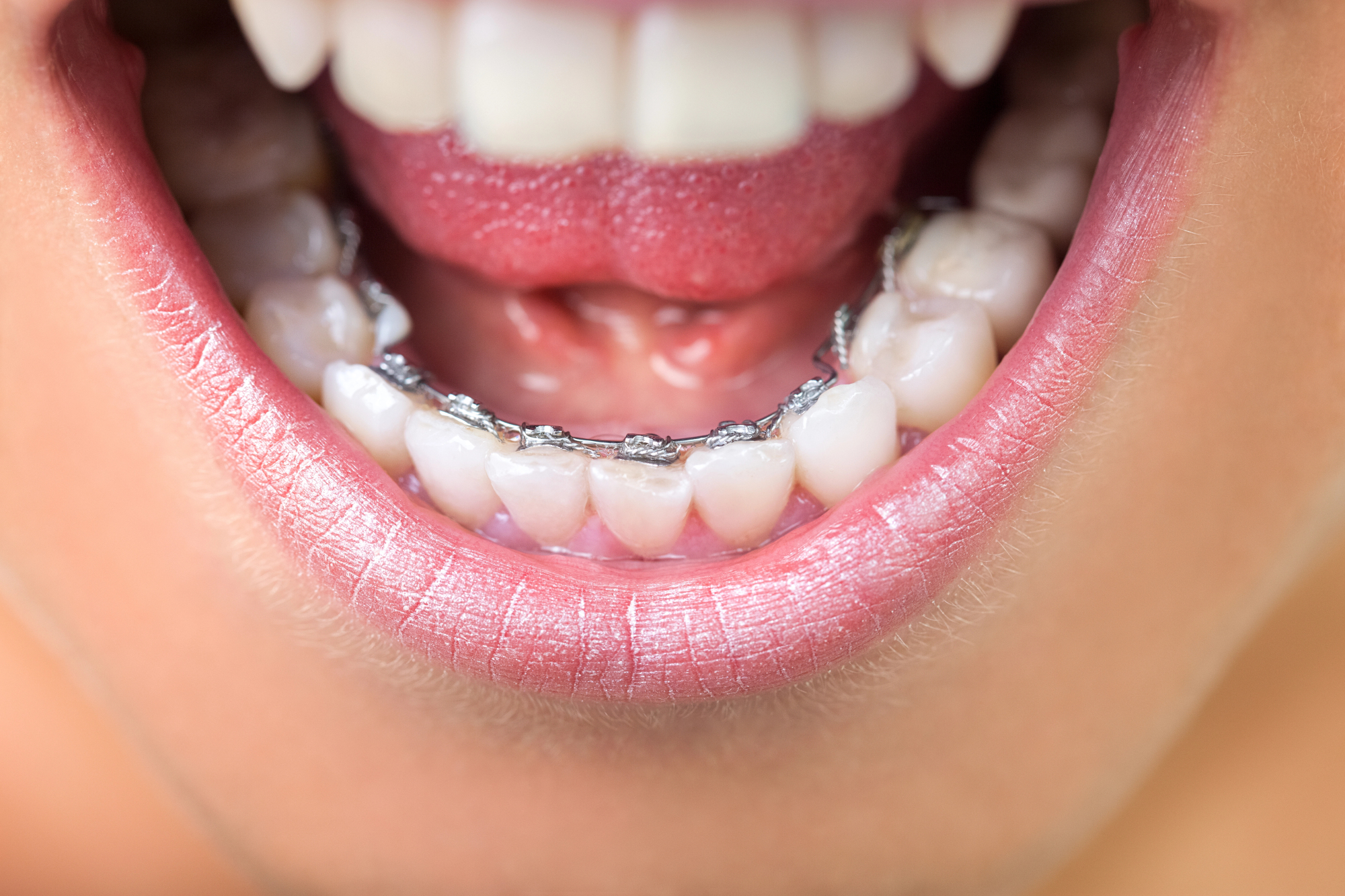
Lingual braces are the only truly invisible fixed orthodontic option. Placed on the tongue side (lingual surface) of your teeth, they deliver the same tooth-moving power as traditional braces while remaining completely hidden from the outside world. For NYC professionals, performers, and anyone who absolutely cannot have visible orthodontic hardware, lingual braces solve a problem that no other fixed appliance can. This 2026 guide covers costs, candidacy, speech adaptation, the treatment process, and how to find a qualified lingual orthodontist in New York City.
Key Takeaways: Lingual Braces in 2026
- • 100% invisible: Brackets sit behind the teeth -- no one can see them
- • NYC cost: $10,000-$14,000, the most expensive braces option
- • Treatment time: 18-30 months depending on case complexity
- • Speech adaptation: Temporary lisp for 2-4 weeks in most patients
- • Specialist required: Seek an orthodontist with specific lingual training
What Are Lingual Braces?
Lingual braces consist of custom-made metal brackets bonded to the inner (tongue-facing) surfaces of the teeth, connected by archwires that the orthodontist adjusts at regular intervals. Unlike traditional braces that sit on the front of the teeth, lingual braces are completely concealed. Even someone standing directly in front of you during a conversation will see nothing -- your treatment is entirely hidden behind your smile.
Each lingual bracket is individually custom-fabricated using digital impressions and CAD/CAM technology. The inner surfaces of teeth are far more irregular than the front surfaces, so off-the-shelf brackets would not fit properly. The major lingual systems in 2026 -- Incognito (by 3M), WIN, and Harmony -- all use robotic bending of archwires and computerized bracket design to achieve precise, patient-specific appliances.
Lingual braces have been available since the 1970s, but earlier versions were bulky, uncomfortable, and produced inconsistent results. The modern digital revolution has transformed the technique: today's custom brackets are smaller, more precise, and far more comfortable than their predecessors. For a full comparison with other options, see our types of braces guide.
How Lingual Braces Work
The biomechanics are identical to conventional braces: brackets act as handles on each tooth, and archwires deliver controlled forces that guide teeth into their target positions through bone remodeling. The orthodontist adjusts the wires at regular intervals to progress through the treatment stages.
What differs is the bracket placement and wire customization. Because lingual brackets sit on highly variable tooth surfaces, every bracket must be custom-milled and every archwire robotically bent to match the patient's specific anatomy. This level of customization explains the higher cost and the need for specialized expertise.
The Treatment Process Step by Step
Step 1: Digital impressions (Week 1). Your orthodontist takes precise digital scans of your teeth using an intraoral scanner (iTero, 3Shape, or similar). These scans are sent to the lingual bracket manufacturer's lab.
Step 2: Custom fabrication (Weeks 2-6). The lab uses the digital data to design and manufacture your individual brackets and archwires. This process takes 4-6 weeks -- longer than standard braces, which use off-the-shelf brackets.
Step 3: Bonding appointment (Week 7-8). Your orthodontist bonds the custom brackets to the inner surfaces of your teeth using an indirect bonding technique (a transfer tray ensures precise placement). The first archwire is placed. The appointment takes 90-120 minutes.
Step 4: Adjustment visits (Every 4-8 weeks). Your orthodontist adjusts archwires and monitors progress. Visits take 20-40 minutes -- slightly longer than conventional braces adjustments due to the more challenging access.
Step 5: Debonding and retention. Brackets are removed, adhesive is cleaned, and retainers are fitted. Most patients wear retainers nightly for long-term stability.
Lingual Braces Cost in NYC (2026)
Lingual braces are significantly more expensive than any other orthodontic option. The premium reflects the custom manufacturing, specialized lab fees, extended chair time, and advanced training required. Here is the full cost picture for New York City patients.
| Cost Factor | Lingual Braces | Metal Braces (Comparison) |
|---|---|---|
| NYC range | $10,000-$14,000 | $4,000-$8,500 |
| Manhattan premium offices | $12,000-$14,000+ | $5,500-$8,500 |
| National average | $8,000-$13,000 | $3,000-$7,500 |
| Insurance coverage | $1,500-$3,000 (same as other types) | $1,500-$3,000 |
| Monthly payment plan | $350-$550/month | $150-$300/month |
| Cost premium vs metal | +$5,000-$7,000 | Baseline |
The cost includes custom bracket fabrication, all adjustment visits, and retainers in most practices. Some offices charge a separate lab fee of $1,500-$3,000 for the custom manufacturing, so always ask for a comprehensive breakdown. For additional financial planning strategies, see our braces cost guide and insurance guide.
Advantages of Lingual Braces
Total Invisibility
No other fixed orthodontic system offers complete invisibility. Ceramic braces are semi-discreet but still visible up close. Invisalign is nearly invisible but can be noticed by observant people, and the attachments bonded to teeth are somewhat visible. Lingual braces are the only option where nobody will know you are in treatment unless you tell them.
No Compliance Required
Unlike clear aligners, lingual braces are fixed. They work around the clock without any need for patient compliance regarding wear time. This is a significant advantage for patients who know they would struggle with wearing removable aligners 22 hours per day, removing them for meals, and keeping track of them.
Treats Complex Cases
Lingual braces can handle the same range of orthodontic problems as conventional braces: severe crowding, deep overbites, underbites, crossbites, open bites, and even cases requiring surgical orthodontics. For complex cases where Invisalign may fall short, lingual braces provide a hidden fixed alternative with full biomechanical capability.
"For my patients who are corporate attorneys, news anchors, or Broadway performers, lingual braces are transformative. They get comprehensive orthodontic treatment without anyone in their professional world ever knowing. The technology and precision we have now with custom digital brackets is truly remarkable."
Disadvantages of Lingual Braces
Significantly Higher Cost
At $10,000-$14,000 in NYC, lingual braces cost 2-3 times more than metal braces and 50-80% more than Invisalign. The premium is substantial, and most insurance plans do not differentiate their coverage -- you get the same $1,500-$3,000 lifetime benefit regardless of appliance type, leaving a larger out-of-pocket balance for lingual braces.
Speech Adjustment Period
The brackets occupy space on the tongue side of the teeth, which temporarily interferes with tongue placement during speech. Most patients experience a lisp, particularly with "s," "t," "d," and "th" sounds, for 2-4 weeks after placement. About 90% of patients report that speech returns to normal within one month, but the initial period can be frustrating, especially for professionals who speak publicly.
Warning: If you have an important speaking engagement, presentation, or audition within the first month of treatment, discuss the timing with your orthodontist. Some patients schedule bonding after major events to avoid the speech adaptation period during critical moments.
Tongue Discomfort
The tongue constantly contacts the lingual brackets, especially during eating and speaking. This causes irritation and soreness that can be more intense than the cheek/lip irritation from conventional braces. The adaptation period typically lasts 1-2 weeks, after which the tongue forms a callus and discomfort subsides. Orthodontic wax and over-the-counter pain relievers help manage the transition. For more relief strategies, see our pain relief guide.
Greater Hygiene Challenge
Cleaning lingual brackets is more difficult because you cannot easily see them, and the tongue side of the teeth is harder to access with a toothbrush. Patients need specialized brushing techniques, interdental brushes bent to reach lingual surfaces, and a water flosser. Poor hygiene with lingual braces increases the risk of cavities on the tongue-side surfaces and gum inflammation. Check our brushing with braces guide for detailed cleaning protocols.
Longer and More Frequent Appointments
Lingual bracket adjustments take longer than conventional braces because the orthodontist works in a more confined space with limited visibility. Adjustment appointments typically run 20-40 minutes compared to 15-25 minutes for labial braces. Some orthodontists schedule lingual adjustments more frequently (every 4-6 weeks vs 6-8 weeks) to maintain optimal control.
Lingual Braces vs Invisalign vs Ceramic
Patients seeking discreet orthodontic treatment often compare lingual braces with Invisalign and ceramic braces. Here is how they stack up across the factors that matter most.
| Factor | Lingual Braces | Invisalign | Ceramic Braces |
|---|---|---|---|
| Invisibility | 100% hidden | Nearly invisible | Semi-discreet |
| NYC Cost | $10,000-$14,000 | $4,500-$9,000 | $5,000-$9,500 |
| Compliance Required | None (fixed) | High (22 hrs/day) | None (fixed) |
| Complex Case Ability | Excellent | Good (mild-moderate) | Excellent |
| Speech Impact | Temporary lisp (2-4 weeks) | Minimal | None |
| Comfort | Challenging initially | High | Moderate |
| Dietary Restrictions | Yes | None | Yes |
For a more detailed comparison with all four braces types, see our comprehensive braces types guide. If you are specifically comparing with clear aligners, our Invisalign vs braces article provides an in-depth analysis.
Who Is the Ideal Candidate for Lingual Braces?
Lingual braces are best suited for patients who meet three criteria: they need or want the clinical power of fixed braces, they absolutely require invisible treatment, and they can afford the premium cost. Specific profiles include:
Professionals in appearance-sensitive roles: Attorneys, executives, consultants, and salespeople who meet clients face-to-face and cannot afford the visual distraction of visible braces. Performers and public figures: Actors, news anchors, musicians, and models whose appearance is directly tied to their career. Patients with complex cases who cannot use Invisalign: If your orthodontist has determined that clear aligners cannot effectively treat your specific malocclusion, lingual braces offer invisibility with the biomechanical control of fixed appliances.
"I see many patients in their 30s and 40s who skipped orthodontics as teenagers and now want straighter teeth without anyone knowing. Lingual braces are perfect for this demographic -- they get comprehensive treatment while maintaining their professional image throughout the process."
Finding a Lingual Braces Provider in NYC
Lingual orthodontics is a specialty within a specialty. Not all orthodontists offer it, and among those who do, experience levels vary widely. When searching for a lingual braces provider in New York City, prioritize the following:
Certification with a major system: Look for orthodontists certified with Incognito (3M), WIN, or Harmony. These certifications require hands-on training courses specific to lingual technique. Case volume: Ask how many lingual cases the provider treats per year. An orthodontist who does 20-50+ lingual cases annually will produce more predictable results than one who does 2-3. Board certification: ABO board certification is a baseline indicator of clinical excellence.
NYC is one of the best cities in the world for lingual orthodontics because the demand from professionals and performers supports a critical mass of experienced providers. Manhattan, in particular, has several practices that specialize heavily or exclusively in lingual braces. Start your search with our best NYC orthodontists guide.
Questions to Ask Your Lingual Orthodontist
- • Which lingual system do you use (Incognito, WIN, Harmony)?
- • How many lingual cases do you complete per year?
- • Are you board-certified by the American Board of Orthodontics?
- • What is the total fee, and what does it include?
- • What payment plans do you offer?
- • Can I see before-and-after photos of your lingual cases?
Warning: Be cautious of general dentists or providers advertising lingual braces without specialized training. Improperly placed lingual brackets can lead to prolonged treatment times, poor results, and increased discomfort. Always verify the provider's lingual-specific credentials and ask to see completed cases.
Frequently Asked Questions
Yes, most patients experience a temporary lisp or speech difficulty for 2-4 weeks after placement. The tongue needs time to adapt to the brackets on the inner tooth surfaces. About 90% of patients report speech returns to normal within one month. Practicing reading aloud and speaking slowly during the adaptation period helps accelerate adjustment. Singing and tongue-twister exercises are also recommended by speech therapists.
Lingual braces are the most expensive orthodontic option, ranging from $10,000 to $14,000 in New York City. The higher cost reflects custom bracket fabrication, specialized lab work, and the advanced training required for placement. In Manhattan, prices can reach $14,000 or more for complex cases. Insurance typically covers the same $1,500-$3,000 lifetime maximum as any braces type.
Yes, lingual braces produce the same clinical results as conventional labial (front-facing) braces. They can treat crowding, spacing, overbites, underbites, crossbites, and open bites. However, certain complex tooth movements may take slightly longer with lingual braces because adjustments are more technically demanding. Treatment time is typically 18-30 months depending on case complexity.
Technically any licensed orthodontist can offer lingual braces, but the technique requires specialized post-graduate training that many practitioners have not completed. In NYC, only a subset of orthodontists have significant lingual experience. Look for providers who have completed certification courses from Incognito, WIN, or Harmony and who treat at least 20-30 lingual cases per year.
The initial discomfort can be more intense because the tongue constantly contacts the brackets. Most patients report significant tongue soreness for 1-2 weeks that gradually resolves. After adaptation, the ongoing discomfort level is comparable to regular braces. Orthodontic wax applied to irritating brackets and over-the-counter pain relievers help manage the adjustment period.
Sources
1. American Journal of Orthodontics and Dentofacial Orthopedics, "Lingual Orthodontics: A Systematic Review of Treatment Outcomes," Vol. 169, 2026.
2. 3M Oral Care, "Incognito Lingual Bracket System: Clinical Manual and Indications," 2025.
3. WIN Lingual Systems, "Precision-Manufactured Lingual Brackets: Technical Overview," 2026.
4. Journal of Clinical Orthodontics, "Speech Adaptation Following Lingual Bracket Placement: A Prospective Study," 2025.
5. European Journal of Orthodontics, "Patient Satisfaction and Quality of Life During Lingual vs Labial Orthodontic Treatment," Vol. 48, 2025.
6. American Association of Orthodontists (AAO), "Orthodontic Fee Survey and Practice Economics," 2025-2026.
7. New York State Dental Association, "Specialist Fee Survey for Orthodontic Services," 2025-2026.
8. Angle Orthodontist, "Biomechanics of Lingual Bracket Systems: Custom vs Semi-Custom Approaches," Vol. 96, 2026.
Interested in Invisible Lingual Braces?
Find NYC orthodontists with specialized lingual braces training. Free consultations available to determine if you are a candidate.
Find a Provider in NYC