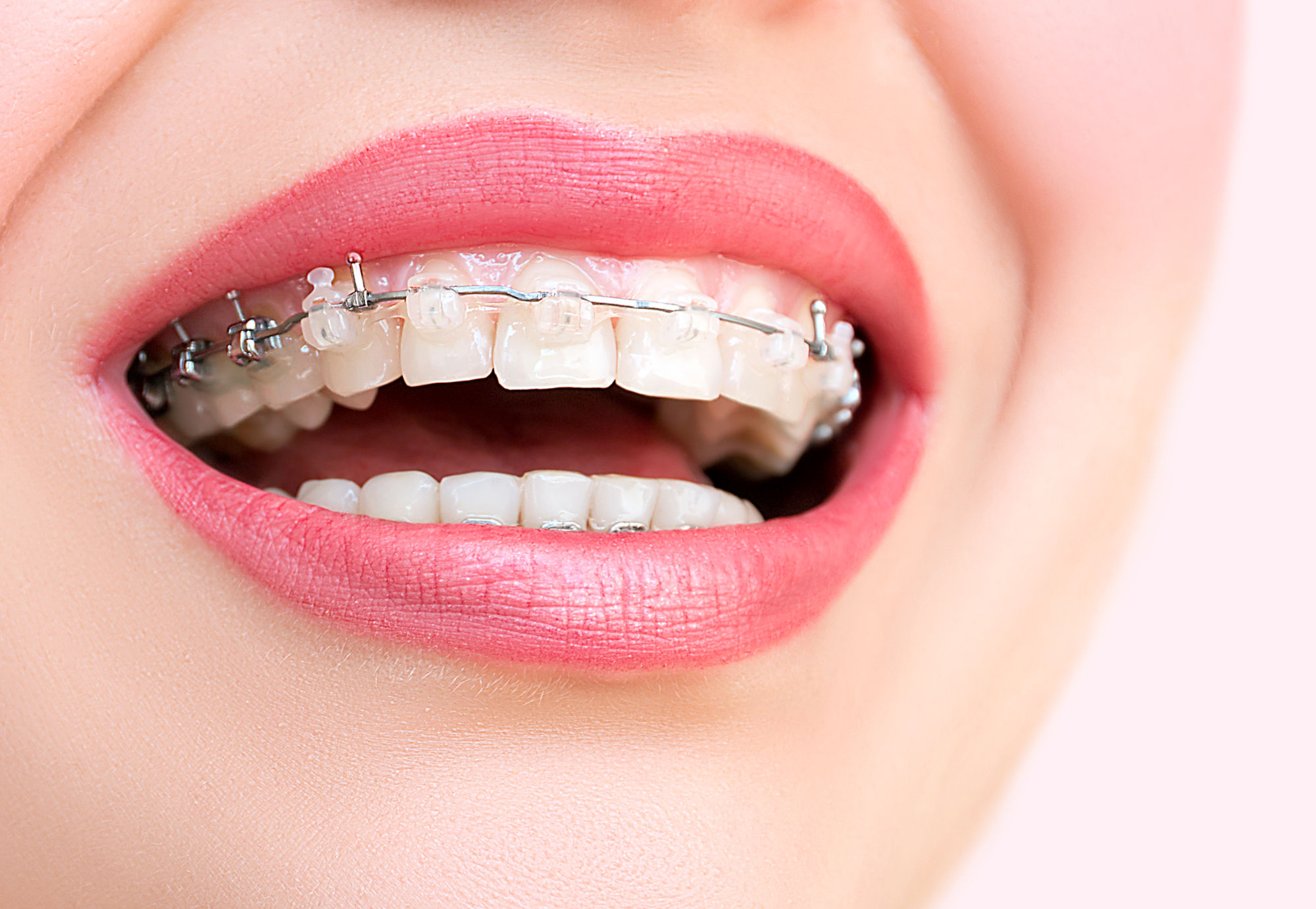
Ceramic Braces in 2026: Cost, Pros & Cons, and NYC Provider Guide
Ceramic braces offer the proven effectiveness of traditional fixed orthodontics with a major aesthetic upgrade: tooth-colored brackets that blend with your natural enamel. For adults and image-conscious teens in New York City who want dependable results without the metallic look, ceramic braces hit a sweet spot between visibility, cost, and clinical performance. This 2026 guide covers everything you need to know -- from pricing and insurance to staining prevention, treatment timelines, and how to find the right NYC provider.
Key Takeaways: Ceramic Braces in 2026
- • NYC cost: $5,000-$9,500 (about $1,000-$2,000 more than metal braces)
- • Treatment time: 18-26 months, comparable to metal braces
- • Aesthetics: Tooth-colored brackets are significantly less visible than metal
- • Effectiveness: Clinically equivalent to metal braces for most cases
- • Best for: Adults and teens who want fixed-bracket results with better aesthetics
What Are Ceramic Braces?
Ceramic braces are fixed orthodontic appliances that work identically to traditional metal braces but use brackets made from polycrystalline alumina -- a translucent, tooth-colored ceramic material. The brackets are bonded to the front surface of each tooth and connected by an archwire that the orthodontist adjusts at regular intervals. The key difference is visual: ceramic brackets blend with the natural tooth color, making them far less conspicuous than their metallic counterparts.
Modern ceramic bracket systems include the 3M Clarity Advanced, Damon Clear, American Orthodontics Radiance Plus, and Ormco Inspire ICE. Each uses slightly different ceramic formulations and bracket designs, but all share the core advantage of reduced visibility. Some systems are self-ligating (no elastic ties), while others use traditional ligation with clear or white elastic ties.
Ceramic braces can be used on both the upper and lower teeth, though some orthodontists recommend ceramic on the upper arch (more visible when smiling) and metal on the lower arch (less visible and more durable) as a cost-saving compromise. For a comprehensive look at all available options, see our complete guide to braces types.
Pros of Ceramic Braces
Superior Aesthetics Over Metal
The most compelling advantage of ceramic braces is their discreet appearance. Tooth-colored brackets are difficult to notice from conversational distance (about 3-5 feet), making them a popular choice for working professionals in Manhattan, Brooklyn, and Queens who attend client meetings, give presentations, or appear on camera. When paired with white-coated archwires, the entire appliance becomes remarkably subtle.
Proven Clinical Effectiveness
Ceramic braces use the same biomechanical principles as metal braces. The orthodontist can achieve precise three-dimensional tooth movements including rotations, torque, intrusion, and extrusion. Clinical studies published in the American Journal of Orthodontics (2025) confirm that treatment outcomes with ceramic brackets are statistically equivalent to metal brackets across all standard malocclusion types. This means you are not sacrificing results for aesthetics.
No Compliance Required
Unlike Invisalign, ceramic braces are permanently fixed to the teeth for the duration of treatment. They work 24 hours a day without requiring the patient to remember to wear anything. This makes them an excellent choice for patients who know they would struggle with the 20-22 hour daily wear requirement of clear aligners. For a direct comparison, see our Invisalign vs braces article.
"I recommend ceramic braces to about 40% of my adult patients. They want the reliability of fixed brackets but need something that does not scream 'braces' in a professional setting. With today's ceramic materials, we get excellent results and very few bracket fractures."
Cons of Ceramic Braces
Higher Cost Than Metal
Ceramic brackets cost more to manufacture than stainless steel, and that premium is passed to the patient. In NYC, expect to pay $5,000 to $9,500 for ceramic braces compared to $4,000 to $8,500 for metal. The $1,000 to $2,000 difference may not be significant for many patients, but it adds up for families with multiple children needing orthodontics. For a full cost analysis, read our braces cost guide.
Slightly More Fragile
Ceramic is harder than stainless steel but more brittle. This means ceramic brackets can chip or fracture if subjected to sudden impact -- biting into an apple, taking a hit during sports, or chewing on hard candy. A broken bracket requires an emergency repair visit, which can slow treatment progress. Metal braces almost never fracture under normal conditions.
Elastic Tie Staining
While the ceramic brackets themselves resist staining well, the small elastic ligature ties that hold the archwire to the bracket can absorb color from foods and beverages. Coffee, tea, red wine, turmeric, berries, and tomato sauce are the primary culprits. The ties are replaced at each adjustment (every 4-8 weeks), so staining is temporary but noticeable between appointments.
Warning: Smoking will stain both the elastic ties and the adhesive around ceramic brackets, creating a noticeable yellow discoloration that is difficult to remove. If you smoke, discuss this with your orthodontist before choosing ceramic braces.
Slightly Higher Friction
Ceramic brackets generate more friction against the archwire than polished stainless steel brackets. This can slow the rate of tooth movement slightly, adding 1-3 months to overall treatment time in some cases. Self-ligating ceramic systems (like Damon Clear) partially address this issue with their low-friction slide mechanism, but the difference is not entirely eliminated.
Ceramic Braces Cost in NYC (2026)
New York City orthodontic fees reflect the high overhead of operating in one of the world's most expensive cities. Here is what to expect for ceramic braces in 2026 across different NYC boroughs.
| Cost Factor | Ceramic Braces | Metal Braces (Comparison) |
|---|---|---|
| NYC average range | $5,000-$9,500 | $4,000-$8,500 |
| Manhattan (Midtown/UES) | $6,000-$9,500 | $5,000-$8,500 |
| Brooklyn/Queens | $5,000-$8,000 | $4,000-$7,000 |
| National average | $4,000-$8,500 | $3,000-$7,500 |
| Insurance coverage (typical) | $1,500-$3,000 lifetime max | $1,500-$3,000 lifetime max |
| Monthly payment plan | $200-$350/month | $150-$300/month |
Most NYC orthodontists include the following in their quoted fee: initial consultation and records (X-rays, photos, digital scans), the braces themselves, all adjustment visits, and a set of retainers after treatment. Some practices charge separately for emergency visits or broken bracket repairs. Always clarify exactly what is included before signing a treatment agreement.
Insurance and Payment Options
Dental PPO plans with orthodontic benefits typically cover ceramic braces at the same level as metal braces -- a lifetime maximum of $1,500 to $3,000 per patient. However, some HMO plans may restrict coverage to metal braces only, requiring you to pay the full ceramic upgrade out of pocket. Always verify your specific plan with your insurance provider and ask your orthodontist's billing coordinator to submit a pre-authorization before starting treatment.
FSA and HSA accounts are powerful tools for NYC patients. Contributing pre-tax dollars to these accounts effectively reduces your orthodontic cost by 25-35% depending on your tax bracket. You can also combine insurance benefits with FSA/HSA funds. Many orthodontic practices accept CareCredit or offer in-house financing with 0% interest over 12-24 months. For more details on maximizing your benefits, read our cost and insurance guide.
How to Prevent Staining on Ceramic Braces
Keeping ceramic braces looking clean requires some dietary awareness and oral hygiene discipline. The brackets themselves are stain-resistant, but the elastic ties and bracket adhesive can discolor. Here are evidence-based strategies to minimize staining.
Anti-Staining Tips for Ceramic Braces
- • Brush within 30 minutes of eating or drinking anything pigmented
- • Use a straw for coffee, tea, and dark beverages to bypass brackets
- • Avoid turmeric, curry, tomato sauce, and berries when possible
- • Rinse with water immediately if you cannot brush right away
- • Ask your orthodontist about self-ligating ceramic brackets (no ties to stain)
- • Request clear or white ties at each adjustment -- avoid colored elastics
Ceramic Braces vs Other Options
Choosing between ceramic braces and other orthodontic options depends on your priorities. Here is a quick comparison to help you decide. For an in-depth analysis, see our ceramic vs metal braces and invisible braces guides.
| Factor | Ceramic Braces | Invisalign | Lingual Braces |
|---|---|---|---|
| Visibility | Semi-discreet | Nearly invisible | Completely hidden |
| NYC Cost | $5,000-$9,500 | $4,500-$9,000 | $10,000-$14,000 |
| Complex Cases | Excellent | Good (mild-moderate) | Excellent |
| Compliance Needed | None (fixed) | High (22 hrs/day) | None (fixed) |
| Comfort | Moderate | High | Lower initially |
| Dietary Restrictions | Yes | None | Yes |
Treatment Timeline for Ceramic Braces
The ceramic braces treatment process follows the same stages as metal braces. Understanding the timeline helps set realistic expectations.
Consultation and records (Week 1): Your orthodontist takes digital scans, X-rays, and photographs to create a treatment plan. Many NYC offices use 3D imaging technology like iTero or CBCT scans for precise diagnosis.
Bonding appointment (Week 2-3): Ceramic brackets are bonded to each tooth using dental adhesive. The initial archwire is placed. This appointment takes 60-90 minutes. Expect mild soreness for 3-7 days afterward.
Adjustment visits (Every 4-8 weeks): Your orthodontist replaces archwires, adjusts tension, replaces elastic ties, and monitors progress. Each visit takes 15-30 minutes. Soreness after adjustments typically lasts 1-3 days. For tips on managing discomfort, check our braces pain relief guide.
Debonding (End of treatment): Brackets are carefully removed using special pliers, and any remaining adhesive is polished off. Retainer impressions or scans are taken. The debonding appointment takes 30-60 minutes.
Retention phase (Ongoing): You will wear retainers nightly to maintain your results. This phase is lifelong -- teeth can shift at any age without retention.
"The ceramic brackets we use in 2026 are a dramatic improvement over what was available even a decade ago. The materials are stronger, the adhesion is more reliable, and staining is far less of an issue. For my adult patients who want a fixed appliance with better aesthetics, ceramic is my go-to recommendation."
Who Is the Best Candidate for Ceramic Braces?
Ceramic braces are ideal for patients who meet several criteria. You want the mechanical advantages of fixed braces -- reliable, 24/7 tooth movement without compliance concerns -- but you also care about how your smile looks during treatment. You have a moderate to complex orthodontic case that might not be fully treatable with Invisalign. And you are willing to invest the $1,000-$2,000 premium over metal braces for improved aesthetics.
Adults are the largest demographic for ceramic braces. About 35% of adult orthodontic patients in NYC choose ceramic over metal, according to local practice surveys. Teens who are responsible enough to avoid hard and sticky foods are also excellent candidates. For younger children, metal braces are generally recommended due to their superior durability.
Oral Care With Ceramic Braces
Maintaining excellent oral hygiene with ceramic braces follows the same principles as metal braces, with extra attention to staining prevention. Brush after every meal using a soft-bristled toothbrush or an electric toothbrush with an orthodontic head. Use interdental brushes to clean around each bracket and under the archwire. Floss daily with a floss threader or orthodontic flosser. A water flosser (like Waterpik) is highly recommended as a supplement. For our complete brushing protocol, visit our brushing with braces guide.
Warning: Poor oral hygiene with ceramic braces can lead to white spot lesions (permanent enamel demineralization) around the brackets. These marks become visible after braces are removed and can be difficult to treat. Commit to thorough brushing and consider a fluoride mouth rinse for extra protection.
Finding a Ceramic Braces Provider in NYC
Nearly all NYC orthodontists offer ceramic braces, but experience and preferred systems vary. When evaluating providers, ask how many ceramic cases they complete annually, which bracket system they use, and whether they offer self-ligating options. A board-certified orthodontist with active ABO certification demonstrates a commitment to excellence beyond basic training.
Consultations are typically free or low-cost ($50-$150) at most NYC practices. We recommend visiting at least two offices to compare treatment plans, pricing, and office atmosphere. Use our guides to the best orthodontists in New York and top 5 NYC orthodontists as a starting point.
Frequently Asked Questions
The ceramic brackets themselves are highly stain-resistant due to modern polycrystalline alumina materials. However, the elastic ligature ties that hold the archwire in place can absorb pigments from coffee, tea, red wine, curry, and tomato sauce. These ties are replaced at each adjustment appointment (every 4-8 weeks), so staining is temporary. Choosing self-ligating ceramic brackets eliminates ties entirely.
Yes, ceramic braces produce clinically equivalent results to metal braces for the vast majority of orthodontic cases. They use the same mechanics of brackets, archwires, and elastic forces. The slight difference is that ceramic brackets generate marginally more friction against the wire, which can extend treatment time by 1-3 months in some cases. For complex cases, some orthodontists may recommend metal brackets on the lower arch for efficiency.
Ceramic braces in NYC typically range from $5,000 to $9,500, which is about $1,000 to $2,000 more than metal braces. The premium covers the higher manufacturing cost of tooth-colored brackets and sometimes white-coated archwires. Most NYC orthodontists offer payment plans of $200 to $350 per month with little or no interest.
Yes, but with precautions. Ceramic brackets are more brittle than metal and can chip or fracture on impact. Athletes should wear a properly fitted orthodontic mouthguard during all contact sports. If you play high-impact sports like basketball, football, or martial arts, discuss the fracture risk with your orthodontist -- metal braces on the front teeth may be a safer choice.
Ceramic braces treatment typically takes 18 to 26 months for moderate cases, which is comparable to metal braces. The slightly higher friction from ceramic brackets may add 1-3 months compared to metal in some cases. Self-ligating ceramic systems like Damon Clear can reduce this difference. Treatment time ultimately depends on case complexity and patient compliance with care instructions.
Sources
1. American Journal of Orthodontics and Dentofacial Orthopedics, "Clinical Performance of Ceramic vs Metal Brackets: A Randomized Controlled Trial," Vol. 168, 2025.
2. American Association of Orthodontists (AAO), "Patient Demographics and Appliance Preferences Survey," 2025-2026.
3. Journal of Dental Research, "Friction Characteristics of Ceramic Bracket Systems: A Comparative Study," Vol. 105, 2025.
4. 3M Oral Care, "Clarity Advanced Ceramic Bracket System: Technical Overview," 2026.
5. Ormco Corporation, "Damon Clear Self-Ligating System Clinical Guide," 2025.
6. New York State Dental Association, "Orthodontic Fee Survey for New York Metropolitan Area," 2025-2026.
7. Journal of Clinical Orthodontics, "Staining Susceptibility of Ceramic Brackets and Ligatures: A Systematic Review," 2025.
Considering Ceramic Braces in NYC?
Connect with top-rated NYC orthodontists who specialize in ceramic braces. Free consultations and flexible payment plans are available at most offices.
Find a Provider in NYC