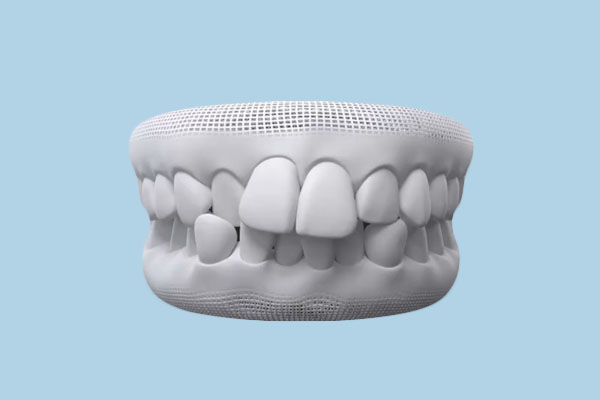
How to Fix Overlapping Teeth: All Treatment Options Compared (2026)
Overlapping teeth -- where one or more teeth sit in front of or behind adjacent teeth -- are among the most common dental concerns in the United States, affecting an estimated 50-65% of adults to some degree. Whether it is two front teeth slightly crossing each other or significant crowding across multiple teeth, overlapping creates hygiene challenges, increases cavity and gum disease risk, and is one of the top cosmetic complaints patients bring to their NYC orthodontist. In 2026, the treatment options range from Invisalign and braces to veneers and bonding -- each with different costs, timelines, and trade-offs. This guide compares every option so you can make an informed decision.
Key Facts: Fixing Overlapping Teeth in 2026
- • Invisalign: $3,500 - $8,500 in NYC | 6-18 months | Best for mild to moderate overlap
- • Braces: $4,000 - $8,000 in NYC | 12-24 months | Best for all severity levels
- • Veneers: $1,500 - $3,000 per tooth | 2-3 visits | Cosmetic fix only, does not move teeth
- • Bonding: $300 - $800 per tooth | 1 visit | Minor cosmetic improvement
- • Insurance: PPO plans cover $1,500 - $3,000 for orthodontic treatment
What Causes Overlapping Teeth?
Teeth overlap when there is a mismatch between the total size of your teeth and the available space in your dental arch. This can result from having teeth that are too large for your jaw, a jaw that is too small for your teeth, or a combination of both. Multiple factors contribute:
- Genetics (primary cause): Tooth size and jaw size are inherited separately, which means you can inherit large teeth from one parent and a small jaw from the other. Studies show that genetics account for 60-70% of crowding.
- Natural mesial drift: Throughout life, teeth naturally drift forward (mesially), gradually increasing crowding. This is why many people notice their teeth becoming more crooked in their 30s and 40s even if they were straight earlier.
- Early loss of baby teeth: Premature loss of primary teeth allows neighboring teeth to drift into the space, blocking the permanent tooth from erupting properly.
- Late lower incisor crowding: Lower front teeth tend to crowd progressively from the late teens through the 30s, a natural process unrelated to wisdom teeth.
- Tooth loss without replacement: When a tooth is extracted or lost and not replaced, adjacent teeth tilt into the space, creating overlap elsewhere.
- Gum disease: Advanced periodontal disease weakens the bone supporting the teeth, allowing them to shift and overlap.
Why Overlapping Teeth Should Be Fixed
Beyond cosmetic concerns, overlapping teeth create real health risks that worsen over time:
- Higher cavity risk: Overlapping surfaces trap plaque and food in areas that are nearly impossible to clean with a toothbrush. Studies show that overlapping teeth have a 25-50% higher incidence of interproximal cavities compared to properly aligned teeth.
- Gum disease: Plaque accumulation around overlapping teeth leads to gingivitis and, over time, periodontitis. The gum tissue between crowded teeth is often chronically inflamed.
- Uneven wear: Overlapping teeth create abnormal contact points, leading to accelerated wear on some teeth and no contact on others.
- Chipping risk: Teeth that protrude due to crowding are more vulnerable to trauma and chipping.
- Self-confidence: Research consistently shows that overlapping front teeth significantly impact smile satisfaction and social confidence, with over 75% of adults reporting that crooked teeth negatively affect their self-image.
"I always explain to patients that overlapping teeth are not just a cosmetic issue. The areas where teeth overlap are breeding grounds for bacteria because they are virtually impossible to clean properly. Many patients come in with cavities specifically between their overlapping teeth despite having otherwise good oral hygiene."
Treatment Options for Overlapping Teeth
Invisalign Clear Aligners
Invisalign is the most popular treatment for overlapping teeth among adults in NYC, and for good reason. The clear aligners are nearly invisible, removable for eating and brushing, and highly effective for crowding and overlapping. Invisalign uses a sequence of custom aligners that gradually move overlapping teeth into alignment, often incorporating interproximal reduction (IPR) -- gentle filing between teeth to create space without extractions.
- NYC cost: $3,500 - $8,500 depending on case complexity
- Treatment time: 6-18 months (mild to moderate); up to 24 months for severe
- Best for: Mild to moderate overlapping in adults and older teens who want a discreet option
- Limitations: Severe overlap with rotations greater than 20 degrees may require braces
Traditional Braces
Metal and ceramic braces remain the most versatile option for overlapping teeth of any severity. Braces can achieve tooth movements that aligners struggle with, including severe rotations, vertical repositioning, and bodily movement of teeth through dense bone.
- NYC cost: $4,000 - $8,000 (metal); $5,000 - $9,000 (ceramic); $7,000 - $12,000 (lingual)
- Treatment time: 12-24 months
- Best for: Moderate to severe overlapping, complex cases with bite issues, teens who may not comply with removable aligners
Dental Veneers
Porcelain veneers are thin shells bonded to the front of teeth to change their appearance. For mildly overlapping front teeth, veneers can create the illusion of straight teeth without actually moving them. However, this approach has significant trade-offs.
- NYC cost: $1,500 - $3,000 per tooth ($12,000 - $24,000 for a full smile of 8 veneers)
- Treatment time: 2-3 dental visits over 2-4 weeks
- Best for: Very mild cosmetic overlap in patients who want instant results and are not candidates for orthodontics
- Limitations: Requires removing tooth enamel (irreversible), does not fix bite issues, needs replacement every 10-15 years
Dental Bonding
Composite bonding involves applying tooth-colored resin to reshape teeth. It can mask very minor overlapping by building up the smaller tooth to match its neighbor or reshaping edges to appear more uniform.
- NYC cost: $300 - $800 per tooth
- Treatment time: 1 visit (30-60 minutes per tooth)
- Best for: Very minor aesthetic irregularities; often combined with orthodontics as a finishing touch
- Limitations: Only cosmetic, prone to staining and chipping (lasts 5-7 years), does not address underlying crowding
Full Treatment Comparison
| Treatment | NYC Cost | Duration | Moves Teeth? | Longevity | Insurance |
|---|---|---|---|---|---|
| Invisalign | $3,500 - $8,500 | 6-18 months | Yes | Permanent (with retainers) | $1,500-$3,000 coverage |
| Metal braces | $4,000 - $8,000 | 12-24 months | Yes | Permanent (with retainers) | $1,500-$3,000 coverage |
| Ceramic braces | $5,000 - $9,000 | 12-24 months | Yes | Permanent (with retainers) | $1,500-$3,000 coverage |
| Porcelain veneers | $1,500-$3,000/tooth | 2-4 weeks | No | 10-15 years | Not covered |
| Dental bonding | $300-$800/tooth | 1 visit | No | 5-7 years | Rarely covered |
Warning: Be cautious about using veneers to "fix" significantly overlapping teeth. Placing veneers over crowded teeth often requires aggressive tooth reduction to create a uniform appearance, which can weaken the teeth and increase sensitivity. For moderate to severe overlapping, orthodontic treatment (braces or Invisalign) is almost always the better long-term investment.
IPR: Creating Space Without Extractions
Interproximal reduction (IPR), also known as tooth stripping or slenderizing, is a common technique used alongside Invisalign and braces to create space for overlapping teeth to straighten. During IPR, the orthodontist removes 0.1-0.5mm of enamel from between teeth using a thin disc or strip. This creates enough space to resolve mild to moderate crowding without extracting teeth.
- Amount removed: 0.1-0.5mm per surface (teeth have 2-3mm of enamel, so this is a small percentage)
- Total space gained: 4-8mm across a full arch (enough to resolve most moderate crowding)
- Pain level: Painless -- enamel has no nerve endings in the outer layers
- Safety: Extensive research confirms IPR does not increase cavity risk or weaken teeth when performed within guidelines
"For overlapping teeth, the decision between orthodontics and veneers often comes down to this question: do you want to fix the problem or cover it up? Orthodontics aligns the actual teeth and improves both function and aesthetics. Veneers mask the appearance but leave the underlying crowding in place. For most patients, orthodontics is the smarter investment, especially when you factor in that veneers need replacement every decade."
How to Choose the Right Treatment
The best treatment for your overlapping teeth depends on several factors:
| Your Situation | Best Treatment | Why |
|---|---|---|
| 1-2 teeth slightly overlapping, no bite issues | Invisalign Lite/Express | Quick, affordable, discreet treatment |
| Multiple overlapping teeth, mild-moderate crowding | Invisalign Comprehensive | Full arch alignment with clear aligners |
| Severe crowding with bite issues | Traditional braces | Maximum control for complex movements |
| Mild overlap + discolored/chipped teeth | Orthodontics then veneers/bonding | Aligns teeth first, then perfects appearance |
| Want instant cosmetic improvement, very mild | Veneers or bonding | Fast results, but does not fix underlying issue |
NYC Tip: Get Multiple Consultations
- • Most NYC orthodontists offer free or low-cost initial consultations
- • Get opinions from at least 2-3 providers before deciding on treatment
- • Ask specifically about whether your overlapping can be fixed with Invisalign or requires braces
- • Compare total costs including retainers, not just treatment fees
- • If a cosmetic dentist recommends veneers, get a second opinion from an orthodontist
Retention: Keeping Teeth Straight After Treatment
Overlapping teeth have a strong tendency to relapse toward their original positions. Retainer wear is not optional -- it is the only way to protect your investment. Studies show that without retainers, 50% of orthodontic patients experience clinically significant relapse within 10 years.
- Bonded retainers: A thin wire glued behind the front teeth (upper and/or lower). Provides 24/7 retention. Cost: $300-$600 per arch in NYC.
- Clear retainers: Worn nightly for life. Vivera retainers (by Invisalign) or Essix retainers. Cost: $200-$600 per set.
- Hawley retainers: Traditional wire-and-acrylic retainers. Durable and adjustable. Cost: $250-$500 per arch.
Frequently Asked Questions
Yes, depending on the severity. Invisalign clear aligners are the most popular alternative to braces for overlapping teeth. Mild cosmetic overlap can also be addressed with dental veneers or bonding, which cover the appearance without moving the teeth. However, moderate to severe overlapping with functional bite issues is best treated with orthodontic tooth movement using either braces or clear aligners for a lasting result.
Treatment time depends on the severity and method. Mild overlap of one or two teeth may be corrected with Invisalign in 6 to 12 months. Moderate overlapping affecting multiple teeth typically takes 12 to 18 months with braces or Invisalign. Severe crowding with significant overlapping may require 18 to 24 months. Cosmetic solutions like veneers or bonding can be completed in 1 to 3 dental visits but do not actually move the teeth.
Yes, overlapping teeth generally worsen with age. Natural mesial drift causes teeth to gradually shift forward throughout life, increasing crowding. Gum disease, tooth loss, and grinding accelerate the process. Wisdom teeth were once blamed but studies show they are not a significant cause of crowding. Without treatment, mild overlapping in your 20s can become moderate to severe by your 40s and 50s.
In many cases yes. Even slight overlapping creates areas that are difficult to clean, increasing the risk of cavities and gum disease between those teeth. There is also a cosmetic benefit since front teeth overlapping is one of the most noticeable dental imperfections. For mild cases, Invisalign Lite or Express treatments cost $3,500 to $5,500 in NYC and can correct the issue in 6 to 12 months.
Most dental PPO plans cover orthodontic treatment including Invisalign and braces for overlapping teeth, typically paying $1,500 to $3,000 toward the total cost. Some plans have age restrictions limiting coverage to patients under 19. Veneers and cosmetic bonding are generally not covered by insurance as they are classified as cosmetic procedures. FSA and HSA accounts can be used for any of these treatments.
Sources
1. Proffit WR, Fields HW, Sarver DM. "Contemporary Orthodontics." 7th Edition, Elsevier, 2024.
2. Littlewood SJ, et al. "Retention and relapse in clinical practice." Australian Dental Journal, 2017;62(S1):51-57.
3. Zhylich D, Campos LA. "Interproximal enamel reduction in orthodontics: A systematic review." Angle Orthodontist, 2022;92(6):801-810.
4. Align Technology. "Invisalign for Crowding and Overlapping Teeth: Clinical Outcomes." Provider Data, 2025.
5. American Association of Orthodontists. "Crowding: When Teeth Do Not Have Enough Room." Patient Education, 2025.
6. Journal of Esthetic and Restorative Dentistry. "Veneers vs. Orthodontics for Anterior Crowding: A Comparative Analysis." 2023;35(4):552-563.
7. American Dental Association. "Dental Bonding and Veneers: What Patients Should Know." ADA.org, 2025.
Ready to Fix Your Overlapping Teeth?
Find a top-rated orthodontist in NYC who can evaluate your overlapping teeth and recommend the most effective treatment for your case.
Find a Provider in NYC