Invisible Braces in 2026: All Your Options Compared (NYC Guide)
The era of conspicuous metal brackets as the only orthodontic option is long over. In 2026, New York City patients have multiple ways to straighten their teeth discreetly -- from nearly invisible clear aligners to completely hidden lingual brackets to tooth-colored ceramic systems. But with so many options branded as "invisible," knowing which one actually fits your needs, budget, and clinical situation can be overwhelming. This guide compares every invisible and semi-invisible braces option available in NYC, with real costs, effectiveness data, and practical guidance on choosing the right one.
Quick Overview: Invisible Braces Options in 2026
- • Lingual braces: 100% invisible (behind teeth), $10,000-$14,000 in NYC
- • Invisalign/clear aligners: Nearly invisible (removable trays), $4,500-$9,000 in NYC
- • Ceramic braces: Semi-discreet (tooth-colored brackets), $5,000-$9,500 in NYC
- • All options are available across Manhattan, Brooklyn, and Queens
- • Most dental insurance covers invisible options at the same level as metal braces
What Counts as "Invisible" Braces?
The term "invisible braces" is used loosely in marketing, and it can mean different things depending on context. Strictly speaking, only lingual braces are truly invisible because they sit entirely behind the teeth. Clear aligners like Invisalign are nearly invisible but can be detected at very close range. Ceramic braces are semi-discreet -- significantly less visible than metal but still noticeable up close.
For this guide, we define "invisible braces" as any orthodontic system designed to minimize visual impact during treatment. This includes lingual braces, clear aligners (Invisalign, Spark, SureSmile), and ceramic (clear) braces. Each occupies a different point on the invisibility-cost spectrum.
Complete Comparison: All Invisible Options
| Feature | Lingual Braces | Invisalign | Ceramic Braces |
|---|---|---|---|
| Invisibility Level | 100% hidden | ~95% invisible | ~70% discreet |
| NYC Cost (2026) | $10,000-$14,000 | $4,500-$9,000 | $5,000-$9,500 |
| Type | Fixed (behind teeth) | Removable trays | Fixed (front of teeth) |
| Treatment Time | 18-30 months | 12-18 months | 18-26 months |
| Case Complexity | Mild to severe | Mild to moderate | Mild to severe |
| Compliance Required | None (fixed) | 22 hours/day | None (fixed) |
| Speech Impact | Lisp for 2-4 weeks | Mild for 1-2 days | None |
| Dietary Restrictions | Yes | None (remove to eat) | Yes |
| Provider Availability | Limited specialists | Widely available | Widely available |
Option 1: Invisalign and Clear Aligners
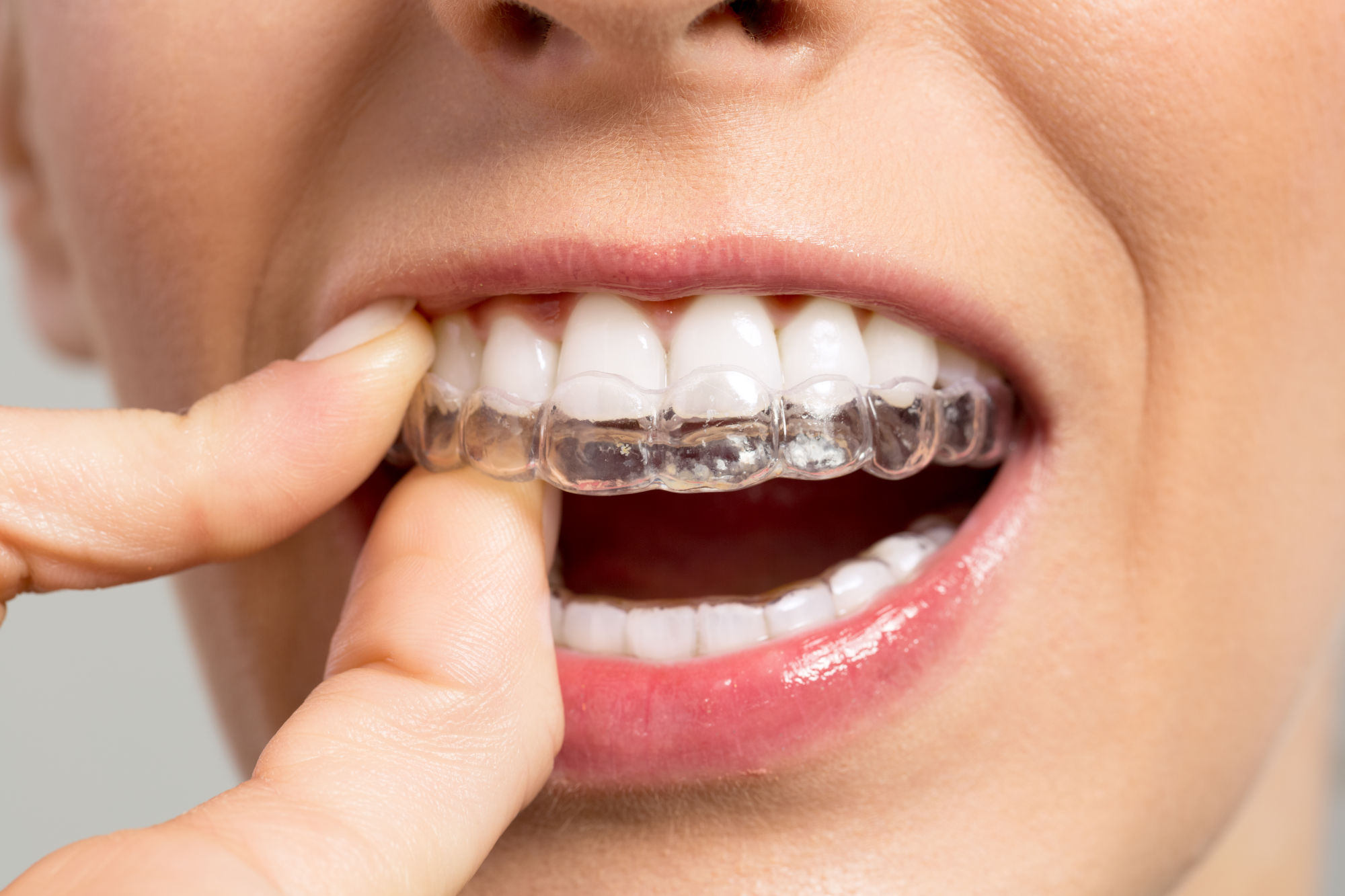
Invisalign is the most popular invisible braces option worldwide, and for good reason. The system uses a series of custom-fabricated, FDA-cleared thermoplastic trays that fit snugly over the teeth. Each set of aligners makes small, precise adjustments, and patients switch to a new set every 1-2 weeks. The aligners are nearly invisible when worn -- most people will not notice them unless they look very closely.
Invisalign's biggest advantages are aesthetics, comfort, and removability. You can take the aligners out to eat, brush, floss, and for special occasions. There are no dietary restrictions and oral hygiene is straightforward. The technology has improved dramatically with SmartForce attachments and precision cuts that enable treatment of many cases previously limited to braces.
The main limitation is compliance. Aligners must be worn 20-22 hours per day to achieve the planned results. Patients who frequently forget or remove their aligners will experience compromised outcomes. For severe crowding, complex rotations, or significant bite corrections, braces may be more effective. For a complete assessment, read our Invisalign pros and cons guide.
Other Clear Aligner Brands
While Invisalign dominates the market with over 17 million patients treated globally, several other clear aligner systems are available through orthodontists in NYC. Spark Clear Aligners (by Ormco) use TruGEN material that claims better clarity and stain resistance. SureSmile Aligners (by Dentsply Sirona) integrate with robotic wire-bending technology. ClearCorrect (by Straumann) is another professionally supervised option.
All of these professional-grade aligner systems produce comparable results when prescribed and monitored by an experienced orthodontist. The key differentiator is usually the orthodontist's familiarity and experience with a particular system, not the aligner brand itself.
Warning: Avoid direct-to-consumer (DTC) aligner companies that promise treatment without in-person orthodontic supervision. The American Association of Orthodontists and the FDA have raised concerns about unsupervised clear aligner treatment. Complex tooth movements require professional monitoring with X-rays and clinical examinations that remote-only models cannot provide.
"Clear aligners are a remarkable tool, but they are only as good as the clinician directing the treatment. I have seen patients come to my practice after failed DTC aligner attempts with bite problems worse than when they started. Professional supervision is not optional -- it is essential."
Option 2: Lingual Braces
Lingual braces are the only 100% invisible fixed orthodontic option. Custom-manufactured brackets are bonded to the tongue side of the teeth, making them completely hidden from the outside. Systems like Incognito (3M), WIN, and Harmony use digital design and robotic wire bending for precise, patient-specific treatment.
Lingual braces are ideal for patients who need the clinical power of fixed braces but cannot have any visible hardware. They work 24/7 without compliance requirements, can treat complex cases, and leave the front tooth surfaces completely untouched. The main drawbacks are the highest cost of any option ($10,000-$14,000 in NYC), a 2-4 week speech adaptation period, tongue irritation, and the need to find a provider with specialized lingual training.
Option 3: Ceramic Braces
Ceramic braces use tooth-colored polycrystalline alumina brackets instead of metal. They work identically to traditional braces but are significantly less noticeable. From a conversational distance, ceramic brackets blend with the teeth, making them a popular "invisible" choice for adults who want fixed braces without the metallic look.
Ceramic braces are not truly invisible -- they are visible at close range, especially if the elastic ties have stained between adjustment appointments. However, they are the most affordable of the three invisible options ($5,000-$9,500 in NYC) and can treat the full range of orthodontic cases. They require no compliance and offer proven, reliable results. For a head-to-head analysis, see our ceramic vs metal braces comparison.
How to Choose the Right Invisible Option
Your ideal invisible braces option depends on three primary factors: how invisible you need to be, your case complexity, and your budget. Here is a decision framework.
| Your Situation | Best Option | Why |
|---|---|---|
| Mild-moderate case, want removability | Invisalign | Best comfort, no diet restrictions, fast treatment |
| Complex case, need total invisibility | Lingual braces | 100% hidden, full biomechanical control |
| Complex case, moderate budget | Ceramic braces | Fixed reliability, lower cost than lingual |
| Poor compliance, need discreet treatment | Ceramic or lingual braces | Fixed -- no wear-time discipline needed |
| Budget-conscious, want some discretion | Ceramic top / metal bottom | Discreet where it matters, saves $500-$800 |
| Performer, public speaker, TV personality | Lingual braces | Absolutely no visible hardware at any angle |
| Teen with mild case | Invisalign Teen | Discreet, removable for sports, compliance indicators |
Cost Comparison for NYC Patients
Budget is often the deciding factor when choosing between invisible options. Here is a detailed cost comparison for New York City, including financing strategies to make treatment more affordable.
Insurance: Most dental PPO plans cover orthodontics at a lifetime maximum of $1,500-$3,000, applied equally to any braces type. This means the insurance benefit offsets a larger percentage of the cost for Invisalign or ceramic braces than for lingual braces. Some HMO plans may restrict coverage to specific appliance types.
FSA/HSA: Contributing pre-tax dollars to a Flexible Spending Account or Health Savings Account effectively reduces your orthodontic cost by 25-35%. For lingual braces at $12,000, FSA savings could reduce your effective cost by $3,000-$4,200.
Payment plans: Most NYC orthodontists offer in-house financing with 0% interest spread over the treatment duration. Monthly payments range from $175 to $550 depending on the treatment type and total fee. For complete financial planning strategies, read our braces cost guide.
"I tell my patients not to choose a treatment solely based on what is cheapest. The most cost-effective option is the one that gets the best result for your specific case in the most efficient timeline. Sometimes that is Invisalign, sometimes it is ceramic braces, and sometimes the investment in lingual braces pays for itself in professional confidence."
Effectiveness by Case Type
Not every invisible option can handle every orthodontic problem. Understanding which treatments work best for different conditions helps narrow your choices.
Mild crowding or spacing: All three invisible options work well. Invisalign may be fastest (6-12 months with Invisalign Lite). Ceramic braces and lingual braces will also achieve excellent results.
Moderate crowding with bite issues: Invisalign Comprehensive can handle most of these cases. Ceramic and lingual braces are equally effective. Choice comes down to aesthetics and budget.
Severe crowding or complex bite: Ceramic braces and lingual braces are the most reliable options. Invisalign can treat some complex cases but may require attachments and longer treatment. For cases involving significant crowding or gap closure, discuss specific limitations with your orthodontist.
The Bottom Line on Invisible Braces
- • You do not have to sacrifice results for aesthetics -- excellent outcomes are possible with all invisible options
- • The best choice depends on your specific diagnosis, not just marketing claims
- • Get 2-3 consultations from board-certified NYC orthodontists before deciding
- • For the full picture of all braces types, see our complete guide
Warning: "Invisible" does not always mean "best." Some complex cases are treated more effectively and efficiently with traditional metal braces. Prioritizing invisibility over clinical effectiveness can lead to longer treatment, compromised results, or the need for retreatment. Always follow your orthodontist's clinical recommendation.
Frequently Asked Questions
Lingual braces are the most invisible option because they are placed entirely behind the teeth -- no one can see them from the front. Invisalign clear aligners are the next most discreet, being nearly invisible but potentially noticeable at very close range. Ceramic braces with tooth-colored brackets are semi-discreet but still visible up close. The choice depends on your budget, case complexity, and how important total invisibility is to you.
For mild to moderate cases, invisible options like Invisalign and ceramic braces produce results that are clinically equivalent to metal braces. Lingual braces can treat the full range of complex cases just like metal braces. However, severe malocclusions, complex tooth rotations, and significant vertical movements may still respond better to traditional metal brackets. Your orthodontist will recommend the most effective option for your specific case.
Costs vary by type: Invisalign ranges from $4,500 to $9,000, ceramic braces from $5,000 to $9,500, and lingual braces from $10,000 to $14,000 in New York City. Insurance typically covers $1,500-$3,000 regardless of type. FSA/HSA accounts can reduce costs by 25-35% through pre-tax savings. Most NYC orthodontists offer payment plans.
Yes. Invisalign Teen is specifically designed for adolescents and includes compliance indicators, eruption tabs for incoming teeth, and replacement aligners for lost trays. Ceramic braces are also popular with responsible teens. Lingual braces are less common for teens due to cost but can be an option for special circumstances. About 40% of teen patients in NYC now choose a discreet option over traditional metal braces.
Not necessarily. Invisalign often finishes faster than metal braces for mild to moderate cases (12-18 months vs 18-24 months). Ceramic braces may take 1-3 months longer than metal due to slightly higher bracket friction. Lingual braces typically take 18-30 months. The most significant factor affecting treatment time is case complexity, not the type of appliance used.
Sources
1. American Association of Orthodontists (AAO), "Patient Preferences for Aesthetic Orthodontic Appliances Survey," 2025-2026.
2. Align Technology, "Invisalign System: Clinical Indications and Outcomes Data," 2026.
3. 3M Oral Care, "Incognito Lingual System Technical Manual," 2025.
4. American Journal of Orthodontics and Dentofacial Orthopedics, "Comparative Aesthetic Perception of Orthodontic Appliances," Vol. 169, 2026.
5. Journal of Clinical Orthodontics, "Clear Aligner Treatment: Systematic Review of Outcomes and Limitations," 2025.
6. New York State Dental Association, "Orthodontic Fee Survey: NYC Metropolitan Area," 2025-2026.
7. FDA, "Dental Devices: Orthodontic Appliances -- Regulatory Overview," 2025.
8. Ormco Corporation, "Spark Clear Aligners: Material Properties and Clinical Performance," 2025.
Explore Invisible Braces Options in NYC
Find board-certified NYC orthodontists offering Invisalign, lingual braces, and ceramic braces. Most offer free consultations to help you choose.
Find a Provider in NYC