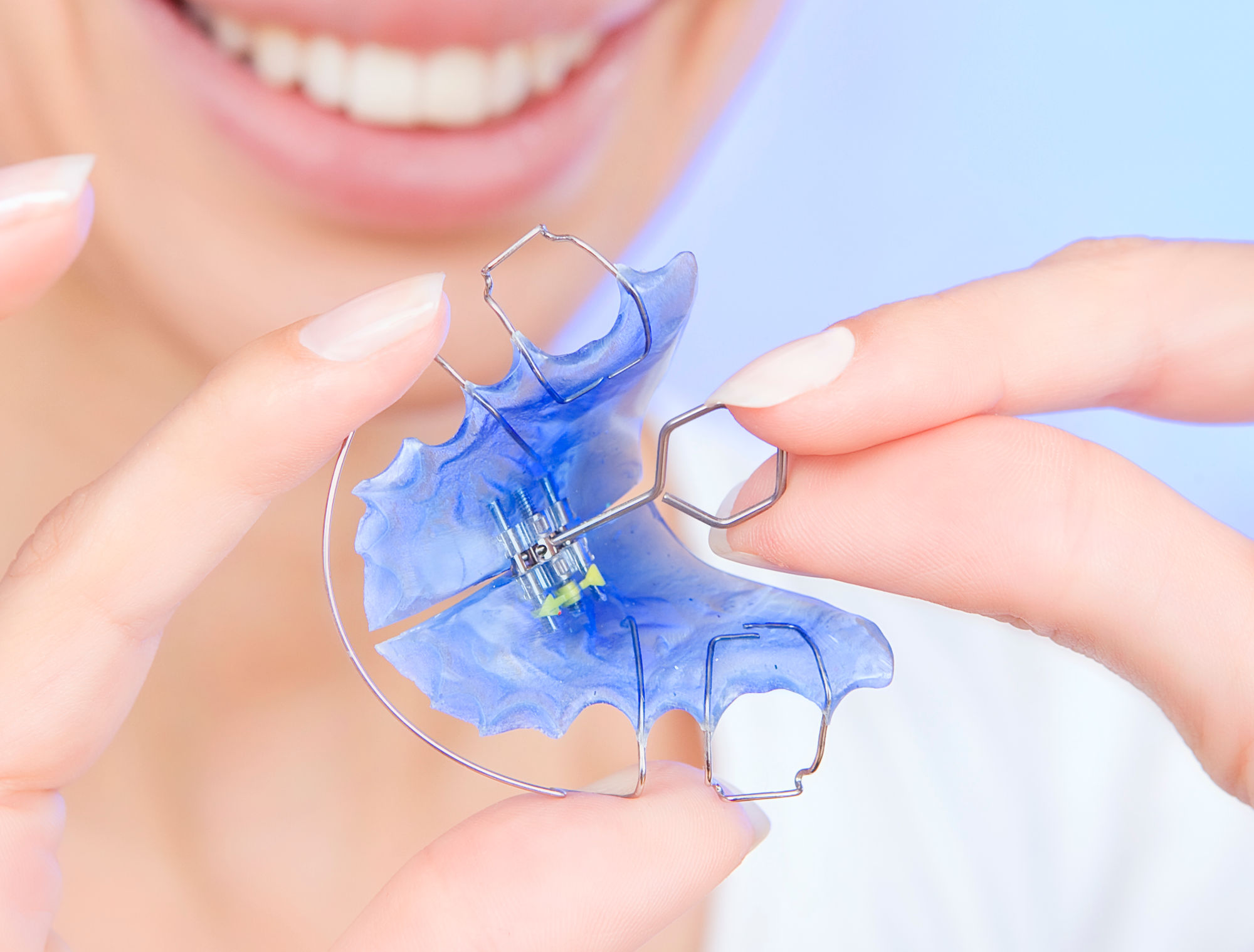
Night-Only Aligners: Do They Work? Pros, Cons & Alternatives (2026)
The pitch is appealing: wear clear aligners only while you sleep and wake up with straighter teeth -- no daytime wear, no office visits, and no one ever knows you are in treatment. Night-only aligners have grown into a significant niche within the clear aligner market, marketed primarily to adults who find full-time aligner wear inconvenient or who are self-conscious about wearing aligners during the day. But do they actually work? And if so, for whom? This 2026 guide provides an honest, evidence-based assessment of nighttime aligner therapy -- the science behind it, the realistic results, the limitations, and how it compares to full-time options like Invisalign.
Night-Only Aligners: Key Facts
- • Wear time: 8-10 hours per night (vs 20-22 hours for full-time aligners)
- • Cost: $1,800-$3,000 (national); similar in NYC
- • Treatment time: 10-18 months for mild cases (2-3x longer than full-time)
- • Suitable for: Very mild crowding, minor spacing, slight relapse only
- • Clinical evidence: Limited; most studies are brand-sponsored
- • Professional supervision: Typically remote only (no in-person exams)
How Night-Only Aligners Work
The biological principle behind night-only aligners is the same as full-time aligners: controlled force applied to teeth triggers bone remodeling, allowing teeth to shift position. The critical difference is the duration of force application.
Full-time aligners like Invisalign apply force for 20-22 hours per day, creating nearly continuous pressure that keeps the bone remodeling process active. Night-only aligners apply force for only 8-10 hours. During the remaining 14-16 hours, teeth are unloaded and can partially rebound toward their original position.
To compensate for reduced wear time, night aligner brands typically use thicker plastic that applies heavier initial force, and program smaller movements per tray so each aligner is worn for more nights. Some brands also use companion devices (like vibration tools) that claim to accelerate tooth movement, though independent evidence for these claims is limited.
Brands Offering Night-Only Aligners in 2026
| Brand | Cost | Claimed Treatment Time | Supervision | Accessories |
|---|---|---|---|---|
| Byte At-Night | $2,000-$2,800 | 5-8 months (brand claim) | Remote | HyperByte vibration device |
| SmileDirectClub Nighttime | $2,000-$2,300 | 10-12 months | Remote | None |
| NewSmile Night | $1,500-$2,000 | 8-12 months | Remote | LED device (claimed whitening) |
Note: Invisalign does not currently offer a nighttime-only product. Their system requires 20-22 hours of daily wear for all treatment tiers.
What Does the Clinical Evidence Say?
Honest assessment: the independent clinical evidence for night-only aligners is thin. Most published data comes from brand-sponsored studies with small sample sizes and short follow-up periods. Here is what we know:
- Reduced force application time: Multiple biomechanical studies confirm that 8-10 hours of force is sufficient to initiate bone remodeling, but the rate of tooth movement is significantly slower than with 20-22 hours of wear.
- Rebound effect: During the 14-16 hours without aligners, teeth experience partial elastic rebound. This means a portion of each night's movement is lost during the day, reducing net progress.
- Case selection is critical: The limited studies that show positive outcomes involve carefully selected mild cases. There is no evidence supporting night-only aligners for moderate or complex cases.
- Long-term stability data: Minimal. Most studies track outcomes for less than 12 months after treatment completion.
"The physics are straightforward: less time in the appliance means less tooth movement per day. Night-only aligners can work for very mild cases, but patients need to understand that they are trading convenience for speed and capability. The treatment that takes 6 months with full-time wear might take 14 months with nighttime wear -- if it works at all."
Pros and Cons of Night-Only Aligners
| Pros | Cons |
|---|---|
| No daytime wear -- invisible treatment | Slower treatment (2-3x longer than full-time) |
| No impact on speaking during the day | Only suitable for very mild cases |
| No eating/drinking restrictions | Cannot correct bite problems |
| Lower cost than Invisalign | No attachments or elastics available |
| Convenient for busy professionals | Limited or no in-person monitoring |
| Less oral hygiene burden during the day | Limited clinical evidence for efficacy |
| Good option for minor relapse correction | Higher risk of treatment failure |
Who Actually Qualifies for Night Aligners?
The honest answer: a relatively small percentage of people seeking orthodontic treatment. Night-only aligners are appropriate when all of the following conditions are met:
- Crowding is less than 2-3 mm
- Spacing (gaps) is less than 2-3 mm
- No bite issues whatsoever (no overbite, underbite, crossbite, or open bite)
- No significant tooth rotations (less than 10-15 degrees)
- Healthy gums with no periodontal disease
- No missing teeth affecting the treatment area
- Patient has realistic expectations about treatment timeline and limitations
Warning: Many patients who think they have "mild" alignment issues actually have underlying bite problems that are not visible in a mirror. Without X-rays and a professional examination, it is impossible to accurately assess whether a case is truly mild enough for nighttime-only treatment. Self-diagnosis based on visual appearance is unreliable.
Night Aligners vs Invisalign: Head-to-Head
For a fair comparison, let us compare night aligners to Invisalign's mild-case options (Invisalign Lite and Invisalign Express), since night aligners cannot treat moderate or complex cases:
| Factor | Night-Only Aligners | Invisalign Lite/Express |
|---|---|---|
| NYC cost | $1,800-$3,000 | $3,500-$5,500 |
| After insurance | $1,800-$3,000 (rarely covered) | $1,500-$4,000 (after ortho benefit) |
| Treatment time (mild case) | 10-18 months | 6-10 months |
| Daily wear | 8-10 hours (nighttime only) | 20-22 hours |
| Professional monitoring | Remote only | In-person every 6-10 weeks |
| Predictability | Moderate (for suitable cases) | High |
| Refinements | Limited | 1 round (Lite) / limited (Express) |
When you factor in insurance coverage and the faster treatment time, the real-world cost difference between night aligners and Invisalign Lite narrows considerably. For many NYC patients with PPO orthodontic coverage, Invisalign Lite after insurance can cost less than night aligners without insurance.
"When patients ask about night aligners, I explain the trade-offs honestly. If wearing aligners during the day is truly a dealbreaker, and the case is genuinely mild, night aligners can be an option. But most patients, once they understand that full-time aligners are nearly invisible and the treatment will finish in half the time, choose the conventional approach."
Risks and Concerns
Night-only aligners share many of the same risks as full-time aligners, but with some additional concerns:
- Higher treatment failure rate: The reduced wear time means there is less margin for error. Even slight non-compliance (not wearing them every single night for the full duration) can derail treatment.
- No professional monitoring: Most night aligner brands operate without in-person exams, meaning complications can go undetected longer.
- Heavier forces: To compensate for reduced wear time, night aligners often use thicker plastic and program more aggressive movements, which may increase the risk of root resorption and discomfort.
- Bite changes: Wearing thick aligners only at night can temporarily alter the bite each morning, causing jaw discomfort until teeth "settle" during the day.
- False economy: If night aligners fail to produce results, the patient still needs to invest in full-time treatment, effectively paying twice.
Warning: If you experience jaw pain, clicking, headaches, or a noticeably changed bite after starting night aligners, stop wearing them and consult a dental professional immediately. These symptoms could indicate TMJ stress or unintended bite changes that need professional evaluation.
Better Alternatives for Discreet Treatment
If your primary concern is discretion during the day, consider these alternatives that may offer better results:
- Invisalign: Full-time aligners are virtually invisible. Most people will not notice you are wearing them unless you tell them. The adult patient experience is overwhelmingly positive regarding aesthetics.
- Ceramic braces: Tooth-colored brackets are far less noticeable than metal and can handle complex cases night aligners cannot.
- Lingual braces: Placed behind the teeth, completely invisible from the front. Handle the full range of orthodontic cases.
- Invisalign with reduced visibility: Ask your orthodontist about minimizing attachments on the most visible teeth if aesthetics are your primary concern.
Frequently Asked Questions
Night-only aligners can produce results for very mild cases -- minor crowding or small gaps in front teeth. However, they work significantly slower than full-time aligners (often 2-3x longer), and clinical evidence is limited. They are not effective for moderate crowding, bite correction, or complex tooth movements. Independent clinical studies on nighttime-only aligners remain scarce.
Night-only aligner treatment typically takes 10-18 months for mild cases, compared to 6-10 months for the same cases with full-time aligners. Some brands claim faster treatment, but independent evidence does not consistently support these claims. The reduced wear time means each aligner must be worn for more days to achieve the programmed movement.
Yes, night aligners typically cost $1,800-$3,000, compared to $5,000-$9,000 for Invisalign Comprehensive in NYC. However, night aligners can only treat mild cases. Invisalign Lite, which also treats mild cases but with full-time wear and in-person supervision, costs $3,500-$5,500 in NYC -- a closer comparison. Factor in insurance coverage (which applies to Invisalign but rarely to night aligners) and the gap narrows further.
Absolutely not. Invisalign treatment plans are designed for 20-22 hours of daily wear. Wearing aligners only 8-10 hours at night means teeth receive less than half the prescribed force time, leading to tracking failure, treatment stalling, and potentially teeth moving in unintended directions. Never reduce your wear time without orthodontist approval.
Ideal candidates have very mild cosmetic concerns: slight crowding of front teeth (less than 2-3 mm), small gaps, or minor relapse after previous orthodontic treatment. They must not have bite issues, moderate or severe crowding, rotated teeth, or periodontal problems. Honestly, the number of truly appropriate candidates for nighttime-only aligners is quite small.
Sources
1. American Journal of Orthodontics and Dentofacial Orthopedics. "Efficacy of Nighttime-Only Clear Aligner Wear: A Scoping Review." Vol. 167, Issue 4, 2025.
2. Journal of Clinical Orthodontics. "Biomechanical Considerations in Reduced Wear-Time Aligner Protocols." Vol. 59, Issue 7, 2024.
3. Angle Orthodontist. "Tooth Movement Rates Under Intermittent vs Continuous Orthodontic Forces." Vol. 94, Issue 5, 2024.
4. European Journal of Orthodontics. "Patient Outcomes in Night-Only vs Full-Time Clear Aligner Treatment." Vol. 47, Issue 3, 2025.
5. American Association of Orthodontists (AAO). Position Statement on Direct-to-Consumer and Reduced Wear Aligner Products, 2025.
6. Dental Materials. "Force Decay and Material Properties of Night-Only vs Standard Aligner Plastics." Vol. 42, Issue 2, 2025.
7. Journal of Dental Research. "Elastic Rebound in Orthodontic Tooth Movement: Implications for Intermittent Force Protocols." Vol. 104, Issue 2, 2025.
Not Sure if Night Aligners Are Right for You?
Get an honest assessment from a board-certified NYC orthodontist who can evaluate your case and recommend the most effective treatment approach.
Find a Provider in NYC