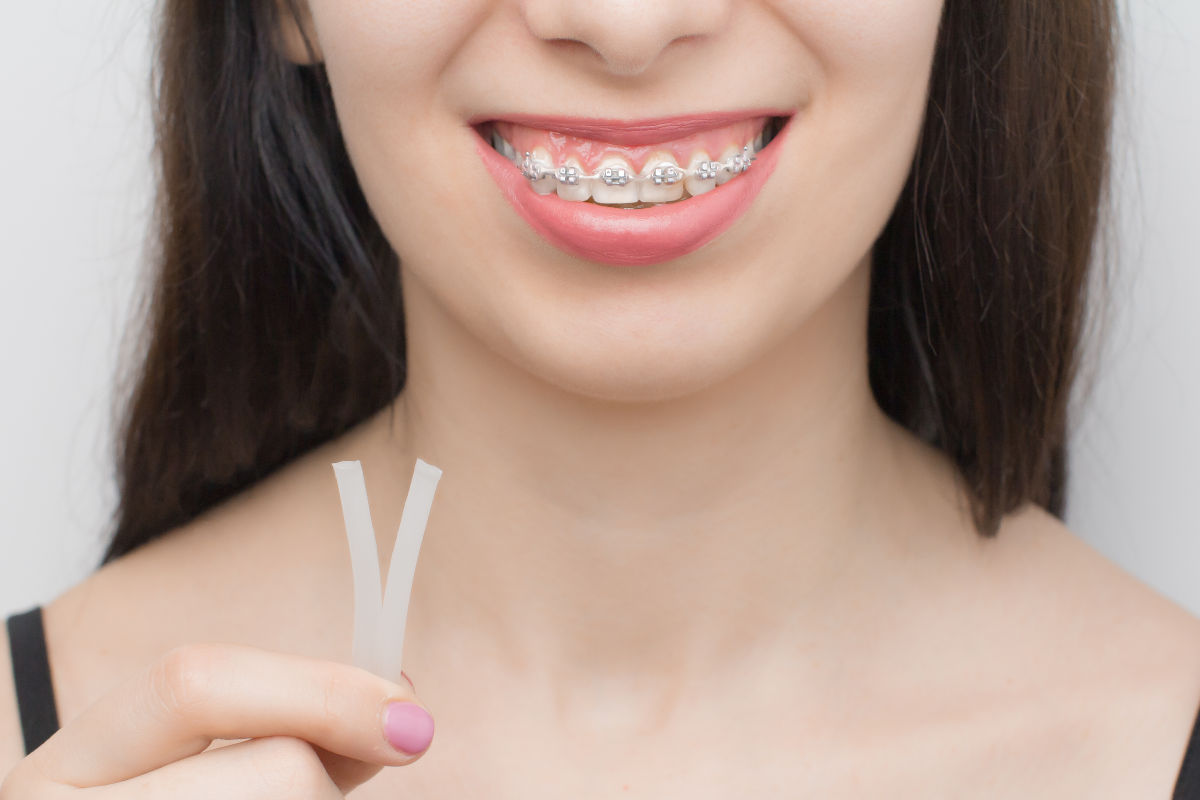
How to Use Orthodontic Wax: Complete Guide for Braces Wearers (2026)
If you wear braces, you have almost certainly experienced the sharp poke of a wire end or the dull ache of a bracket rubbing against your cheek. Orthodontic wax is your first line of defense -- a simple, inexpensive product that over 90% of braces patients rely on during at least part of their treatment. This guide walks you through exactly how to apply orthodontic wax, which brands work best, what to do if wax alone is not enough, and when to call your NYC orthodontist for help.
Key Facts: Orthodontic Wax in 2026
- • Cost: $2 - $8 per pack (often free from your orthodontist)
- • What it does: Creates a smooth barrier between brackets/wires and soft tissue
- • Safe if swallowed: Non-toxic, passes through the digestive system
- • How long it lasts: 4-8 hours per application
- • Alternatives: Dental silicone (OrthoDots), sugar-free gum, beeswax
- • When to call your orthodontist: If irritation persists more than 5-7 days despite wax use
What Is Orthodontic Wax?
Orthodontic wax is a soft, pliable, non-toxic material -- typically made from paraffin, beeswax, or carnauba wax -- designed to cover sharp or protruding parts of braces. When you press it over a bracket, hook, or wire end, it creates a smooth cushion that prevents metal from digging into your lips, cheeks, gums, and tongue. The concept is simple, but the relief it provides is significant: studies show that mechanical irritation from braces is the number-one comfort complaint among orthodontic patients, reported by up to 70% of wearers within the first two weeks of treatment.
Orthodontic wax has been a standard part of braces care for decades. It is FDA-classified as a Class I medical device, meaning it carries the lowest risk category and does not require special prescriptions. You can buy it at any pharmacy, order it online, or receive it from your orthodontist -- most New York City orthodontic offices hand out wax at every appointment as part of their standard care kits.
When to Use Orthodontic Wax
Not every bit of discomfort from braces calls for wax. Understanding when wax is the right solution versus when you need professional attention will save you unnecessary trips to your orthodontist while also making sure you do not ignore a genuine problem.
Common Situations That Call for Wax
- The first 1-2 weeks after braces are placed: Your mouth needs time to toughen up. Wax protects against the initial rubbing while your cheeks and lips adapt.
- After adjustments or wire changes: New wires may have sharper ends or sit differently, creating temporary irritation points.
- Protruding wire ends: As teeth shift, the archwire can extend past the last bracket, poking your cheek. Wax provides an immediate barrier.
- Bracket edges irritating your lips or cheeks: Especially common with ceramic braces, which can have slightly rougher edges than metal brackets.
- Canker sores or ulcers near hardware: Wax shields the sore from repeated contact, allowing faster healing.
- Before sports or physical activities: An extra layer of protection reduces the risk of soft tissue injury if you take a bump to the face.
"I tell every new braces patient to keep orthodontic wax in their bag, at their desk, and on their nightstand. The first two weeks are the hardest, and wax makes the difference between a tolerable adjustment period and a miserable one."
How to Apply Orthodontic Wax: Step-by-Step
Applying orthodontic wax is straightforward, but technique matters. A poorly applied piece will fall off within minutes; a well-applied one can last all day. Follow these steps:
Step 1: Wash Your Hands
Always start with clean hands. You are placing material directly inside your mouth on an area that may already be irritated or have a small sore. Use soap and water or hand sanitizer before handling the wax.
Step 2: Pinch Off the Right Amount
Tear or pinch off a small piece -- about the size of a pea or a small grain of rice. Using too much wax creates a bulky mass that will not stick well and may interfere with your bite. Using too little will not adequately cover the irritating area.
Step 3: Warm and Roll the Wax
Roll the piece between your thumb and index finger for about 5-10 seconds. The heat from your fingers softens the wax and makes it pliable. You want it to be smooth and slightly tacky, not crumbly. A well-warmed piece should feel like soft putty.
Step 4: Dry the Bracket Area
This is the step most people skip -- and the number-one reason wax falls off. Use a tissue, paper towel, or cotton ball to thoroughly dry the bracket and wire where you are applying wax. Saliva prevents adhesion. If possible, pull your lip or cheek away from the bracket and dab the area dry.
Step 5: Press and Mold the Wax
Place the softened wax ball directly over the offending bracket, hook, or wire end. Press firmly and mold it around the edges of the bracket so it grips the metal. The wax should form a small dome that completely covers the sharp point. You should feel the difference immediately -- smooth wax instead of sharp metal against your cheek.
Warning: Do not try to push loose or broken wires back into place using your fingers. If a wire is significantly displaced or causing severe pain, cover it with wax as a temporary measure and contact your orthodontist within 24 hours. Attempting to adjust wires yourself can damage your braces and set back your treatment.
Best Orthodontic Wax Brands in 2026
Not all orthodontic wax is created equal. Some brands stick better, last longer, or come with added features like flavoring or vitamin E for tissue healing. Here is how the most popular options compare:
| Brand | Type | Flavors | Price (2026) | Best For |
|---|---|---|---|---|
| GUM Orthodontic Wax | Paraffin | Unflavored, Mint | $3 - $5 | Everyday use, reliable adhesion |
| OrthoDots CLEAR | Medical-grade silicone | Unflavored | $8 - $12 | Long-lasting, moisture-resistant |
| DenTek Orthodontic Wax | Paraffin blend | Fresh Mint | $2 - $4 | Budget-friendly option |
| Orthomunchies Wax | Beeswax blend | Multiple (grape, cherry, etc.) | $5 - $7 | Kids and teens who prefer flavors |
| Sunstar GUM Ortho Wax with Vitamin E | Paraffin + Vitamin E | Unflavored | $4 - $6 | Patients with sores needing healing support |
For NYC patients, all of these products are readily available at Duane Reade, CVS, Walgreens, and most independent pharmacies. Amazon and Target also carry them for same-day or next-day delivery in Manhattan, Brooklyn, and Queens.
Orthodontic Wax vs. Alternatives
Traditional paraffin-based wax is not the only option for braces comfort. Several alternatives have gained popularity in recent years, each with distinct advantages and drawbacks.
| Product | Adhesion | Duration | Can Eat With It? | Cost Per Use | Best Use Case |
|---|---|---|---|---|---|
| Orthodontic Wax | Moderate | 4-8 hours | No | $0.10 - $0.30 | General bracket/wire irritation |
| Dental Silicone (OrthoDots) | Strong | 12-48 hours | Yes (carefully) | $0.50 - $1.00 | Persistent problem areas, eating |
| Sugar-Free Gum | Weak | 1-2 hours | No | $0.05 | Emergency temporary fix only |
| Dental Lip Bumper | N/A (appliance) | Permanent | Yes | $100 - $300 | Chronic lower lip irritation |
"Dental silicone products like OrthoDots represent a meaningful upgrade over traditional wax for many patients. They stay on longer, resist moisture, and can even remain in place during meals. For patients who need wax multiple times per day, I often recommend switching to silicone."
Tips to Maximize Comfort Beyond Wax
Orthodontic wax is an essential tool, but it is part of a broader comfort toolkit. Use these strategies alongside wax to manage braces pain and irritation:
Oral Hygiene Reduces Irritation
Plaque buildup around brackets increases gum inflammation, which makes your tissue more sensitive to mechanical irritation. Brush after every meal using a soft-bristled or orthodontic brush, and floss daily with a floss threader or water flosser. Clean hardware means less swelling and less rubbing.
Saltwater Rinses
Mix half a teaspoon of table salt into 8 ounces of warm water and rinse for 30-60 seconds. Salt water reduces bacteria and promotes healing of minor sores. Do this 2-3 times daily during the first week after adjustments or whenever you have mouth sores.
Over-the-Counter Pain Relief
For generalized aching after adjustments, ibuprofen (Advil) or acetaminophen (Tylenol) can help. Follow package directions. Note that some research suggests ibuprofen may slightly slow tooth movement due to its anti-inflammatory properties, though the clinical significance of this is debated.
Topical Numbing Gels
Products like Orajel or Anbesol containing benzocaine can numb a specific sore spot for temporary relief. Apply a small amount directly to the irritated area with a clean finger or cotton swab. Do not use excessively -- benzocaine overuse has been linked to a rare condition called methemoglobinemia.
NYC Patients: What Your Orthodontist Provides
- • Most NYC orthodontic offices include orthodontic wax in your starter kit at no extra charge
- • Many offices stock silicone alternatives on request -- just ask at your next visit
- • If you run out between appointments, call your office; many will mail or courier additional wax
- • For after-hours emergencies, Duane Reade locations (open 24/7 in Manhattan) carry orthodontic wax
When Wax Is Not Enough: Calling Your Orthodontist
While wax handles the majority of minor braces irritations, certain situations require professional attention. Contact your orthodontist if you experience any of the following:
- A wire is poking into your cheek or gum and cannot be covered: Your orthodontist can clip the wire or re-tie it in minutes.
- A bracket has come loose or fallen off: Wax can temporarily hold a loose bracket in place, but it needs to be re-bonded professionally.
- Persistent sores that do not heal after 7-10 days: This may indicate an allergic reaction to the nickel in your wires (affects roughly 10% of women and 1-2% of men) or another underlying issue.
- Significant pain not relieved by OTC pain medication: Could indicate root resorption, an abscess, or excessive force from the wire.
- Swelling, pus, or fever: Signs of infection that require immediate attention.
Warning: If you experience sudden swelling of the face, difficulty breathing, or signs of a severe allergic reaction after getting braces, call 911 or go to the nearest emergency room immediately. While extremely rare, nickel allergies can occasionally cause serious reactions. NYC hospitals including NYU Langone, Mount Sinai, and NewYork-Presbyterian have orthodontic and oral surgery departments that can provide emergency care.
Do You Need Wax with Invisalign?
If you are considering Invisalign clear aligners instead of braces, you may wonder whether wax is still needed. The answer is: rarely, but sometimes.
Invisalign trays are made of smooth, medical-grade SmartTrack plastic that is far less likely to irritate soft tissue than metal brackets and wires. However, there are two scenarios where wax or similar products can help:
- Sharp aligner edges: Occasionally, a tray may have a rough edge or seam that rubs against the gum line. Orthodontic wax can be placed on the aligner edge as a temporary fix, though your orthodontist can also smooth the edge with a dental file.
- Invisalign attachments: The tooth-colored bumps bonded to your teeth can sometimes irritate your lips, especially during the first few days. Wax can be applied over exposed attachments when your trays are out during eating.
Overall, Invisalign patients use wax far less frequently than braces patients. This is one of the comfort advantages that makes clear aligners popular among adult patients in NYC who want a smoother treatment experience.
Cost and Where to Buy Orthodontic Wax in NYC
Orthodontic wax is one of the most affordable dental products available. Here is what to expect in terms of pricing and availability in New York City as of 2026:
- Pharmacy price: $2 - $8 per pack (5-10 strips per pack)
- Online (Amazon, Target.com): $3 - $7 with same-day or next-day delivery available in NYC
- Bulk packs (10-pack): $12 - $20 on Amazon -- best value for long-term braces patients
- From your orthodontist: Often free with appointments; some offices charge $1-$3 per pack
- Dental silicone alternatives: $8 - $15 per pack (fewer units but longer-lasting)
In NYC, Duane Reade stores (over 200 locations across the five boroughs) and CVS pharmacies are the most convenient sources. Many are open 24/7 in Manhattan and downtown Brooklyn, which is helpful for late-night braces emergencies.
Common Mistakes When Using Orthodontic Wax
Even something as simple as orthodontic wax can be used incorrectly. Avoid these common errors:
- Applying to a wet surface: The most frequent mistake. Always dry the bracket and surrounding wire with a tissue before applying.
- Using too much wax: A pea-sized piece is sufficient. Large lumps interfere with your bite and fall off more easily.
- Not replacing wax regularly: Old wax loses its seal and can trap bacteria. Remove, brush, and reapply with a fresh piece after every meal.
- Ignoring persistent problems: If you need wax on the same spot for more than two weeks straight, your orthodontist may need to adjust the wire or reposition the bracket.
- Forgetting to remove before brushing: Wax over brackets prevents proper cleaning. Always remove it, brush thoroughly, then reapply.
Pro Tip: Create a Braces Comfort Kit
- • 2-3 packs of orthodontic wax (keep one at home, one in your bag, one at work/school)
- • A travel toothbrush and mini toothpaste
- • Floss threaders or a portable water flosser
- • A small mirror for checking your braces
- • Ibuprofen or acetaminophen for ache after adjustments
- • Your orthodontist's emergency phone number
Frequently Asked Questions
You can safely leave orthodontic wax on your braces for several hours, including overnight. It is non-toxic and will not cause harm if accidentally swallowed. However, you should remove it before eating and brushing, then reapply a fresh piece afterward. Most patients find they need to replace the wax every 4 to 8 hours for best comfort.
It is not recommended to eat with orthodontic wax in place. The wax can break apart, mix with food, and lose its protective seal. While swallowing a small amount of wax is harmless since it passes through your digestive system, you should remove it before meals and reapply after brushing. This also helps maintain good oral hygiene around your brackets.
Temporary alternatives include dental silicone (like OrthoDots), sugar-free chewing gum, beeswax, or even a small piece of damp cotton or gauze. Dental silicone products tend to last longer and stick better than traditional wax. However, these are short-term solutions. If you are experiencing persistent irritation, contact your orthodontist for an adjustment.
Orthodontic wax is very affordable, typically costing $2 to $8 per pack. Most packs contain 5 to 10 strips and last 2 to 4 weeks depending on usage. Many NYC orthodontic offices provide wax for free at appointments. You can purchase it at any pharmacy such as CVS, Walgreens, Duane Reade, or online retailers like Amazon.
Wax may not stick properly if your braces are wet. Before applying, dry the bracket and surrounding wire thoroughly with a tissue or cotton ball. Pinch off a pea-sized piece, roll it into a ball to warm it, then press it firmly over the irritating area. If wax still will not adhere, try dental silicone products like OrthoDots, which bond more securely and resist moisture better than traditional wax.
Sources
1. American Association of Orthodontists. "Braces Care and Maintenance Guidelines." Updated 2025.
2. Kvam E, Bondevik O, Gjerdet NR. "Traumatic ulcers and pain in adults during orthodontic treatment." Community Dentistry and Oral Epidemiology, 1989;17(3):154-157.
3. U.S. Food and Drug Administration. "Medical Device Classification: Orthodontic Wax." FDA Product Classification Database, 2024.
4. Baldini A, Nota A, Tripodi D, Longoni S, Cozza P. "Evaluation of the efficacy of orthodontic wax and silicone-based products in reducing mucosal irritation." Dental Materials Journal, 2021;40(2):445-451.
5. Journal of Clinical Orthodontics. "Patient Comfort During Fixed Appliance Therapy: A Systematic Review." JCO, 2022;56(8):489-498.
6. American Dental Association. "Over-the-Counter Oral Care Products: Orthodontic Wax Safety Profile." ADA Seal Program, 2024.
7. Oral Health Foundation. "Caring for Teeth with Braces: Patient Guide." 2025 Edition.
Braces Causing Discomfort? Find Expert Help in NYC
Connect with a top-rated orthodontist in New York City who can adjust your braces and provide personalized comfort solutions.
Find a Provider in NYC