Power Chain Braces in 2026: What They Do, Stages, Colors and Cost (NYC Guide)
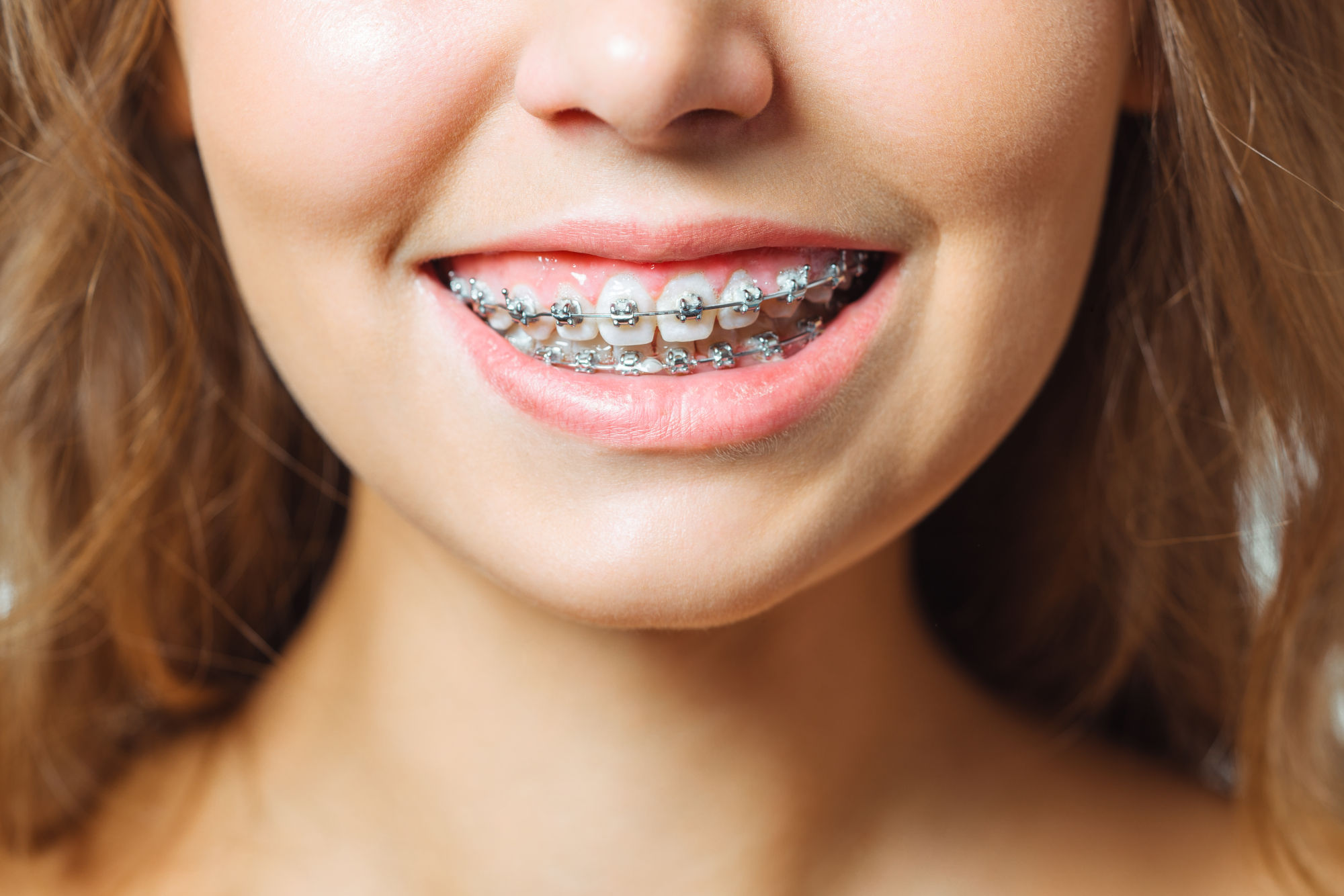
Power chains are connected elastic loops stretched across several brackets to pull teeth together, most often to close gaps. They typically cost nothing extra: power chains are included in the total braces fee at virtually every practice, in NYC and nationwide.
If your orthodontist just added a power chain, or announced one for your next visit, this guide covers what it does, when it shows up in treatment, how much soreness to expect, which color to pick, and what to do if it breaks.
What a Power Chain Is and How It Works
Standard braces hold the archwire to each bracket with an individual elastic ring called a ligature. A power chain replaces those separate rings with one continuous elastic strip. Each loop of the strip seats over a bracket, and the stretched elastic between loops creates a constant pulling force that draws the connected teeth toward each other.
That is the difference in one sentence: ligatures hold the wire, power chains actively move teeth. The chain works together with the archwire, which keeps the teeth traveling along the right path while the elastic supplies the closing force.
Orthodontists reach for power chains to:
- Close gaps, including spaces left after a tooth extraction
- Close the small residual spaces at the end of alignment
- Keep closed spaces closed while other movements finish
- Distribute force across a group of teeth so they move as a block
- Assist bite correction alongside elastics and other mechanics
The Three Types of Power Chains
Chains differ by the distance between loops. Your orthodontist picks the spacing based on how far apart the target brackets sit.
| Type | Loop spacing | Typical use |
|---|---|---|
| Closed (continuous) | Loops touch, no gap | Adjacent teeth, small spaces |
| Short | Small gap between loops | Standard spacing between brackets |
| Long | Wide gap between loops | Larger gaps or wider-set brackets |
The material is the same elastomer as individual ligatures. Chains fit metal and ceramic brackets alike, and clear or tooth-colored chains keep ceramic braces discreet.
When Power Chains Appear in Treatment
Power chains usually arrive in the middle or final phase of treatment, after the initial alignment has leveled the teeth. A common timeline:
| Treatment stage | What happens | Power chain? |
|---|---|---|
| Months 1 to 6 | Leveling and initial alignment | Rarely |
| Months 6 to 18 | Space closure, bite work | Most common window |
| Final months | Detailing and finishing | Often, to hold spaces closed |
So a power chain is a progress marker, not a setback: it means your teeth are aligned enough for space closure to begin. It is not automatically the last stage, though many patients wear one through the finishing phase. Expect to wear power chains for several weeks to several months, with a fresh chain installed at each adjustment visit, typically every 4 to 6 weeks, because elastomer loses a large share of its pulling force within the first days of wear.
Not everyone gets one. Patients with no gaps to close and no extractions may finish treatment entirely on individual ligatures.
Do Power Chains Hurt?
Expect pressure and soreness for 2 to 4 days after a chain is placed or replaced, similar to a regular adjustment and sometimes slightly stronger, since the chain moves several teeth at once. The discomfort fades as teeth begin to move. What helps:
- Soft foods for the first days
- Cold water and cold foods to calm soreness
- Over-the-counter pain relief if your usual adjustment routine includes it, taken as directed on the label
- Orthodontic wax on any loop end that rubs the cheek
Persistent sharp pain, a loose bracket, or a chain that snapped are reasons to call the office rather than wait for the next visit.
Power Chain Colors: Choosing and Staining
Power chains come in the same palette as ligatures: clear, silver, gray, and the full color range. Two practical rules beat aesthetics debates:
| Choice | Upside | Watch out |
|---|---|---|
| Clear or white | Discreet, ideal with ceramic brackets | Stains fastest: coffee, tea, curry, tomato sauce |
| Silver or gray | Blends with metal brackets, hides stains | Neutral look |
| Dark colors (navy, black, purple) | Hide staining best, make teeth look whiter | Bold look |
| Bright colors | Fun, popular with teens | Yellow and light tones show stains |
Staining is temporary either way, since the chain is replaced at every adjustment. Rinsing with water after staining foods keeps any chain cleaner between visits.
How Much Do Power Chain Braces Cost?
Power chains add nothing to your bill in almost all cases. They are a standard supply item folded into the overall braces fee, exactly like ligatures and archwires. In NYC, that overall fee runs $4,000 to $8,500 for metal braces and $5,000 to $9,500 for ceramic. If a practice quotes power chains as a separate line item, ask why: it is not standard billing.
The honest cost answer is therefore about the braces themselves, not the chain. Insurance, FSA and HSA rules apply to the total orthodontic fee the same way whether or not your plan of care includes power chains.
What to Do if a Power Chain Breaks
Elastic breaks sometimes, especially with hard or sticky foods. If a loop tears or slides off a bracket:
- Check for a sharp or dangling end and cover it with orthodontic wax.
- Call the office. A broken chain stops delivering force, and every day without it slows the space closure.
- Do not cut the chain off yourself unless the office tells you to.
Prevention is the usual braces list: skip caramel, hard candy, ice chewing, and whole raw apples, and keep up brushing so the elastic stays sound between visits.
Power Chains and Invisalign
Power chains attach to brackets, so they belong to braces treatment. Clear aligner systems close gaps with the trays themselves, sometimes helped by attachments and rubber bands. If you are comparing the two systems for a gap-closing case, both work; the mechanics differ.
Frequently Asked Questions
A power chain applies continuous pulling force across several brackets at once, drawing the connected teeth toward each other. Its main job is closing gaps, including extraction spaces, and keeping closed spaces closed while treatment finishes. Individual ligatures only hold the archwire; the power chain is what actively moves groups of teeth together.
Not necessarily, but it often arrives in the second half of treatment. Power chains appear once initial alignment is done and space closure begins, and many patients keep one through the finishing phase. Treat it as a sign of progress: your teeth are ready for the closing work. Your orthodontist can tell you how many months remain in your specific plan.
Power chains are included in the standard braces fee at virtually every practice, with no separate charge. The cost question is really the cost of braces: in NYC, $4,000 to $8,500 for metal and $5,000 to $9,500 for ceramic in 2026. Insurance and FSA or HSA savings apply to that total fee as usual.
No. Power chains are used when there are gaps to close or spaces to hold closed, which covers many but not all cases. Patients without extractions or spacing issues can go through the entire treatment on individual ligatures. Whether you get one depends on your treatment plan, not on how well treatment is going.
From a few weeks to several months, depending on how much space needs to close. The chain itself is replaced at every adjustment visit, usually every 4 to 6 weeks, because the elastic loses much of its force after the first days of wear. Wearing several successive chains over months is normal.
Slightly, for the first 2 to 4 days after placement. A power chain moves several teeth at once, so the pressure can feel stronger than a routine adjustment. Soft foods, cold drinks, and orthodontic wax on any rubbing spot get most patients through the adjustment window. Pain that sharpens instead of fading warrants a call to the office.
Sources
1. American Association of Orthodontists. "Braces and Orthodontic Appliances: Patient Guide." AAO.org, 2025.
2. Peer-reviewed literature on elastomeric chain force decay, including studies indexed on PubMed showing substantial force loss of elastomeric chains within the first days of wear.
3. American Dental Association. "Braces and Orthodontics." MouthHealthy.org, 2025.
Find an Orthodontist in NYC
Compare top-rated orthodontists across the five boroughs. Most offices offer free consultations and will walk you through your full treatment plan.
Find a Provider in NYC